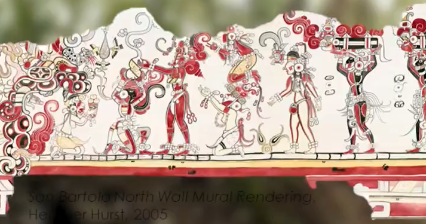
Archaeologists have identified the name of an ancient Mayan astronomer and mathematician for the first time by transcribing mural symbols, according to a Monday announcement by Guatemala’s Ministry of Culture. The name, Sak Tahn Waax, translates to "White-chested Fox" and was discovered at the San Bartolo-Xultun archaeological site near the Mexican border.
The discovery involved the analysis of drawings dating from 400 BC to 900 AD. Researchers found the name alongside a "complete mathematical and astronomical formula" within the Xultun ruins. According to Culture Minister Luis Mendez, this is the only known work of its kind attributed to a specific mathematician from the Maya Classic period, a timeframe considered the peak of the civilization.
To decipher the name, researchers conducted an epigraphic analysis—the study of ancient inscriptions—of more than 50 mathematical and astronomical microtexts found on a wall. The team used photographs, drawings, and digital scans to identify 11 specific hieroglyphs. In addition to the astronomer's name, the ministry reported that the inscriptions include calculations and tables utilizing astronomical and calendrical units of time.
The scale of the finding involves more than 50 microtexts and 11 deciphered glyphs found within a single archaeological complex. By identifying Sak Tahn Waax, historians gain a concrete reference point for the authorship of complex formulas that governed Mayan timekeeping and celestial observations. This serves as a precedent for the use of digital enhancement and epigraphic analysis to extract specific biographical details from weathered ruins that were previously illegible.
What happens next: The Ministry of Culture did not report specific dates for future excavations or the public display of the digital scans. The discovery follows other recent findings in the region, including the 2024 identification of a Mayan city in Mexico by an American doctoral student and the 2023 announcement of a 3,000-year-old city in northern Guatemala. Research continues at the San Bartolo-Xultun site as experts analyze how art and science were intertwined in ancient Mayan daily life.