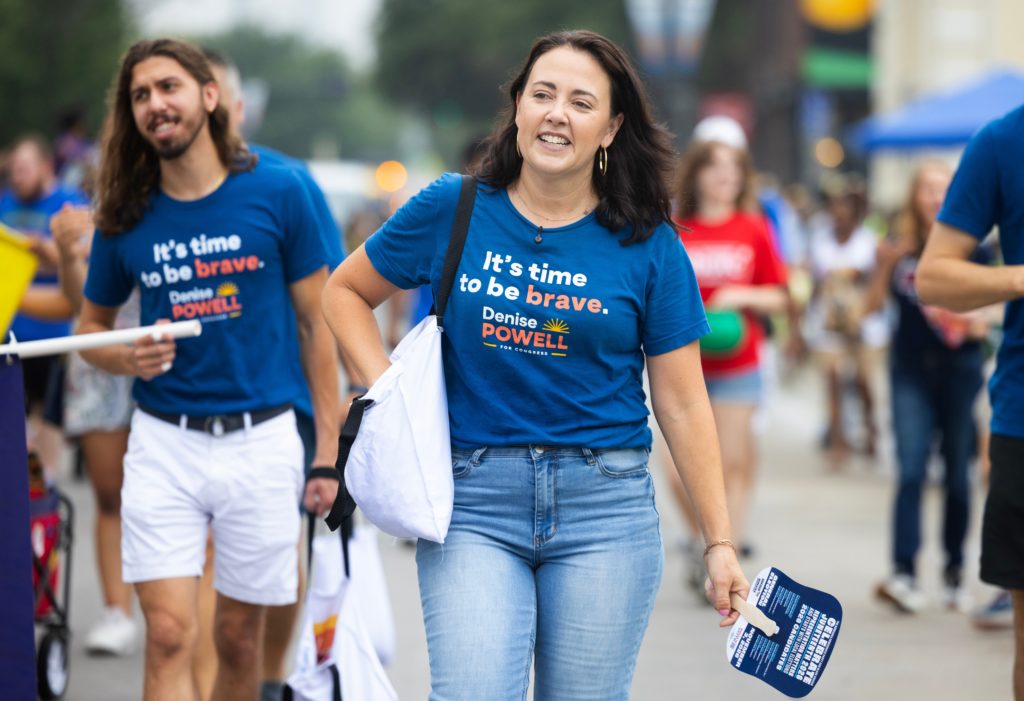
The race for Nebraska’s 2nd Congressional District features Republican Brinker Harding and Democrat Denise Powell, who are competing for the open seat vacated by retiring Representative Don Bacon (R-NE). The district is one of only eight in the United States that supported Democrat Kamala Harris in the 2024 presidential election while electing a Republican to the House of Representatives. Republican leadership, including House Speaker Mike Johnson and President Donald Trump, have endorsed Harding, while Powell has campaigned with prominent Democrats such as Rahm Emanuel and Pete Buttigieg.
The 2nd Congressional District encompasses the Omaha metropolitan area, which includes more than 1 million residents, and its surrounding suburbs. While Nebraska as a whole has not supported a Democratic presidential candidate since 1964, its unique system of splitting electoral votes has allowed the Omaha-based district to award its delegate to Democrats three times since 2008. Despite this presidential trend, Republican candidates have won the district’s House seat in all but one election since 1994.
Republican candidate Brinker Harding, a member of the Omaha City Council, has emphasized his support from party leadership and his familiarity with the district. Democratic candidate Denise Powell, co-founder of Women Who Run Nebraska, has focused her campaign on concerns regarding Medicare costs and the need for legislative checks and balances. Both candidates have engaged in local community outreach, including appearing before a weekly political discussion group led by retired executive Jack Hosking, to appeal to crossover voters in the November midterm elections.
The scale of the contest is reflected in the national attention and resources directed toward the district. Republican leadership, including the House Speaker and Majority Leader, have campaigned for Harding, while high-profile former Cabinet members have appeared for Powell. The Republican National Committee has rebranded its recruitment efforts as the "MAGA Majority" program, specifically targeting key districts like this one to prevent the loss of seats that often occurs for the party in power during midterm cycles. Voters will notice the impact of this nationalized focus through increased campaign activity, including a planned Republican midterm convention in Dallas next month.
The race also serves as a test for the "Blue Dot" movement, a local effort by residents Jason Brown and Ruth Huebner-Brown to promote Democratic candidates in the Republican-leaning state. While Republican supporters have countered with "Brinker Dot" signs, the success or failure of these grassroots branding efforts may set a precedent for how activists in other politically isolated urban centers organize. Residents will see the final results of these efforts when they cast ballots in the November midterm elections, which will decide if the district continues its pattern of split-party representation.