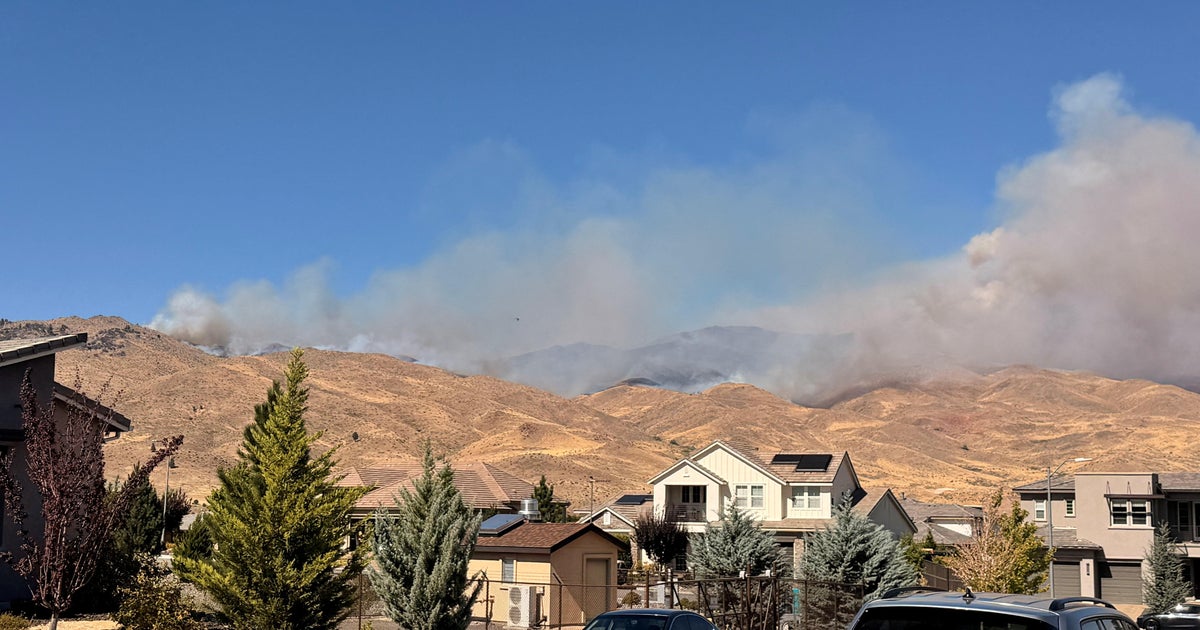
The Hawk Fire spread from the Sierra foothills toward central Reno early Sunday, prompting the mandatory evacuation of approximately 14,000 homes. As of Sunday morning, the wildfire had consumed more than 10,500 acres and remained at 0% containment. Nevada Governor Joe Lombardo declared a state of emergency for Washoe County and mobilized the Nevada National Guard to assist with aerial firefighting and ground security.
The fire began Saturday and expanded rapidly due to a combination of dry vegetation, low humidity, and strong winds. Truckee Meadows Fire & Rescue, an agency based across the California state line, joined local responders to combat the blaze. The "GO NOW" evacuation zone expanded to reach the edge of the University of Nevada campus as the fire moved toward residential areas.
Governor Lombardo authorized the deployment of two National Guard helicopter crews and 60 troops to assist police in safeguarding neighborhoods that residents were forced to flee. Richard Edwards, chief of Truckee Meadows Fire & Rescue, stated in a video that wind-driven fires create significant challenges for crews attempting to protect lives and property. To accommodate those displaced, Washoe County emergency officials opened the Reno-Sparks Convention Center as an evacuation shelter.
For those displaced, the immediate concrete change includes a loss of access to their homes and a reliance on public shelters like the Reno-Sparks Convention Center. Evacuees face specific logistical hurdles, as the primary shelter does not allow pets; owners must transport small and large animals to two separate designated locations, adding complexity to the evacuation process during a period of high stress. The deployment of 60 National Guard troops to patrol neighborhoods indicates a shift in local security, as these personnel work to prevent property loss in areas where residents are no longer present.
The fire's rapid growth to 10,500 acres creates knock-on effects for local air quality and infrastructure. With 0% containment as of Sunday morning, the duration of the displacement remains unknown, and the state of emergency allows for the mobilization of broader state resources to address these long-term costs. What happens next depends on weather conditions; fire crews are currently focused on protecting residential structures and establishing containment lines, while the state of emergency remains in effect until further notice from Governor Lombardo's office.