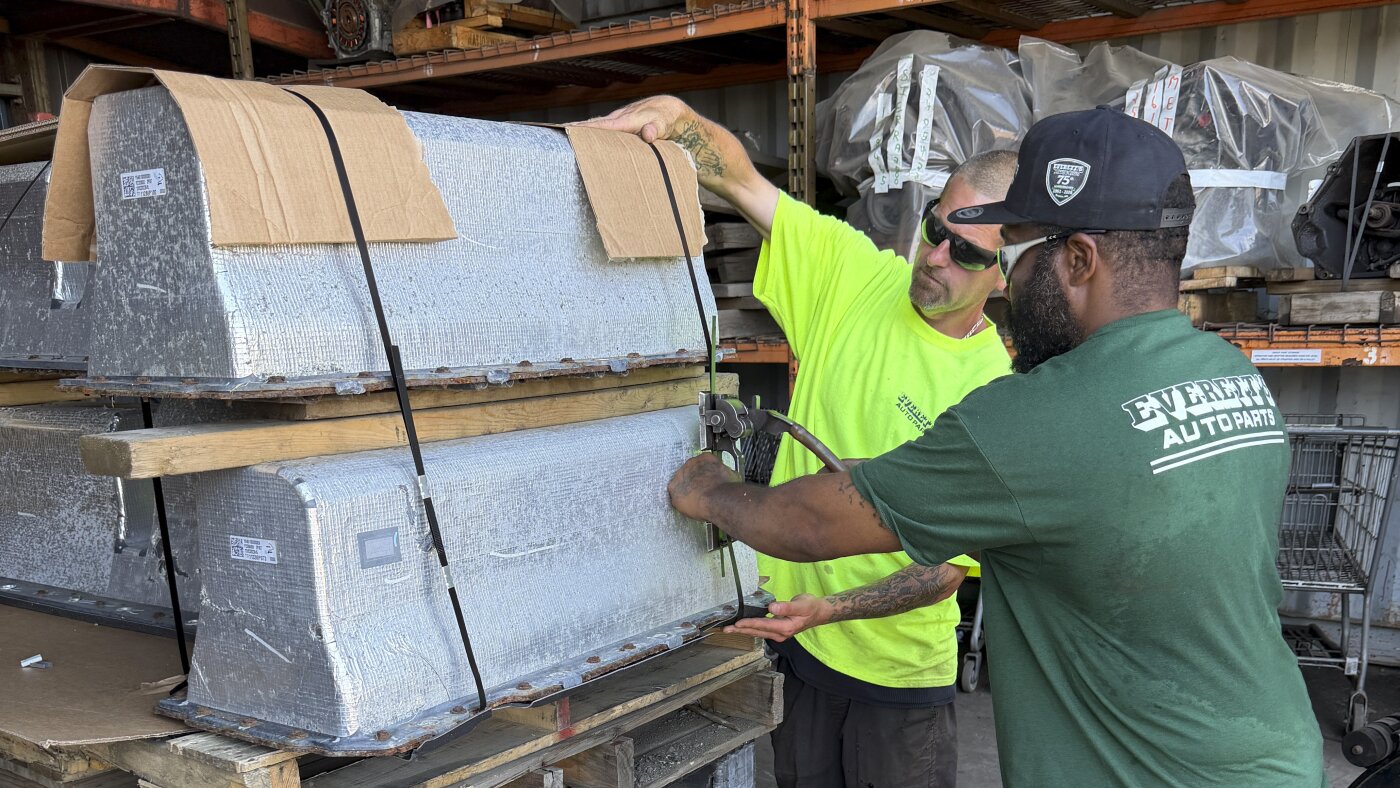
Salvage yard operators in Massachusetts reported varying economic challenges regarding the disposal and recycling of electric vehicle (EV) batteries. While EV batteries contain valuable minerals such as lithium, cobalt, and nickel, the costs associated with shipping hazardous materials and processing the units occasionally exceed the market value of the recovered materials. At Everett Auto Parts, co-owner Thomas Andrade stated he was able to ship hybrid batteries to a recycler at no cost, though the yard received no payment for the units.
In contrast, Westover Salvage Yard CEO Brian Bachand reported difficulty disposing of a Tesla battery. Bachand stated that a recycler quoted a price of -$1,800 to take the unit, meaning the salvage yard would have to pay to have it removed. Industry experts note that while some batteries can be resold for thousands of dollars as replacement parts, the lack of a secondary market or high recycling costs can turn the components into financial liabilities for small businesses.
Industry leaders remain optimistic about the long-term viability of the sector. J.B. Straubel, CEO of Redwood Materials, stated at a General Motors event that recycling is becoming more competitive and economical as mineral demand grows. Proponents of recycling argue that a "circular" system reduces reliance on foreign mineral sources and prevents environmental hazards, such as fires or toxic leaching, caused by improper disposal.
To address these economic disparities, Colorado recently enacted a law aimed at regulating battery recycling and management. The legislation is intended to ensure batteries are recycled safely and to stabilize the costs associated with their disposal, potentially serving as a model for other states facing similar infrastructure hurdles.