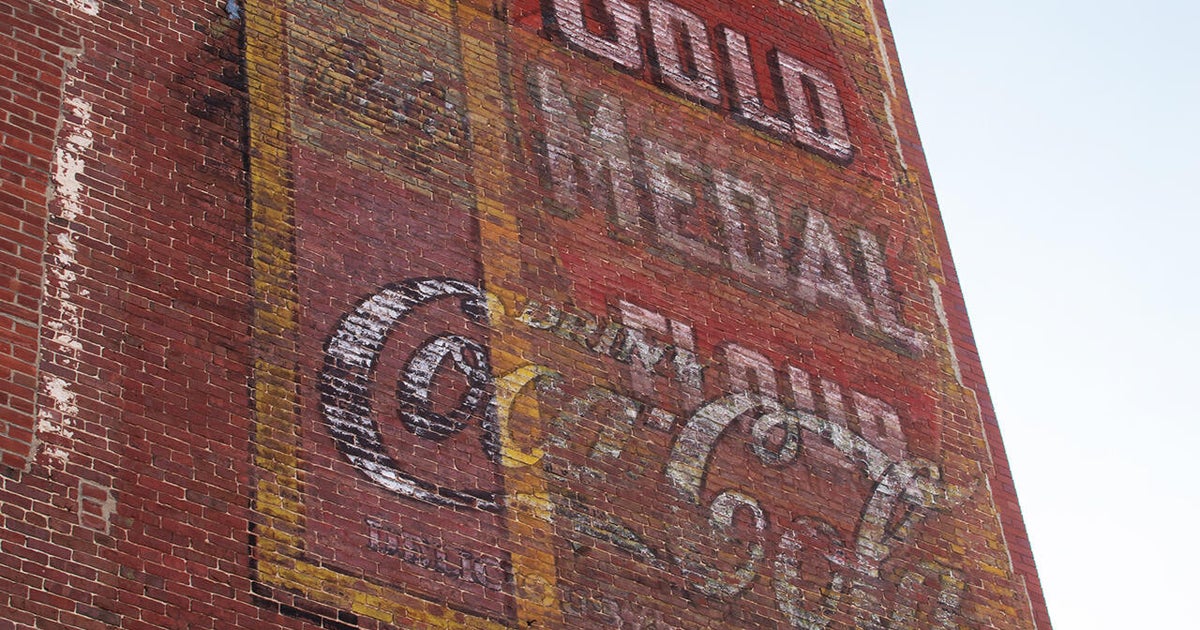
Faded advertisements painted on old brick walls, known as "ghost signs," are being documented and temporarily restored by artists and historians across the United States. These remnants of past businesses, which Ron Ladouceur, an adjunct professor of marketing at the University at Albany, dates primarily to a "golden era" between 1895 and the 1930s, are increasingly being lost to building demolitions.
In Schenectady, New York, Ladouceur identifies these signs as historical layers that coincide with the rise of national advertising. While some signs feature enduring brands like Coca-Cola and Quaker Oats, many represent defunct companies and are often found in overlapping layers on buildings that served as prime advertising spots. As paint fades, older advertisements often become visible through newer ones.
Artist Craig Winslow is using projection mapping technology to briefly illuminate these signs in their original form through his "Light Capsules" project. In Portland, Oregon, Winslow used archival research and projectors to reveal five distinct layers of advertising on a single warehouse, including signs for Montgomery Ward and the Carman Manufacturing Co. In Boston’s West End, museum officials are also pursuing restoration efforts for local signs to preserve the neighborhood's industrial history.
The scale of these artifacts spans major U.S. cities, including Schenectady, Portland, Great Falls, and Boston. While the exact number of surviving signs is not reported, the Portland warehouse project demonstrated the complexity of these sites, featuring five distinct commercial layers dating back a century. For residents, these projects turn static urban environments into interactive historical records, though the visual changes are often temporary due to the use of light projections rather than permanent repainting.
The work of researchers like Ladouceur and artists like Winslow sets a precedent for using non-invasive technology to preserve urban history without altering the physical aging of historic structures. Ladouceur noted that repainting signs could destroy their historical "spirit," suggesting that projection mapping allows for a balance between visibility and preservation. Future steps for these projects include ongoing cataloging by aficionados and specific restoration efforts, such as those initiated by the West End Museum in Boston as of May 2026.