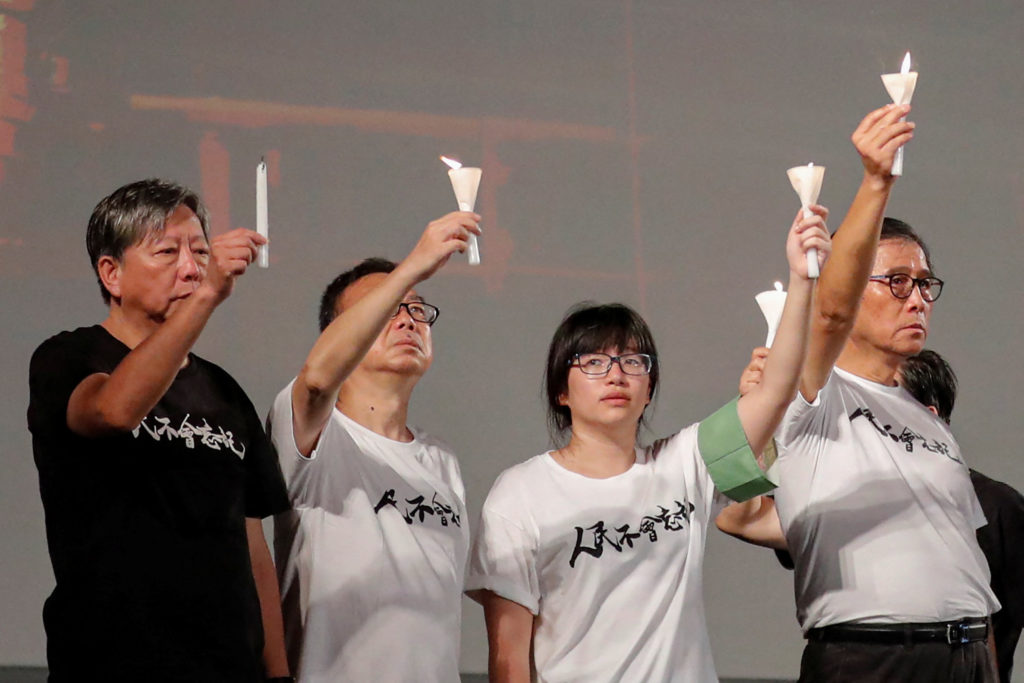
A Hong Kong court convicted two former organizers of the city’s annual Tiananmen Square vigils on Friday for inciting subversion. Lee Cheuk-yan and Chow Hang-tung, former leaders of the Hong Kong Alliance in Support of Patriotic Democratic Movements of China, were found guilty under a national security law imposed by China in 2020. The alliance itself was also convicted in the case.
The charges, initially brought in 2021, centered on the group's slogan to "end one-party dictatorship." Three government-approved judges ruled that this call aimed to overthrow the leadership of the Communist Party, which is defined as a primary feature of the Chinese constitution. The judges stated that the defendants continued this call after the security law was enacted, which they categorized as using "unlawful means" to undermine state power.
During the trial, Lee testified that the slogan was intended to promote a transition toward democracy rather than the overthrow of the party. The defense argued that their actions were peaceful and within the law. A third defendant, Albert Ho, previously pleaded guilty when the trial began in January. Lee and Chow are expected to plead for lesser sentences next week, with a final sentencing date yet to be determined.
The scale of the legal impact is reflected in the dismantling of Hong Kong's civil society institutions and the detention of high-profile figures like media tycoon Jimmy Lai. For residents of Hong Kong, the ruling signals a concrete shift in legal rights regarding political expression and assembly. Activities that were once protected under the "one country, two systems" framework, such as public commemorations and slogans critical of the central government, are now subject to criminal prosecution as threats to national security.
This case sets a precedent for how the Hong Kong judiciary interprets political slogans under the 2020 security law. Legal observers, including Eric Lai of the Georgetown Center for Asian Law, noted that the ruling implies that peaceful methods offer no legal protection if the underlying political objective is deemed unconstitutional by the state. While Hong Kong leader John Lee stated the verdict was necessary to address acts that endangers national security, international bodies including the U.S. State Department and the European Union described the convictions as a sign of deteriorating freedom of expression in the region. Sentencing hearings for the defendants are scheduled to begin next week.