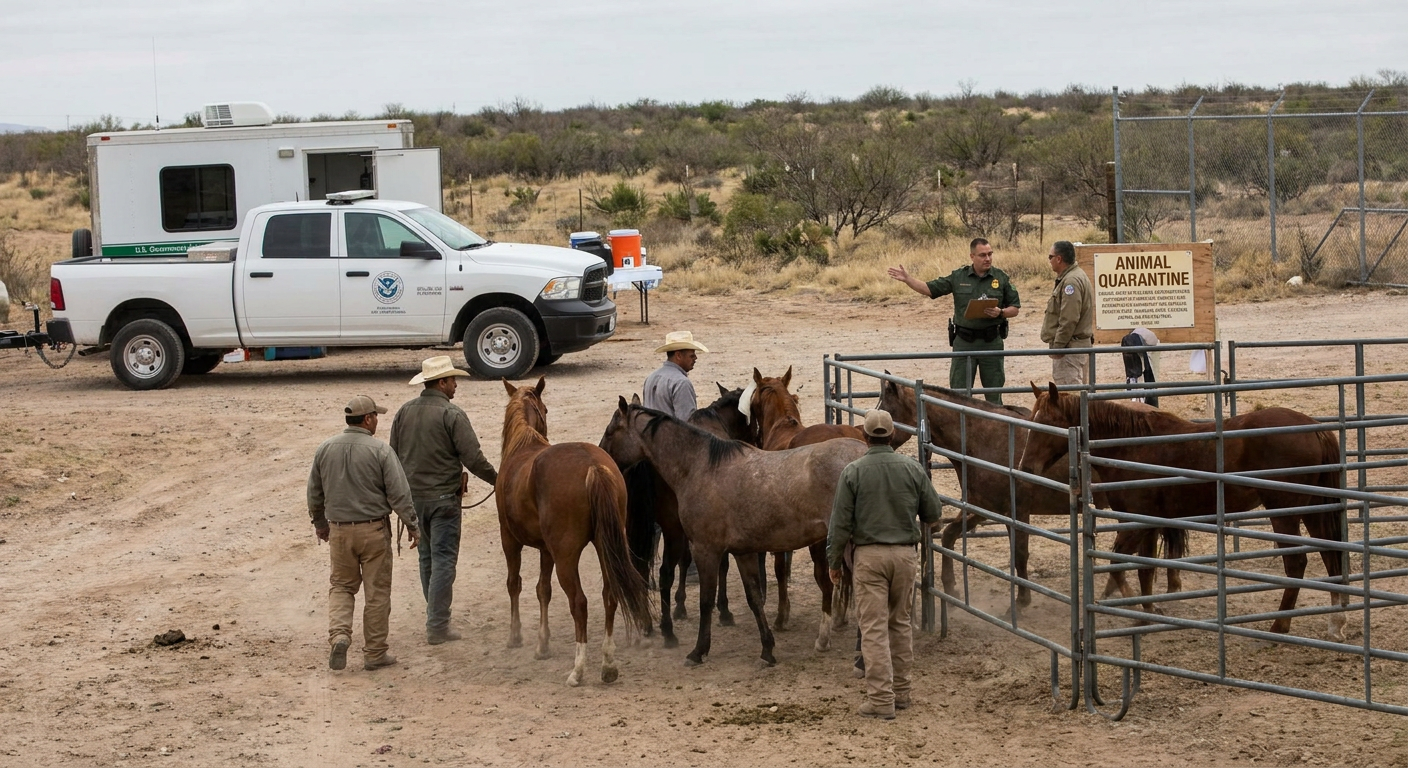
Law enforcement and agricultural officials have identified horse smuggling along the U.S.-Mexico border as a potential pathway for the New World screwworm, a flesh-eating parasite that has recently infested U.S. cattle. While authorities have not linked any of the 48 confirmed U.S. screwworm cases to smuggling, the illicit movement of animals bypasses mandatory veterinary inspections and quarantine measures designed to stop the parasite's spread.
The New World screwworm was declared eradicated in the United States in the 1960s. However, infestations began reappearing in U.S. cattle in June 2026. To mitigate the risk, the U.S. government maintained a ban on Mexican livestock imports for more than a year before the Trump administration partially reopened the border in August 2026.
Local law enforcement in Texas reports that criminal organizations, including the group La Linea, utilize the same remote routes for animal trafficking as they do for drugs and people. In Presidio County, deputies have intercepted over 50 smuggled horses in the past two years. These animals, which can fetch $30,000 on the black market, are often destined for racing, rodeos, or farm work in cities like Houston and Dallas. U.S. Department of Agriculture (USDA) Inspector General John Walk stated that animal trafficking has become a national security issue due to its potential as a disease vector.
Because smuggled animals do not undergo standard health certifications, they can introduce the parasite into domestic herds undetected. The ongoing response involves the USDA and state task forces like Operation Lone Star. The government is attempting to control the population using sterile fly releases and horseback inspectors, but the persistence of illicit trade through remote areas like Redford and Terrell County creates a gap in these defenses. Epidemiological investigations by the USDA are currently ongoing to determine exactly how the screwworm re-entered the country. Ranchers and law enforcement continue to monitor the border as infestations in Mexico exceed 2,000 equine cases.