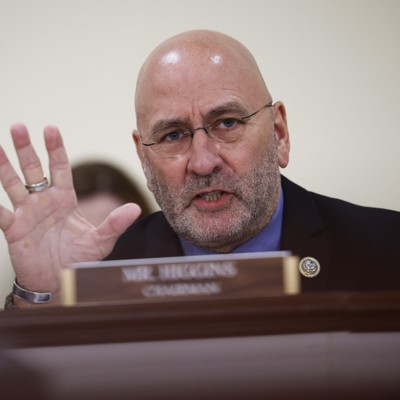
The House Oversight and Accountability Committee is scheduled to vote Wednesday on the Restoring Integrity and Efficiency to Inspector General Oversight Act (H.R. 9725). Introduced by Rep. Clay Higgins (R-LA), the legislation would abolish the Council of the Inspectors General on Integrity and Efficiency (CIGIE) one year after enactment. The bill proposes redistributing CIGIE's current responsibilities to other federal entities, including the Office of Management and Budget (OMB), the Government Accountability Office (GAO), and Federal Law Enforcement Training Centers.
Under the bill's provisions, OMB would assume responsibility for setting training standards, supervising interagency investigations, and resolving jurisdictional disputes. The GAO would be tasked with developing inspection standards for inspectors general (IGs), while training academies for IG employees would be maintained by Federal Law Enforcement Training Centers. Republican supporters of the bill cited a June GAO report which concluded that CIGIE's Integrity Committee frequently failed to follow internal protocols when investigating misconduct allegations within watchdog offices.
A Republican committee aide stated that the bill is necessary because CIGIE "cannot be trusted to investigate wrongdoing in their ranks." Conversely, the Project on Government Oversight (POGO) expressed concern in a letter to the committee, arguing that moving oversight functions to OMB—an executive branch office—creates a conflict of interest. POGO Interim Executive Director Isabel Munilla stated that the change could allow OMB to influence the workforce and priorities of the very offices tasked with investigating executive branch actions.
The legislation follows previous friction between the executive branch and CIGIE. Last year, OMB briefly withheld funding from the council before reversing the decision. CIGIE is currently led by Cheryl Mason, the Inspector General for the Department of Veterans Affairs, who previously served as a senior advisor in the administration. While some groups have questioned the independence of the current leadership, proponents of the bill maintain that structural changes are required to address procedural flaws identified in the GAO's audit.