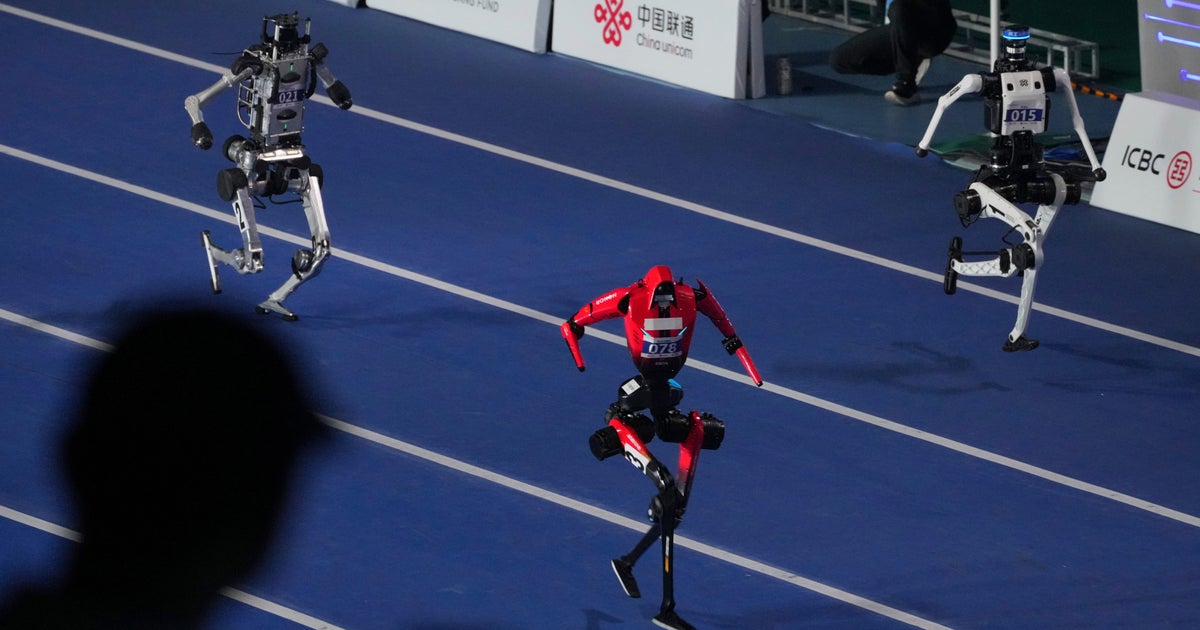
A humanoid robot manufactured by the Beijing-based company X-Humanoid completed a 100-meter sprint in 9.39 seconds on Saturday at the World Humanoid Robot Games in Beijing. This time was faster than the human world record of 9.58 seconds established by Usain Bolt in 2009. Organizers of the event, which is in its second year, stated that the competition is designed to showcase developments in advanced robotics through various sporting events.
The 100-meter dash concluded with the participating robots running into a cushion and falling to the ground to stop, according to video footage of the event. A second robot produced by X-Humanoid also surpassed a standing high jump record, reaching 2.88 meters. This exceeded the human record of 2.45 meters set by Javier Sotomayor in 1993. While these records were established, other robots in the competition experienced mechanical failures, including tripping, falling, breaking, or catching fire.
The World Humanoid Robot Games featured more than 2,000 humanoid robots participating in sports such as soccer and table tennis. The opening ceremony on Saturday included hundreds of robots performing synchronized marching. Chinese manufacturers involved in the event reported that they have received thousands of orders for these machines from both government entities and private businesses.
For businesses and consumers, these developments highlight a growing gap between demonstration capabilities and daily use. While Chinese manufacturers report high order volumes, industry experts noted that the technology is currently used primarily for performances and demonstrations. For the general public, this means that while a robot can now move faster than the fastest human, the transition to mass real-world deployment in workplaces or homes is not yet immediate and will take more time to achieve.
The ongoing competition between international robotics firms also sets a precedent for how global standards for automated machinery are developed. The ban on Chinese-made robots by the FCC means that U.S.-based small businesses or research institutions seeking to utilize these specific high-performance models will be unable to import new units. Beijing has denied the allegations regarding military ties, but the trade restrictions remain in place. Further developments in the field will depend on whether these machines can move beyond controlled sports environments into functional roles, though no specific date for mass deployment was reported.