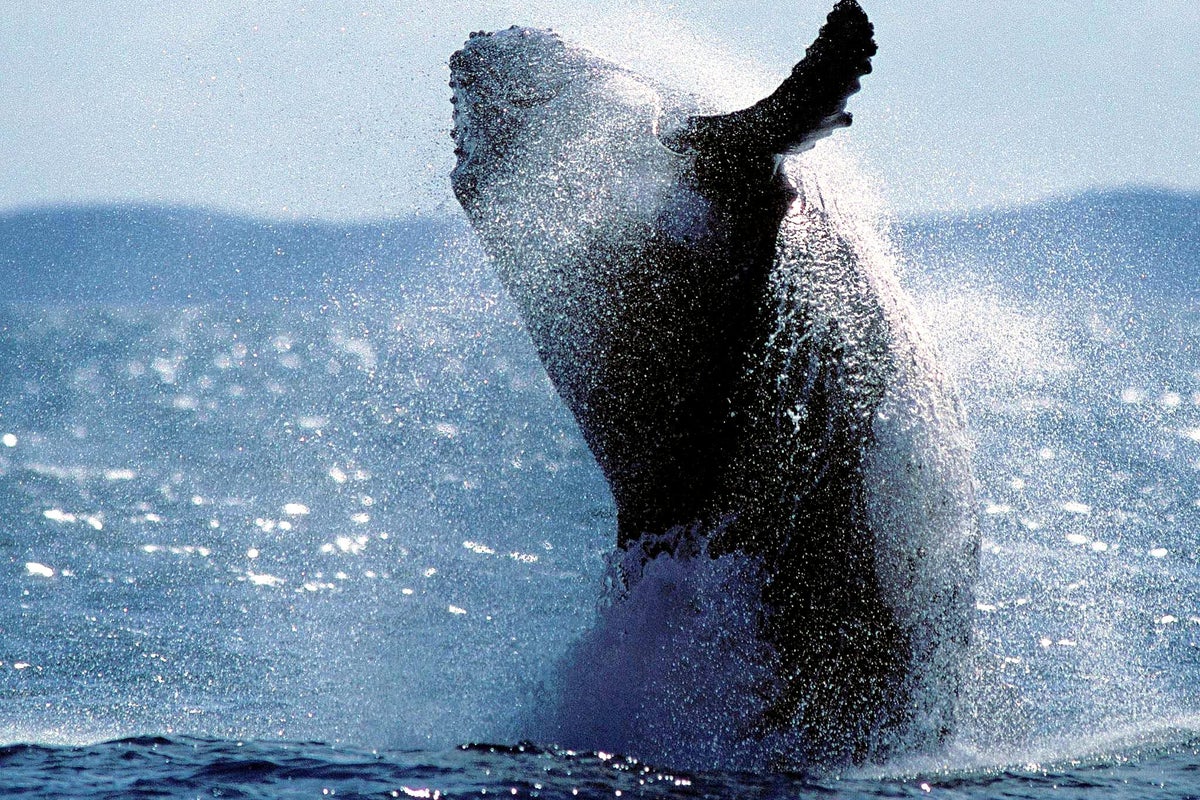
A humpback whale was sighted traveling up the Sacramento River in California this week, reaching a point approximately 60 miles inland from the Pacific Ocean. The Marine Mammal Center confirmed that the adult whale entered San Francisco Bay earlier in the week and moved east into the Sacramento-San Joaquin Delta, the largest river delta in the state. The animal was recorded on video by Denny Glover, who was fishing for salmon and striped bass on Wednesday, September 16, 2026.
According to the Marine Mammal Center, researchers have identified this specific individual 15 times over the last 24 years through a photo identification catalog. The animal's most recent documented sighting prior to this week occurred in February 2026 in Baja California. While the sex of the whale has not been established, observers noted the animal appeared to be moving at a steady pace and did not exhibit erratic behavior despite being in a freshwater environment.
The Marine Mammal Center stated its cetacean team is preparing to evaluate and monitor the whale's condition. Kathi George, the center’s director of cetacean conservation biology, advised the public to maintain a respectful distance and refrain from attempting to interact with the whale or alter its course. Neither the National Oceanic and Atmospheric Administration (NOAA) nor the California Department of Fish and Wildlife have issued comments on the sighting.
The scale of this event involves a single adult whale navigating a complex freshwater system roughly 60 miles from its natural saltwater habitat. Historically, such inland journeys are rare but documented; a whale named Humphrey stayed in the Rio Vista area for several weeks in 1985, and a mother-calf pair remained in the delta for nearly three weeks in 2007. A successful outcome for the whale depends on its ability to navigate back to the Pacific Ocean, a process that in previous cases has taken weeks and required monitoring by state and federal wildlife agencies.
For the scientific community, this sighting provides data on the movement patterns and health of a known individual within the humpback population. The knock-on effects include potential temporary changes to river traffic or fishing activity if the whale remains in narrow channels for an extended period. What happens next depends on the whale's movements; the Marine Mammal Center will continue monitoring the animal to determine if it requires intervention or if it will return to the ocean independently as others have done in the past. No specific deadline or departure date can be predicted.