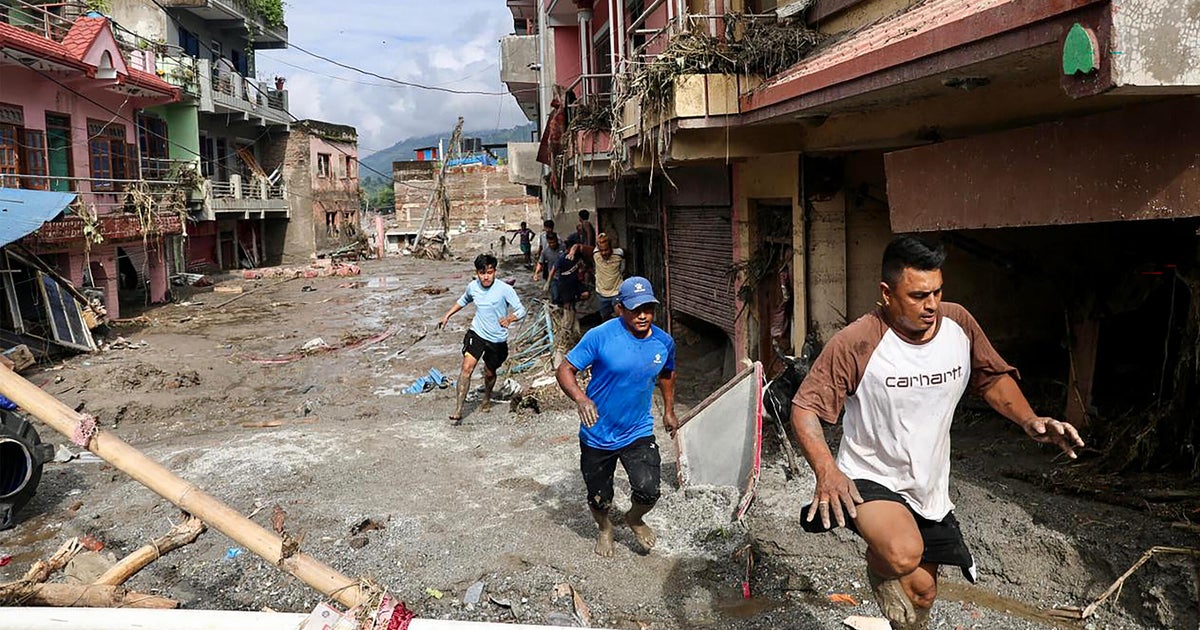
Rescue teams in Nepal and Tibet are searching for hundreds of people reported missing following flash floods and mudflows caused by a glacial collapse. The Nepal Police reported Thursday that the death toll has reached 270, while the Nepal Tourism Board stated that 644 people remain missing in the country, including 65 U.S. nationals. In neighboring Tibet, Chinese state media reported 558 people missing and at least three deaths.
The disaster began Wednesday when a glacial collapse in the Himalayas triggered a sudden surge of water and debris. While the U.S. Geological Survey (USGS) initially reported a magnitude 4.4 earthquake, it later clarified that the seismic activity was actually a magnitude 5.2 event caused by the glacial collapse itself. Climate experts at the International Centre for Integrated Mountain Development noted that the Trishuli River rose 27 feet in just 30 minutes, giving residents little time to evacuate.
In Nepal, the army and private companies have deployed helicopters to conduct rescue operations in the hard-hit Nuwakot and Rasuwa districts. The Nepalese army reported rescuing over 100 people on Thursday, including foreign nationals airlifted to Kathmandu. In Tibet, mudslides near Gyirong Port have left debris up to 6 feet deep, damaging roads and cutting off communications. The U.S. State Department has announced a $500,000 grant to Catholic Relief Services and is sending an adviser to the region to assist with response efforts.
On a local scale, the flooding has caused significant economic and physical damage to communities in the Nuwakot and Rasuwa districts. Residents will face the immediate loss of housing, roads, and bridges, as drone footage showed buildings buried in mud "the color of wet cement." The Trishuli hydropower project was also affected, with workers trapped inside facilities during the surge. These disruptions to power and transportation corridors—which serve as economic lifelines for the region—will likely affect the delivery of food and medical supplies to remote mountain villages for weeks or months.
The event sets a concerning precedent for the region, as researchers in Kathmandu found that glacial melting rates in the Hindu Kush Himalaya have doubled since 2000. This is the second time in 14 months that the Lhende Khola river system has flooded due to glacial instability. As search efforts continue, authorities warned that light rain in Tibet could trigger secondary landslides. The U.S. State Department and international aid groups are currently monitoring the situation to determine if further humanitarian assistance is required as the full scale of the damage becomes clearer.