The Plain Record

Neutral daily news — clear headlines, complete facts.

National

Hungary Announces New Water Management Strategy Amid Record Drought

Prime Minister Péter Magyar announced a shift to water retention policies as record-low river levels and 80% wetland loss exacerbate drought conditions.

Published August 21, 2026 at 3:16 AM EDT

The short answer

Prime Minister Péter Magyar announced a shift to water retention policies as record-low river levels and 80% wetland loss exacerbate drought conditions. Hungarian Prime Minister Péter Magyar announced in late June that the government will launch a comprehensive water conservation program to address severe drought conditions.

Hungary Announces New Water Management Strategy Amid Record Drought

The Facts

Who
Prime Minister Péter Magyar, biodiversity specialist Zsuzsanna Ujj, and local residents.
What
Hungary announced a transition from land drainage to water retention management to combat severe drought affecting 99% of its land.
When
Late June through August 2026
Where
Hungary, including Lake Velence, the Danube River, and Lake Garancsi.
Why
Severe drought has caused record-low water levels, threatening the Paks nuclear plant, destroying crop yields, and causing $54.4 million in annual water utility losses due to leaks.

Timeline of what happened

Key dates and decisions, in the order they occurred.

  1. 2001

    Lake Garancsi featured in Hungarian comedy film

  2. 2023

    Nature study estimates 80% historical wetland loss in Hungary

  3. June 21, 2026

    PM Magyar announces water management policy overhaul

  4. August 5, 2026

    Danube River water levels recorded at low levels in Budapest

  5. August 8, 2026

    Lake Garancsi bed reported as largely exposed and dry

  6. August 18, 2026

    Sandbanks exposed by low water levels near Nagymaros

  7. August 21, 2026

    Record-low water levels reported at Lake Velence and Danube

Hungarian Prime Minister Péter Magyar announced in late June that the government will launch a comprehensive water conservation program to address severe drought conditions. The policy shift aims to move from a drainage-based system to one focused on water retention as record-low water levels affect the country’s lakes, rivers, and infrastructure.

Environmental experts point to a long-standing practice of channelling water away from the landscape to support agriculture. A 2023 study in the journal Nature estimated that Hungary has lost more than 80% of its historical wetlands. The country maintains a network of over 40,000 kilometers of drainage canals, which experts say has contributed to a drop in the water table and the drying of topsoil.

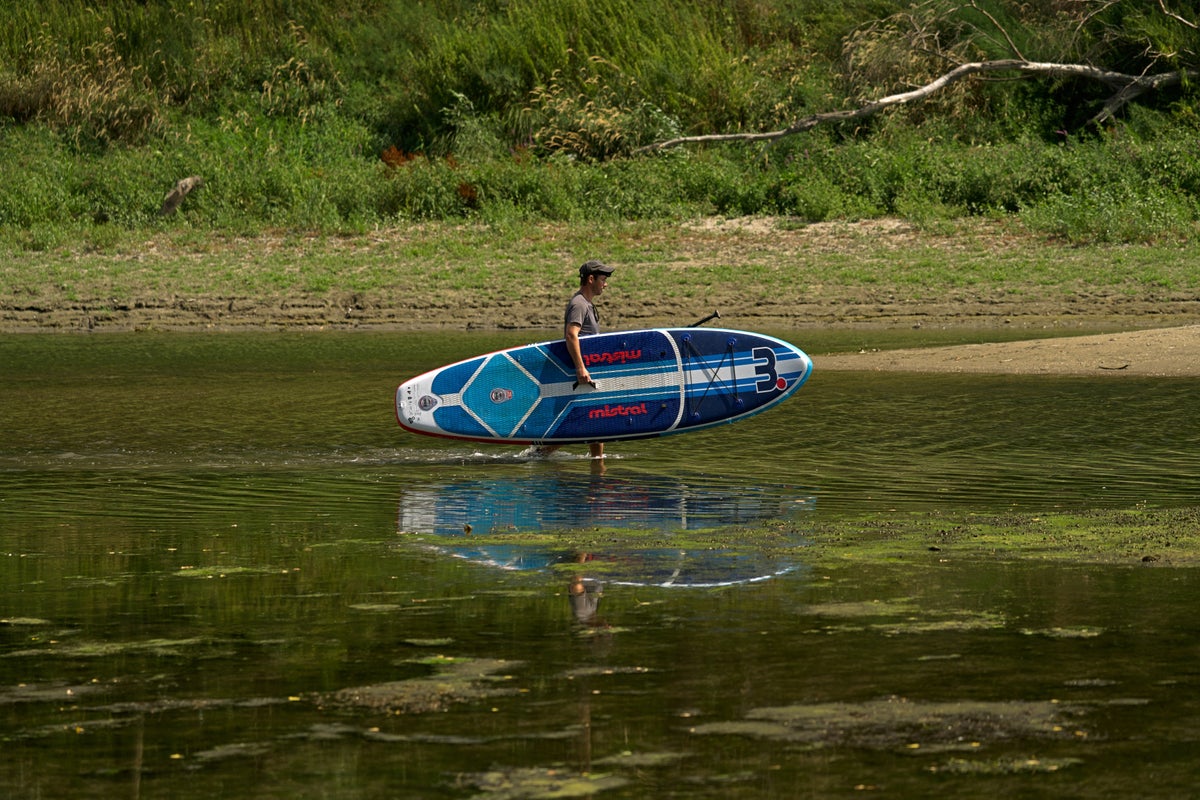
Currently, 99% of Hungary’s lands are experiencing severe or extreme drought, according to the national meteorological service. Lake Velence, the nation's third-largest lake, reached a depth of 20 centimeters in August, significantly below the 150 centimeters considered optimal. Similarly, Lake Garancsi has almost entirely dried out, resulting in the loss of all fish and the closure of recreational activities.

The scale of the crisis involves billions in financial losses and critical infrastructure risks. Prime Minister Magyar reported that aging utility pipes leak 20% to 25% of the country’s drinking water, costing approximately 17 billion forints ($54.4 million) every year. On the Danube River, water levels have reached record lows, threatening the operation of the Paks nuclear power plant. The plant, which has operated for 44 years, relies on river water for cooling. To prevent a shutdown, the government has resorted to emergency measures, including sinking two 80-meter barges and installing a riverbed sill to redirect water flow toward the plant’s pumps.

For the average citizen, these conditions translate to higher risks of water rationing and potential threats to the stability of the power grid during extreme heat. While the government has pledged to prioritize water retention, biodiversity specialists like Zsuzsanna Ujj note that restoring wetlands will be a time-consuming and costly process. The next steps involve the implementation of the government's water management program, though specific deadlines for infrastructure repairs and wetland restoration have not been reported. Officials expect water levels to continue fluctuating as precipitation patterns become more extreme.

Summaries are written by The Plain Record to state the facts of a story plainly and without political slant. See our editorial standards, or report a correction.

← Back to the front page

Questions readers ask

What happened: Hungary Announces New Water Management Strategy Amid Record Drought?

Hungary announced a transition from land drainage to water retention management to combat severe drought affecting 99% of its land.

Who is involved?

Prime Minister Péter Magyar, biodiversity specialist Zsuzsanna Ujj, and local residents.

When did this happen?

Late June through August 2026

Where did this happen?

Hungary, including Lake Velence, the Danube River, and Lake Garancsi.

Why does this matter?

Severe drought has caused record-low water levels, threatening the Paks nuclear plant, destroying crop yields, and causing $54.4 million in annual water utility losses due to leaks.