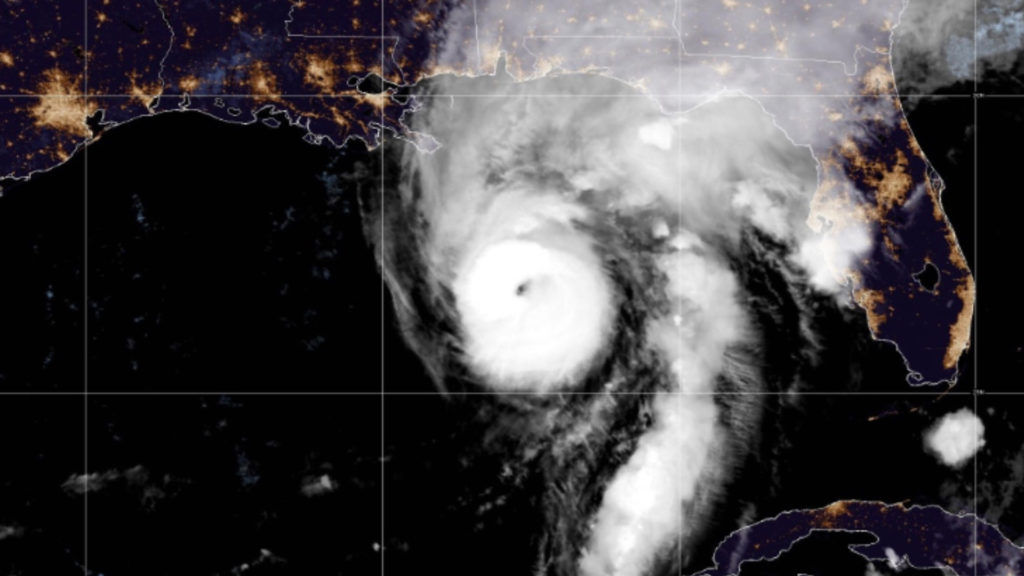
Hurricane Isaias made landfall near Destin, Florida, at 9:30 p.m. ET on Friday, October 9, 2026, as a Category 2 storm. The National Hurricane Center reported the storm had sustained winds of 105 mph and a minimum central pressure of 971 mb at the time of landfall. Earlier on Friday, the storm had reached Category 3 status with sustained winds of 120 mph before weakening slightly as it approached the coast.
The storm's arrival followed days of preparation across the Gulf Coast. Florida Governor Ron DeSantis, Alabama Governor Kay Ivey, and Georgia Governor Brian Kemp each declared states of emergency as the storm developed. Forecasters at the National Hurricane Center noted that while the storm experienced vertical shear—an atmospheric condition that typically inhibits strengthening—it maintained its intensity and increased its forward speed to 17 mph on Friday.
Impacts were reported across the region prior to landfall. In Pensacola, Florida, officials recorded wind gusts of 102 mph at City Hall. A flash flood emergency was issued for Fort Walton Beach and Destin, while water levels in Panama City Beach reached 5.4 feet above average high tide. Mandatory evacuation orders were issued for parts of Walton, Okaloosa, and Escambia counties in Florida, as well as Orange Beach in Alabama. Non-residents and those in flood-prone areas of Gulf Shores, Alabama, were also urged to evacuate.
The scale of the storm's impact extends beyond the immediate coastline due to its increased forward speed. Michael Brennan, director of the National Hurricane Center, stated that the storm's momentum would carry hurricane-force winds and the potential for significant power loss deep inland into Alabama, Georgia, and eastern Mississippi. The Storm Prediction Center also issued tornado watches for the Florida Panhandle, southern Georgia, and southeast Alabama.
Looking ahead, the remnants of Isaias are forecast to spread rain across more than 15 states in the eastern U.S. through the weekend of October 10-11. Emergency officials have transitioned to response mode, advising residents who did not evacuate to remain indoors and \"hunker down\" as conditions deteriorate. Recovery efforts and damage assessments in the Florida Panhandle are expected to begin once weather conditions permit safe travel for emergency crews.