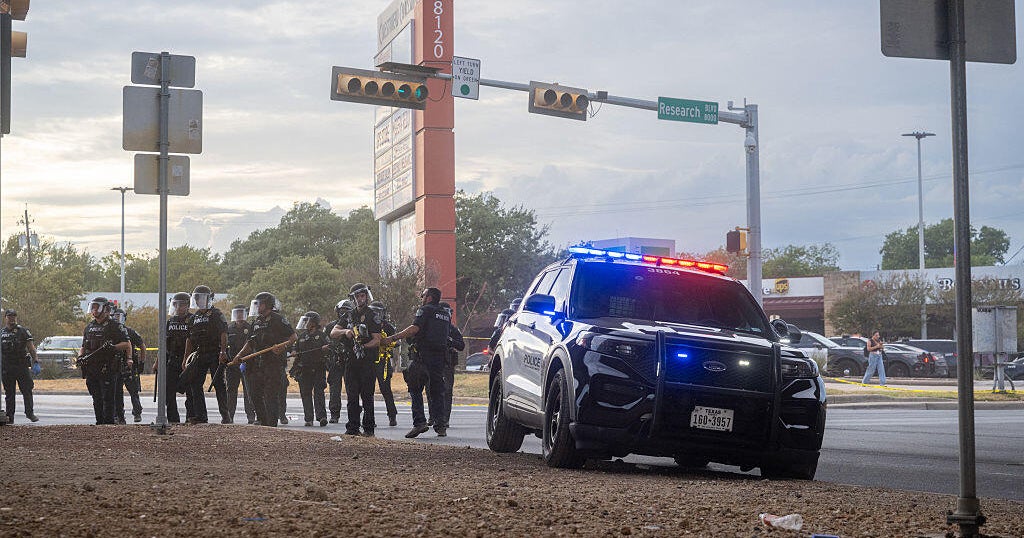
An Immigration and Customs Enforcement (ICE) officer was not wearing a body camera when he shot a 28-year-old Venezuelan man in Austin, Texas, on Sunday, September 20, 2026. Department of Homeland Security (DHS) officials stated the officer had been issued a camera but was not wearing it, while a second officer in the same vehicle was wearing one. The second officer's camera captured partial footage but did not record the moment of the shooting.
The shooting occurred while the man, identified as Wilber Rafael Garces Perez, was working as a DoorDash delivery driver. Federal officials stated Garces Perez is in the U.S. illegally and has a final deportation order. The officer who fired the shot joined ICE last year after previously serving with U.S. Customs and Border Protection. Following the incident, the Austin Police Department released dash cam and body camera footage from local officers who arrived later, though Austin officials confirmed no local police were involved in the shooting itself.
Garces Perez was hospitalized with a gunshot wound to the upper torso and subsequently taken into federal custody at the South Texas ICE Processing Center in Pearsall. His attorney, Kate Lincoln-Goldfinch, stated on Tuesday, September 22, 2026, that the bullet remains lodged in his back and that he has a fractured clavicle. According to Rep. Joaquin Castro (D-TX), Garces Perez was briefly returned to a hospital on Monday, September 21, 2026, after losing feeling on his left side, before being moved back to the detention facility.
For the person involved, the concrete change is a shift from hospitalization to federal detention while managing a gunshot injury. His attorney reports he is currently receiving Tylenol and ibuprofen for pain and is being held in an isolated room with a non-adjustable bed. The case sets a precedent regarding the transparency of federal immigration enforcement actions in major cities. A lack of primary footage can complicate investigations into whether use-of-force protocols were followed during field operations.
The knock-on effects include increased scrutiny of DHS body camera policies and ongoing protests in Austin regarding federal immigration enforcement. Legal proceedings have already impacted federal policy in this specific case, as a U.S. District Court judge issued an order on Monday, September 21, 2026, that effectively blocks Garces Perez's deportation for at least nine days. The next step is a scheduled in-person habeas corpus hearing before Judge Orlando Garcia on Wednesday, September 30, 2026, to determine the legality of his continued detention.