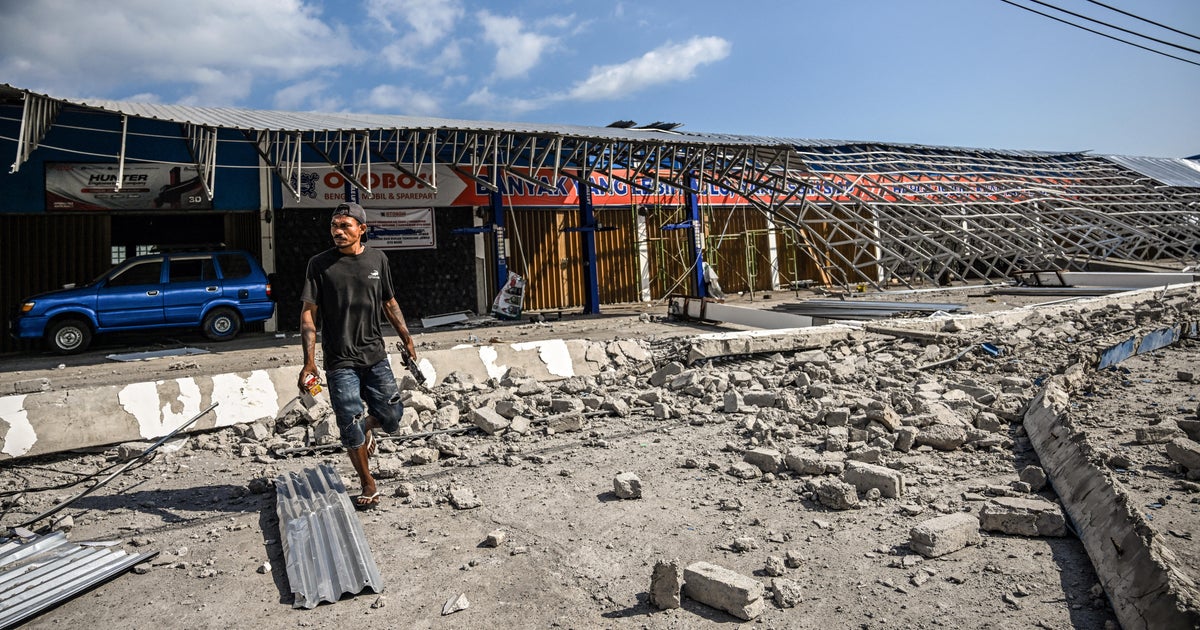
A magnitude 7.7 earthquake in Indonesia’s East Nusa Tenggara province has resulted in at least 68 deaths and left thousands of residents waiting for emergency assistance. The earthquake struck on a Saturday morning, followed by more than 1,500 aftershocks through Monday, as the nation observed its 81st Independence Day.
The earthquake occurred at a depth of 10 kilometers (6 miles) shortly before 6 a.m. Saturday, according to the U.S. Geological Survey. While initial tsunami warnings were lifted, the seismic activity caused widespread destruction across Flores island, including landslides and road blockages. East Nusa Tenggara's governor declared a 14-day state of emergency on Sunday.
According to the National Disaster Management Agency (BNPB), the quake injured 213 people and damaged more than 1,300 homes across the province. On Flores island alone, nearly 250 homes were destroyed, forcing approximately 5,000 people into temporary shelters. In response, authorities deployed 1,500 military and police personnel and two emergency field hospitals in Ruteng to treat the injured.
Logistical challenges, including steep terrain and roads blocked by giant boulders, have slowed the delivery of 275 tons of aid. Abdul Muhari, deputy chief of the BNPB, stated that 10 aircraft are supporting the distribution of food, medicine, and water. Aid workers reached the isolated Palue Island late Sunday, where initial assessments confirmed one death and 150 destroyed homes.
The earthquake has disrupted critical infrastructure and local services, requiring the deployment of 1,500 military and police personnel to manage the crisis. The damage to local medical facilities necessitated the setup of two emergency field hospitals in Ruteng. The 14-day state of emergency declared by the governor signals a period of high-intensity government response, during which 275 tons of aid must be moved through areas where landslides and fallen trees have severed ground transportation links. The scale of this event evokes the region's history with seismic activity, such as the 1992 Flores quake that killed 2,500 people, highlighting the recurring vulnerability of the archipelago.
What happens next involves the continuation of search and rescue operations, though no residents have yet reported missing family members. The 14-day state of emergency will guide the immediate recovery efforts and the distribution of supplies to isolated areas like Palue Island. Long-term recovery will require the reconstruction of the 1,300 damaged homes and the restoration of road access currently blocked by boulders and debris. Authorities continue to monitor the 1,576 aftershocks recorded through Monday to determine when it is safe for residents to return to non-damaged structures.