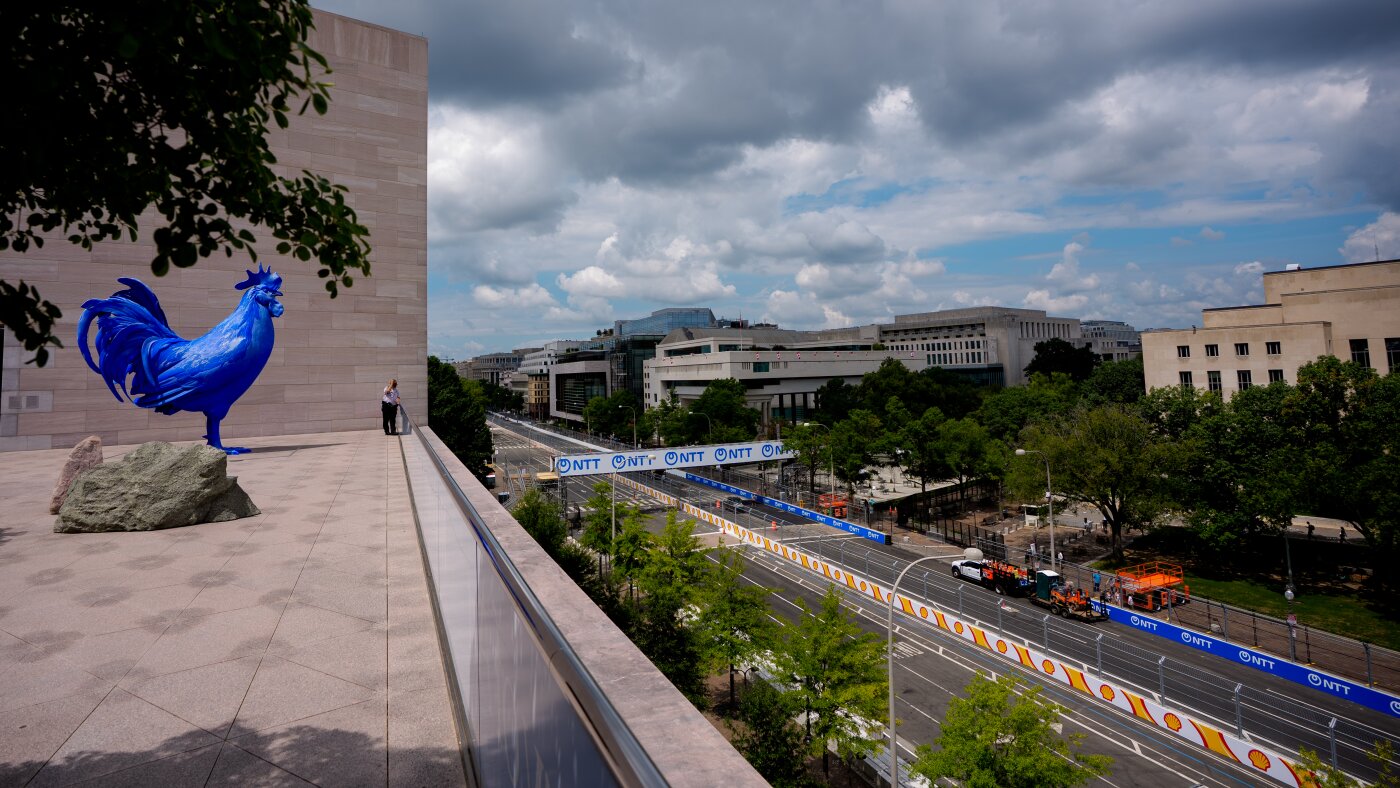
The Freedom 250 Grand Prix is scheduled to take place this weekend on Washington, D.C.’s National Mall, featuring more than two dozen IndyCar drivers. The 250-mile race, which commemorates the country’s 250th birthday, will follow a 1.7-mile track that passes the National Gallery of Art, the National Archives Building, and the Smithsonian’s National Air and Space and Hirshhorn Museums.
The event was authorized by President Trump via an executive order in late January after organizers were unable to secure congressional support for a course around the Capitol. IndyCar, owned by Penske Entertainment Corp., is managing the race, which was planned in seven months rather than the typical two-year window. The National Park Service issued the necessary permits for the competition, which includes practices and qualifiers leading up to the Sunday afternoon race.
Art historians and conservators have expressed concern that vibrations from cars traveling at speeds up to 180 mph could damage artifacts or historic structures. Mary Okin, assistant director at Living New Deal, requested that the National Park Service install vibration monitors, citing risks to the Wilbur J. Cohen Federal Building and its interior murals. The National Gallery of Art reported it conducted its own vibration study and has boarded up some outdoor sculptures and glass atrium skylights as a precaution.
Organizers and federal officials stated that they do not anticipate damage to the surrounding landmarks. Bud Denker, chair of the Freedom 250 Grand Prix, noted that IndyCars weigh 1,750 pounds—less than many passenger buses—and asserted that their decibel levels are lower than city sirens. IndyCar officials also cited successful past races held near sensitive sites, such as the Dali Museum in Florida, which reported no security or structural issues during its history with the event.
The scale of the event involves more than 24 drivers completing 147 laps at speeds reaching 180 mph. For residents and visitors in the District, the race will cause a visible shift in the National Mall’s landscape, including the temporary welding shut of hundreds of manhole covers, the installation of safety fences, and the closure of several major roads. While Penske Corporation is covering most event costs, taxpayers in the District and at the federal level are funding the security operations for the duration of the weekend.
The race sets a precedent for using the National Mall, typically restricted to 25 mph speed limits, as a high-speed sports venue. The General Services Administration (GSA), which manages federal assets, stated it found no areas of concern but plans to conduct post-race assessments to check for building damage. The primary race is scheduled for Sunday afternoon, with museum conservators expected to monitor collections for any physical changes or structural issues immediately following the event's conclusion.