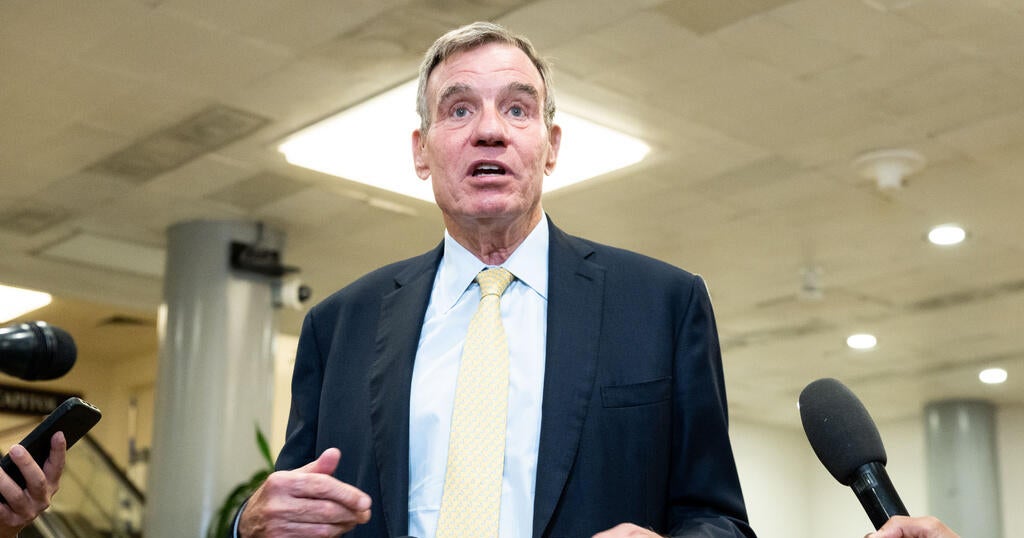
The top Democrats on the House and Senate intelligence committees stated they have prepared response strategies for the possibility that President Trump might use claims of foreign interference to challenge the results of the upcoming midterm elections. Sen. Mark Warner (D-VA) and Rep. Jim Himes (D-CT) reported that while they have seen no indication of foreign efforts to manipulate voting machinery or vote counts, they have "war-gamed" scenarios in which the administration might not accept the election outcomes.
The lawmakers said their concerns stem from past instances where the president and his allies raised claims regarding voter fraud and election interference. In July, Mr. Trump cited declassified intelligence regarding China's acquisition of U.S. voter data to suggest security risks. While the White House stated this included nonpublic data, the intelligence did not indicate that Beijing had altered any votes or final results.
To address their concerns, Warner and Himes requested that CIA Director John Ratcliffe and Director of National Intelligence (DNI) Jay Clayton be reachable by phone on Election Day. A spokesperson for the DNI stated that Clayton has been available to committee leadership "24/7 on any issue" since his confirmation in July. The lawmakers indicated they intend to use this direct access to verify the source and basis of any intelligence cited by the administration in real-time.
The scale of reported foreign activity involves influence operations from Russia, Iran, and China. Intelligence officials previously assessed that Russian operations favored Mr. Trump in 2024, while Iranian actors favored Kamala Harris and targeted the Trump campaign through cyber operations. Despite these influence efforts, which aim to sway voter opinion, intelligence agencies reported finding no indications that any foreign actor attempted to alter any technical aspect of the 2020 voting process, such as voter registration or vote-counting systems.
What happens next depends on the results of the November midterm elections, which will determine if Warner and Himes become chairmen of their respective committees. The House Intelligence Committee expects to receive a bipartisan briefing next week. However, the lawmakers noted that several legally required intelligence reports—due at the 120, 60, and 30-day marks before the election—remain outstanding. They attributed these delays to Clayton's predecessors at ODNI, Tulsi Gabbard and Bill Pulte, who held the role in an acting capacity, though they noted Clayton has made efforts to address these deficiencies since taking office.