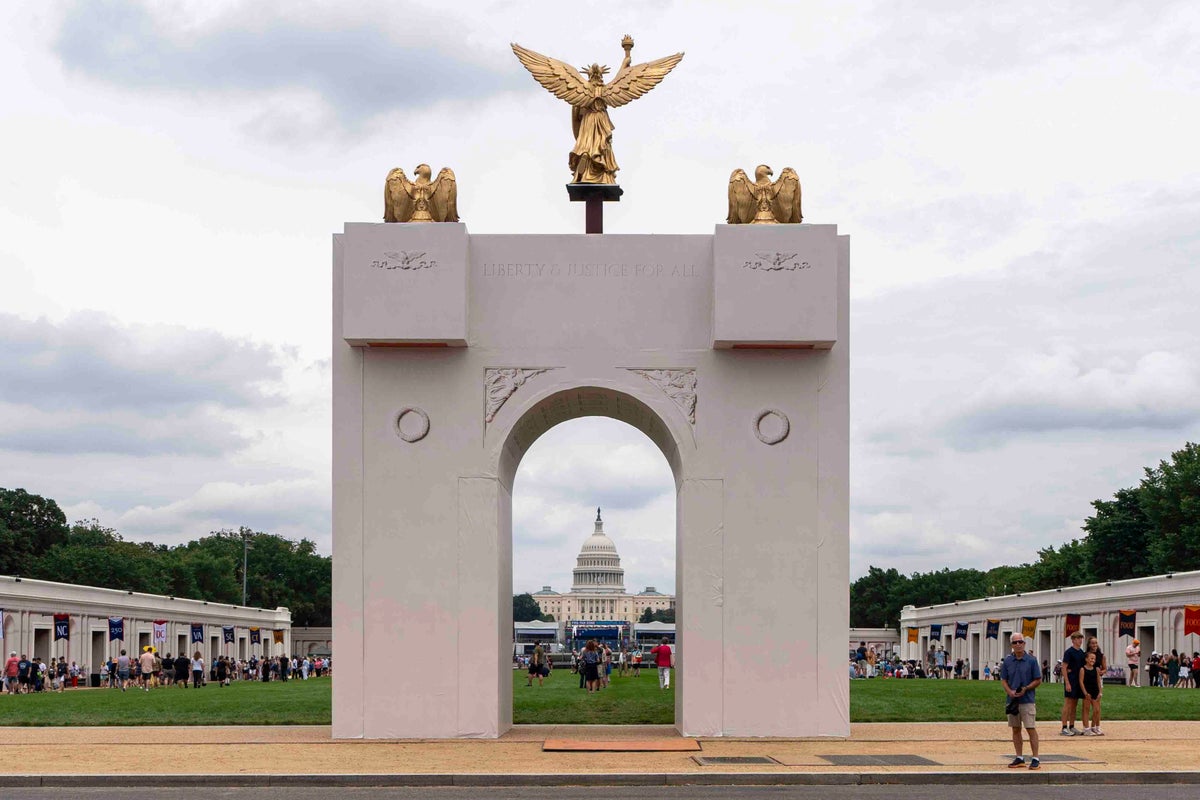
Newly released Interior Department records regarding a proposed Triumphal Arch in Washington, D.C., do not include details of a "military complex" previously described by President Donald Trump. While the planning materials omit these features, the agency stated on Monday, October 19, 2026, that the proposed 250-foot structure could still accommodate national security functions if needed.
The proposal for the monument is part of a series of initiatives by the president to alter the capital. Other projects mentioned in the report include a new White House ballroom, the renovation and renaming of the Kennedy Center, and the rebuilding of a golf course in East Potomac Park. The National Park Service, which operates under the Interior Department, cited the nation’s upcoming 250th anniversary as the reason for the monument's size in response to inquiries from the National Capital Planning Commission.
According to the documents, the arch would be located at a circle adjacent to the Memorial Bridge, linking Washington to northern Virginia. In September, President Trump stated on Truth Social that he intended for the monument to house ammunition, drones, and space for snipers. An Interior Department spokesperson said in an email that the current design remains capable of hosting those capabilities and more, despite their absence from the site maps and visual renderings.
The project affects residents and visitors of the capital region, specifically cyclists and runners who use the paths in East Potomac Park, as the golf course renovation could substantially limit public access to these areas. The Triumphal Arch itself is planned to reach 250 feet (76 meters) in height, a scale that critics said would sever the symbolic sightline between the Lincoln Memorial and Arlington National Cemetery. This vista was originally designed to represent the reunification of the United States following the Civil War.
The scale of the arch—cited by the National Park Service as a "celebratory contribution" for the semiquincentennial—would introduce a new vertical landmark to the Potomac riverfront. The potential inclusion of military hardware, such as drones and ammunition storage, would mark a shift in the primary function of national monuments from purely commemorative sites to active security installations, though specific operational details for these features are not listed in the current planning filings.
The proposal currently faces legal challenges, a status it shares with several other initiatives championed by the president. The next formal step in the process is a scheduled discussion of the planning materials on November 5, 2026, two days after the November 3 midterm elections. It has not been reported which specific courts are presiding over the legal challenges or what the projected total cost to taxpayers would be for the construction of the arch and its associated military capabilities.