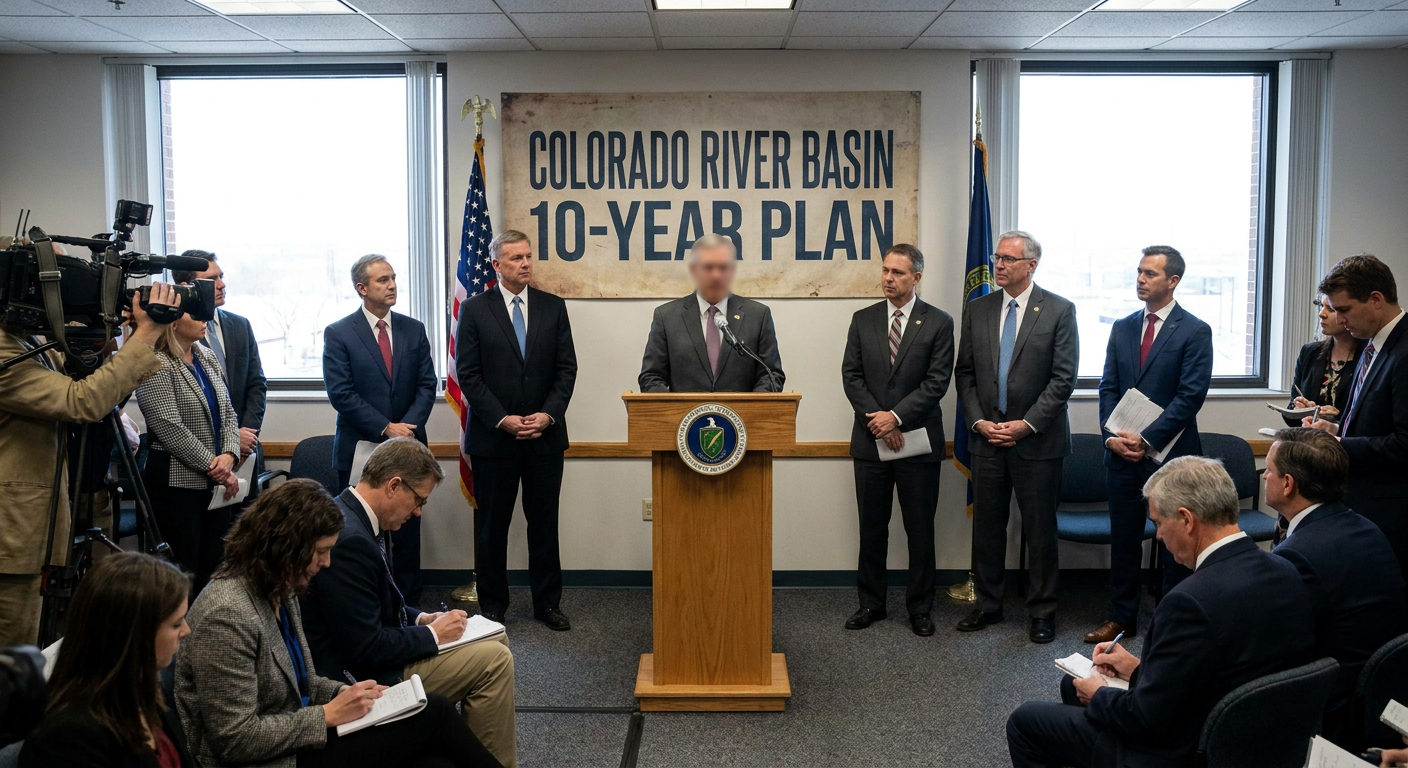
The U.S. Department of the Interior released a new federal management plan for the Colorado River on Friday, outlining potential water usage reductions for Arizona, California, and Nevada. The framework establishes a 10-year strategy to address declining water levels in the nation's largest reservoirs following two decades of drought and climate change. While the plan focuses on significant cuts for downstream states, it currently exempts Colorado, Utah, New Mexico, and Wyoming from mandatory reductions.
The proposal follows years of deadlocked negotiations between states that rely on the river, which serves more than 40 million people and dozens of tribal communities. The river has faced sustained high demand and shrinking supplies, prompting federal intervention to stabilize the system. The new framework requires policymakers to return to the negotiating table every two years to adjust water allocations based on actual river conditions.
Under the new guidelines, the federal government may reduce water deliveries to Arizona, California, and Nevada by up to 40%. The Interior Department is expected to announce the specific reduction amounts for the next two years within the coming days or weeks. While the three states have proposed their own plan to distribute the reductions, Arizona's U.S. senators stated the proposed cuts place an unequal burden on their state, and legal challenges from various stakeholders remain possible.
The scale of the impact includes thousands of farms and municipal communities that must now operate under a 10-year framework of uncertainty. While residents may not see their "taps go dry" immediately due to municipal storage and diverse sourcing, the cost of securing replacement water is expected to rise. The four upstream states—Colorado, Utah, Wyoming, and New Mexico—currently avoid mandatory cuts, but they remain legally bound to send specific volumes of water downstream, a requirement they argue is already difficult to meet due to naturally occurring shortages caused by the ongoing drought.
This federal action sets a precedent for iterative water management, forcing state and federal officials to renegotiate terms every two years rather than relying on long-term fixed allocations. This means that water rights and availability could fluctuate frequently through 2036 based on reservoir levels. The next immediate steps involve the Interior Department releasing the exact reduction numbers for the 2027-2028 period, followed by potential litigation as states like Arizona have already characterized the most severe cuts as unacceptable to their regional economies.