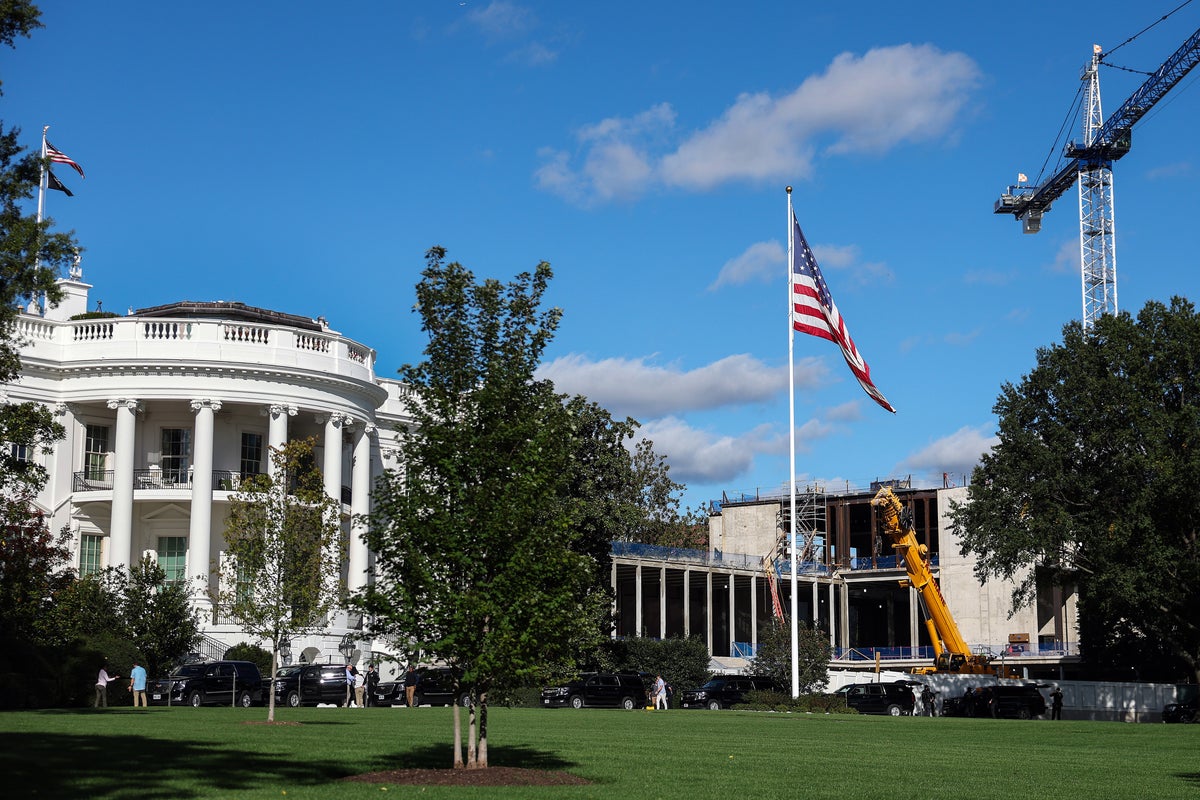
Internal campaign records obtained by the Washington Post have revealed the identities of major donors to a $333 million White House ballroom project. The documents list 67 individual commitments above $10,000 as of late last month, involving top corporations, political allies, and entities with business before the federal government. Despite the president's previous public statements that he was personally financing the project, the internal files do not record any financial contributions from Donald Trump.
The ballroom project, which involves an expansion of the East Wing, is expected to cost a total of $600 million. To fund the construction, the administration is using a combination of taxpayer money and private gifts. Private donations are collected through the Trust for the National Mall, a non-profit organization based in Washington, D.C., which then transfers the funds to a White House account. This structure has drawn criticism from ethics scholars and Democratic lawmakers who argue it avoids the mandatory public reporting required for standard political campaign donations.
According to the records, Nvidia, Apple, the Adelson family, and Dish Network chairman Charles Ergen each pledged $25 million, the highest amount for a single contribution. Other corporate donors committing $5 million or more include Amazon, Comcast, Microsoft, T-Mobile, and Caterpillar. Among political figures, Small Business Administration head Kelly Loeffler and her husband Jeff Sprecher pledged $5 million, while the son of Commerce Secretary Howard Lutnick donated more than $2.5 million in stock. At least $77 million of the total came from donors who requested anonymity.
The White House defended the funding model, with spokesman Davis Ingle stating that the contributors are "a wide array of great American companies and generous individuals" working to improve the "People’s House." Ingle argued that critics would complain if taxpayers were responsible for the full bill and said the administration would investigate the source of the leaked spreadsheet. The Trust for the National Mall stated that honoring requests for anonymous giving is a standard philanthropic practice.
The scale of the project is significant, with some individual companies and families pledging $25 million each. For perspective, the private funds detailed in the spreadsheet represent more than half of the total projected construction cost. The records suggest that major donors include tech leaders, telecommunications executives, and cryptocurrency investors. These groups are frequently subject to federal oversight, and the documents show that several large pledges occurred around the same time as favorable government actions, such as the awarding of a $5.6 billion U.S. Army contract to Salesforce or the approval of a mortgage lender acquisition for Rocket group.
While the donors and federal officials denied any connection between the gifts and government decisions, the public disclosure of these internal records provides a map of the private interests financing the executive mansion's expansion. The day-to-day impact for the average citizen involves how government decisions are perceived and how public infrastructure is funded. What happens next depends on the administration's response to the leak and whether the $600 million project can secure the remaining funding necessary to complete the East Wing renovations. No specific court dates or legislative votes regarding the funding structure were reported.