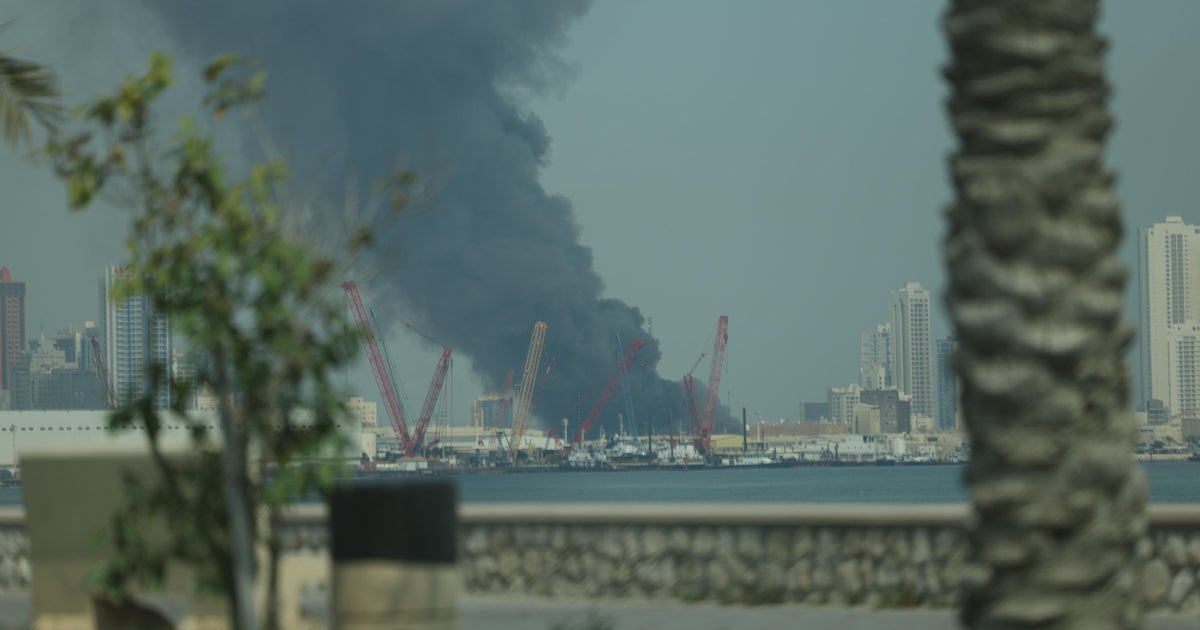
Iranian missile and drone strikes targeted the U.S. Navy's Middle East headquarters in Bahrain during the opening days of a war between the U.S. and Iran, causing damage and leading to the evacuation of approximately 1,450 service members and their families. The scale of the attacks reportedly took U.S. officials by surprise, as families had not been ordered to leave until after the conflict began. Acting Navy Secretary Hung Cao stated that the attacks \"blew the hell out of Bahrain,\" resulting in damage to a key radar system and logistics infrastructure.
The Navy’s 5th Fleet, which has operated from Naval Support Activity Bahrain since the 1990s, serves as a primary logistics hub for U.S. ships in the region. Vice Adm. Curt Renshaw, head of the 5th Fleet, acknowledged that the military is \"making it up as we go\" regarding the long-term displacement of personnel. While the U.S. military anticipated some retaliation and evacuated headquarters buildings on the base, many families were still living in off-base housing when the strikes occurred.
Families reported hearing explosions and seeing contrails of drones and missiles for several days. Although no military personnel were killed, the damage has forced the Navy to restructure its logistics. Aircraft carriers, including the USS Abraham Lincoln, have faced food shortages and were forced to use alternative resupply routes through Diego Garcia in the Indian Ocean. This change increased the logistics cycle from five to seven days to between 14 and 18 days. Admiral Daryl Caudle, the Navy's top officer, stated that there are no imminent plans to return to the previous footprint on the base.
The scale of the impact extends to the Navy’s operational capabilities in the Middle East. With the Bahrain base currently unavailable for aircraft carriers and supply ships due to the risk of attack, the Navy relies on two aircraft carriers to maintain a naval blockade. Mark Cancian, a military analyst, suggested the war may have changed how the U.S. operates Middle Eastern bases, noting that families are unlikely to return for a considerable time. The logistical strain is measured in a doubling of delivery times for essential supplies to sailors at sea, shifting from a one-week cycle to nearly three weeks.
What happens next: The State Department's 180-day ordered departure deadline was scheduled to end on Tuesday, August 25, 2026. Following this, the Navy plans for families to transition to more permanent designated residences to continue receiving housing and relocation entitlements. Families have until the end of November to complete this transition. The Navy is also working on a process for service members to retrieve household goods and vehicles left behind in Bahrain, as Admiral Caudle indicated the military will not be \"getting back in there anytime soon.\" The overall cost of damage to the base has not yet been publicly estimated by the Pentagon.