The Plain Record

Neutral daily news — clear headlines, complete facts.

Politics

Iran Dismisses U.S. Threats of Coordinated Economic Isolation

Iranian officials dismissed President Trump’s threat of a coordinated economic isolation operation, stating that previous sanctions have failed to achieve U.S. goals.

Published August 20, 2026 at 8:00 PM EDT

The short answer

Iranian officials dismissed President Trump’s threat of a coordinated economic isolation operation, stating that previous sanctions have failed to achieve U.S. goals. Iranian officials on Friday dismissed new threats from President Trump to increase economic pressure on the country, asserting that previous U.S. sanctions have not achieved their goals.

Iran Dismisses U.S. Threats of Coordinated Economic Isolation

The Facts

Who
President Trump, U.S. Treasury Secretary Scott Bessent, Iranian Parliament Speaker Mohammad Baqer Qalibaf, and Iranian Foreign Minister Abbas Araghchi.
What
Iranian officials responded to President Trump's announcement of a crushing economic operation, while the U.S. Treasury Secretary detailed plans for global isolation of the regime.
When
Friday, August 21, 2026
Where
Washington, D.C., and Iraq
Why
The U.S. is shifting toward a maximum economic pressure campaign following the expiration of a peace talk memorandum, potentially impacting any nation or business that maintains trade ties with Iran.

Timeline of what happened

Key dates and decisions, in the order they occurred.

  1. August 20, 2026

    Qalibaf speaks at commemoration in Iraq

  2. August 20, 2026

    Treasury Secretary Bessent discusses isolation strategy on CNBC

  3. August 21, 2026

    Iranian officials and Chinese spokesman respond to U.S. threats

  4. August 24, 2026

    Scheduled Treasury press conference on economic operation details

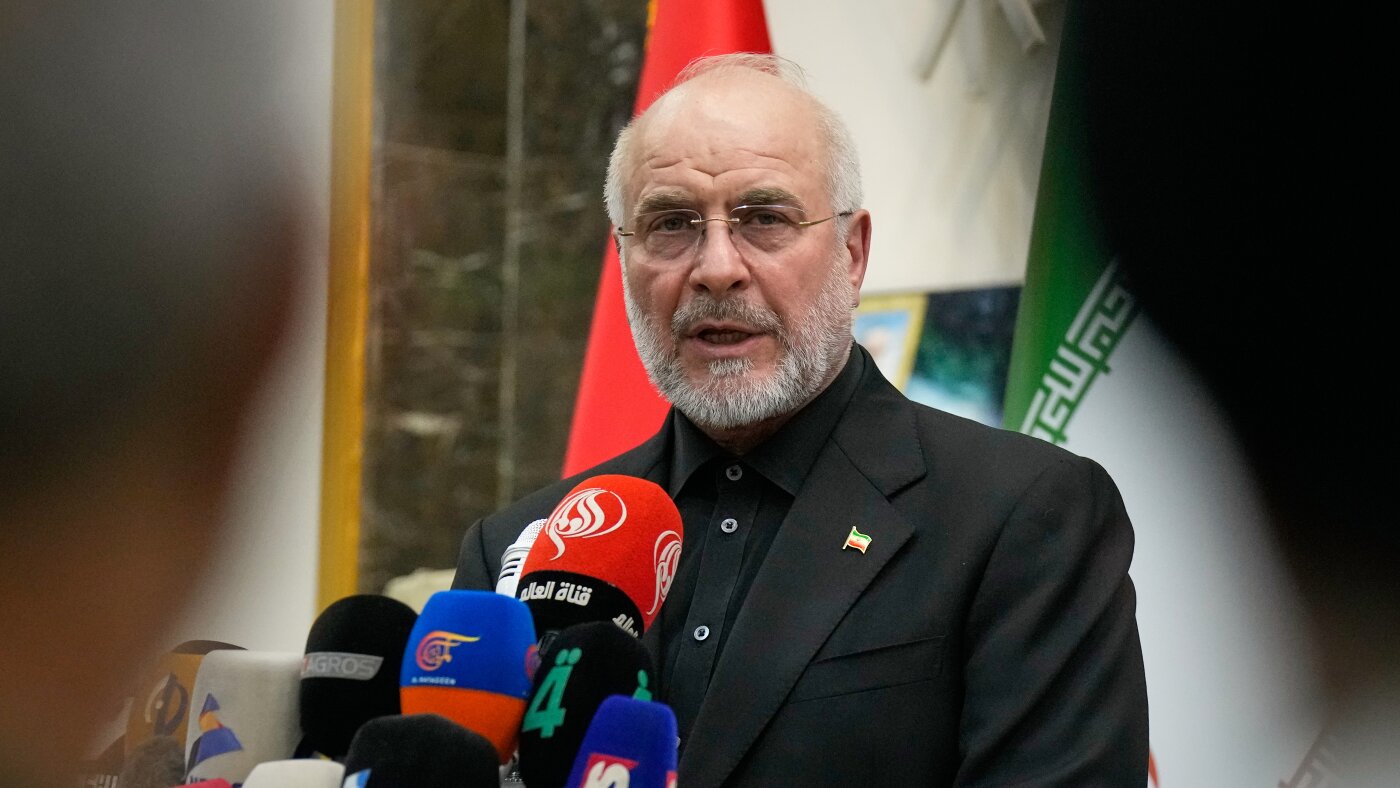
Iranian officials on Friday dismissed new threats from President Trump to increase economic pressure on the country, asserting that previous U.S. sanctions have not achieved their goals. Iranian Parliamentary Speaker Mohammad Baqer Qalibaf stated that the U.S. focus on what Trump called an "economic D-Day" indicates an inability to prevail through military means. These remarks were made during Qalibaf's visit to Iraq following a 40-day commemoration for the late Iranian Supreme Leader Ali Khamenei.

The escalation in rhetoric follows the expiration of a 60-day memorandum of understanding intended to negotiate an end to conflict, with diplomatic peace talks currently stalled. While a U.S. blockade remains in effect, Iran continues to restrict maritime traffic through the Strait of Hormuz, a critical global oil passage. Iranian Foreign Minister Abbas Araghchi characterized the U.S. policy shift as "economic terrorism" and argued that doubling down on these measures would increase anti-American sentiment.

U.S. Treasury Secretary Scott Bessent stated on Thursday that the administration intends to pursue the "greatest coordinated economic isolation in the history of the world" to collapse the Iranian government. The U.S. already maintains extensive sanctions and recently increased enforcement against entities purchasing Iranian oil. Bessent noted that China has been the largest consumer of Iranian oil, purchasing approximately 90 percent of it, though he declined to confirm if China itself would face specific new targets.

For the average Iranian citizen, the impact would be felt through the continued restriction of international trade and the potential for increased domestic economic strain. However, Sina Toossi of the Center for International Policy noted that Iranian leadership may be willing to bear high economic costs due to what they perceive as an existential threat. If secondary sanctions are applied to major trading partners like China, the scale of the impact could involve hundreds of billions of dollars in redirected or halted global trade, potentially affecting energy prices and supply chains for consumers worldwide.

The next steps involve a formal rollout of the specific mechanisms for this economic operation. Treasury Secretary Bessent is scheduled to hold a press conference on Monday, August 24, 2026, to provide details on how the administration plans to achieve its isolation goals. In response, a Chinese foreign ministry spokesman has already called for a return to negotiations, stating on Friday that pressure tactics and sanctions do not provide a solution to the ongoing regional tensions.

Summaries are written by The Plain Record to state the facts of a story plainly and without political slant. See our editorial standards, or report a correction.

← Back to the front page

Questions readers ask

What happened: Iran Dismisses U.S. Threats of Coordinated Economic Isolation?

Iranian officials responded to President Trump's announcement of a crushing economic operation, while the U.S. Treasury Secretary detailed plans for global isolation of the regime.

Who is involved?

President Trump, U.S. Treasury Secretary Scott Bessent, Iranian Parliament Speaker Mohammad Baqer Qalibaf, and Iranian Foreign Minister Abbas Araghchi.

When did this happen?

Friday, August 21, 2026

Where did this happen?

Washington, D.C., and Iraq

Why does this matter?

The U.S. is shifting toward a maximum economic pressure campaign following the expiration of a peace talk memorandum, potentially impacting any nation or business that maintains trade ties with Iran.