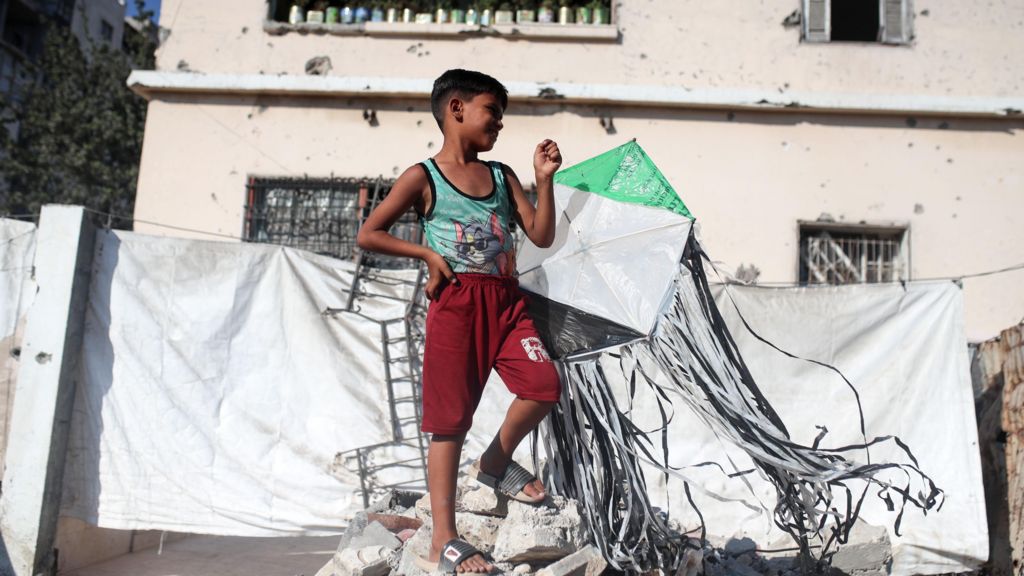
Israel's Defence Minister Israel Katz warned on Monday that the military would increase strikes on Gaza in response to the launching of kites, drones, and balloons from the territory. The warning follows reports from Israeli local media that several kites were discovered in border communities over the weekend. Katz stated that "forceful actions will be taken to put an end to this phenomenon," asserting that the military would maintain "zero tolerance" for such aerial objects regardless of whether they carry explosives.
The tension comes amid a ceasefire agreement reached last October. Prior to the current conflict, incendiary kites and balloons launched from Gaza had caused fires in Israeli forests and farmland. Hamas, the governing authority in Gaza, denied responsibility for the recent launches, stating the kites belonged to children in displacement camps. The group accused Israel of using the incidents as a "pretext" to justify continued military operations despite the standing ceasefire.
The Israeli military reported that four kites were found in Kibbutz Nahal Oz, located approximately 800 meters from the Gaza border, on Friday and Saturday, with others found elsewhere last week. While the military confirmed these specific kites carried no explosives or suspicious materials and posed no immediate threat, military sources cited by local media suggested Hamas may be using them to test Israel’s response. Meanwhile, Palestinian health officials reported two deaths and seven injuries from Israeli strikes in central Gaza on Sunday, including a four-year-old boy in al-Zawayda. The Israeli military stated those strikes targeted Ismail Abu Ful, a Hamas weapons manufacturing commander, and Mohammed Abu Asad, a member of the Nukhba forces.
The policy shift stated by Minister Katz—treating non-explosive kites and balloons with the same military weight as armed drones—changes the threshold for engagement along the border. This could lead to more frequent air strikes in densely populated areas of Gaza where displacement camps are located. Individuals living in these areas may see an increase in evacuation warnings and military activity in their immediate vicinity. The Israeli military maintains these actions are necessary to prevent the escalation of border threats, while Palestinian residents reported to Reuters that the ongoing strikes make the ceasefire feel non-existent.
The knock-on effects include potential strain on the durability of the October ceasefire agreement and the ongoing humanitarian situation in Gaza. With Palestinian media reporting strikes on displacement tents and residential buildings, the risk of civilian casualties remains a central point of contention between Israeli military objectives and Palestinian health officials. As of now, the Israeli government has not provided a specific date for when the promised "forceful actions" will conclude, but the military continues to conduct targeted strikes against individuals they identify as Hamas operatives. Future developments will likely depend on whether the kite launches persist and how the Israeli military carries out its "zero tolerance" policy in the coming days.