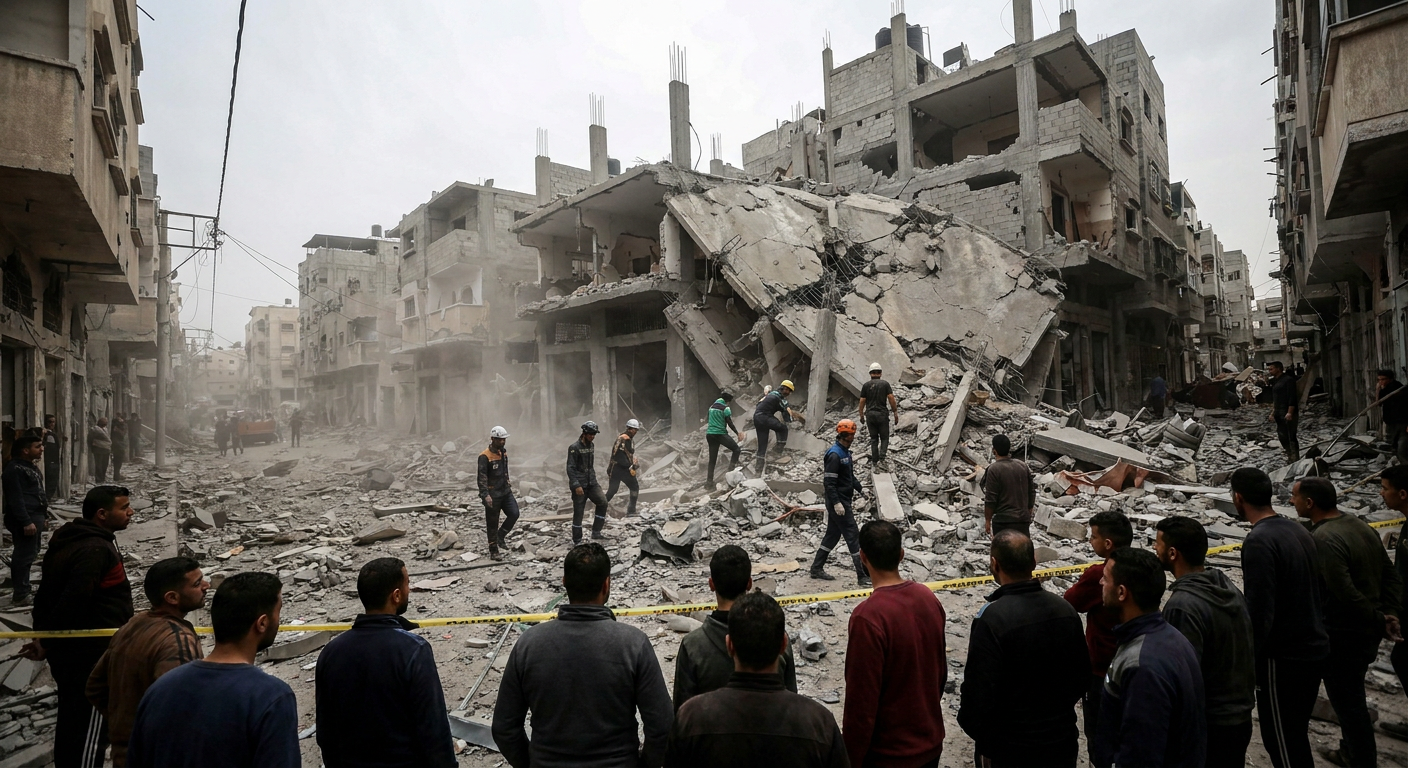
An Israeli airstrike killed at least two Palestinians in the Gaza Strip on Wednesday, September 23, 2026, according to local health officials. Medics reported that the strike hit a vehicle in western Khan Younis, located in the southern portion of the enclave, and left two other people wounded. A spokesperson for the Israeli military confirmed the strike, stating it targeted a militant and that further information would be released later. No Palestinian militant group has claimed the two deceased men as members.
These events occurred amid an ongoing conflict that escalated following an October 2023 attack by Hamas-led fighters, which killed approximately 1,200 people in southern Israel. A U.S.-brokered ceasefire was reached last year, but negotiators have not agreed on terms for Hamas to disarm or for Israel to withdraw its troops. While the ceasefire halted major fighting, Israeli airstrikes have continued. Palestinian authorities report that more than 73,000 people have been killed since the start of the conflict in 2023.
In separate incidents reported on Monday, August 24, 2026, health officials and relatives said a 10-year-old girl was killed by gunfire in Khan Younis and a four-year-old boy died in an airstrike at the Bureij refugee camp. The Israeli military stated it was not aware of the incident involving the girl and said other strikes targeted Hamas militants and weapons storage sites. Additionally, a six-story residential building, the Al-Saada building in southwest Gaza City, collapsed roughly a week prior to September 23, killing 21 people and injuring 45 others. Gaza officials estimate that 2,000 inhabited buildings across the territory are currently at risk of collapse due to prior damage.
The scale of the humanitarian situation is defined by the crowding of the population into approximately 70 square kilometers, which represents about 30% of the Gaza Strip's original territory not occupied by Israel. Residents living in the estimated 2,000 at-risk buildings face the potential loss of shelter as winter approaches, with Gaza’s Civil Defense warning that rainfall increases the likelihood of structural failure. Individuals like Bassam Naseer, a father of eight, report living in damaged storefronts and tents with no access to basic necessities like tarpaulins or caravans, while others note they are forced to stay awake to protect children from rodents and insects.
The lack of progress in ceasefire negotiations sets a precedent of prolonged instability for future regional policy and reconstruction efforts. While a U.S.-brokered plan calls for the eventual reconstruction of the territory, such efforts remain stalled due to disagreements over Hamas disarming and Israeli troop withdrawals. The next steps depend on diplomatic efforts at the United Nations and potential negotiations regarding the reopening of trade routes like the Strait of Hormuz. In the interim, Gaza's Civil Defense continues to urge residents to evacuate unstable homes, though residents frequently cite a lack of alternative housing as a barrier to compliance.