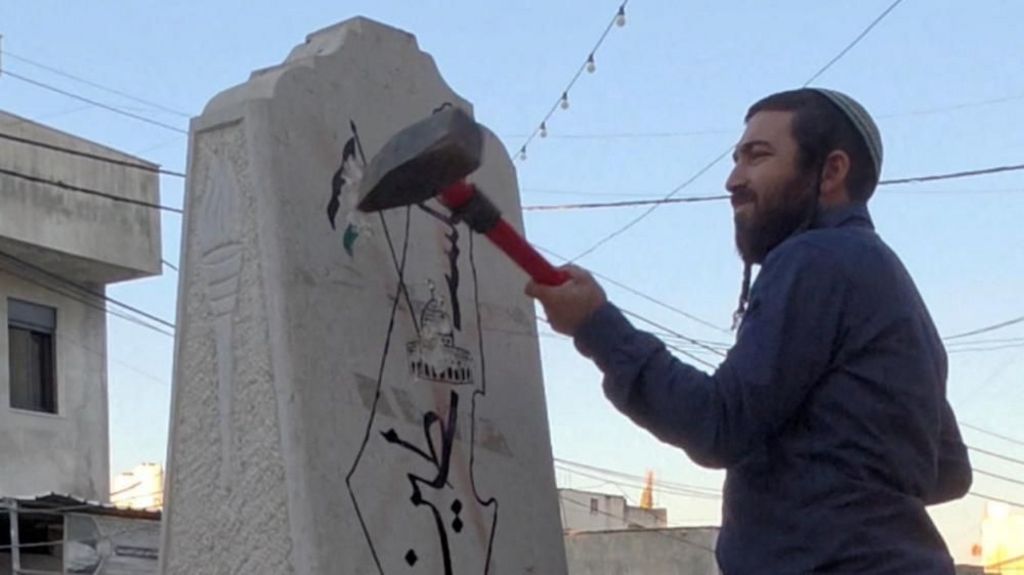
Zvi Sukkot, a member of the Israeli Knesset from the Religious Zionism party, used a sledgehammer to damage a Palestinian memorial in the West Bank village of Madama on Tuesday. Video footage shows Sukkot and several others striking the stone structure while under military escort. Sukkot stated during the act that monuments glorifying terrorism must be removed.
The memorial was erected in 2008 to honor Palestinians killed during the 1968 Battle of Karameh, as well as those killed during the first and second intifadas. Rami Nasar, head of the Madama village council, stated the monument was intended to honor all those killed in conflict with Israel regardless of their political affiliation. The village of Madama has reportedly been the target of multiple attacks by settlers in recent months.
The Israel Defense Forces (IDF) confirmed that soldiers were present to provide security for what was supposed to be an authorized tour of monuments. However, the IDF stated that Sukkot and his group acted deceptively and without authorization when they began damaging the structure. The military reported that soldiers eventually stopped the group and escorted them out of the village after notifying commanders.
The incident drew criticism from Prime Minister Benjamin Netanyahu’s office, which issued a statement describing the act of taking the law into one's own hands as a "reprehensible practice" that distracts the military from combating terrorism. Gadi Eisenkot, a political rival of Netanyahu, called the behavior a "disgrace" and criticized the Prime Minister for allowing such actions. Conversely, Finance Minister Bezalel Smotrich, leader of the Religious Zionism party, criticized the opposition for focusing on Sukkot rather than on terrorism.
Ordinary citizens in the West Bank may notice a change in local security dynamics, as the IDF acknowledged its soldiers were present during the damage but initially failed to prevent it. This follows a pattern noted by the BBC where soldiers have been filmed standing by during settler violence. For Israelis, the incident highlights internal political divisions regarding the rule of law and the limits of parliamentary immunity, which could influence the upcoming general election.
The knock-on effects include potential international condemnation and increased friction between the Israeli military and far-right political figures. The IDF's statement that the lawmaker acted "deceptively" suggests a breakdown in coordination between civil leaders and military security protocols. While no specific court dates or legal charges have been announced as of Tuesday, the incident adds pressure on the government to address the reported rise in settler attacks. Development of future policy regarding the protection of cultural and memorial sites in disputed territories remains uncertain.