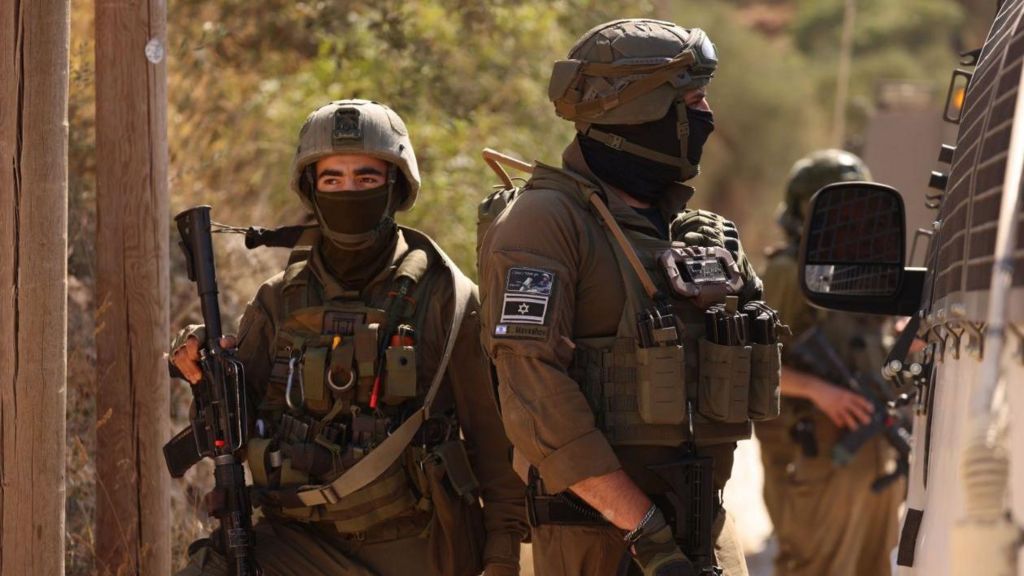
The Israeli military announced it will deploy additional troops to the occupied West Bank following a multi-day standoff between Israeli settlers and Palestinian residents in the village of Qusra. The decision comes after security forces failed to remove settlers who have surrounded the homes of two Palestinian families since Sunday. The Abu Ridi and Hassan families, residing on the outskirts of the village south of Nablus, reported that their electricity and water services were disconnected and their food supplies have become limited.
The situation began on Sunday when settlers blocked access to the families' gates and cut off utilities. Initial reports indicated that the first Israeli soldiers to arrive at the scene participated in prayers with the settlers, an action the military stated would result in disciplinary measures. On Wednesday, Israeli security forces attempted to dislodge the settlers using tear gas and stun grenades, but they were met with a larger group of settlers and were unable to clear the area.
Video footage from the scene showed a heavy military presence, including a bulldozer and various security vehicles, while the village remains designated as a closed military zone. Local media reports indicated that an Israeli settler outpost nearby was demolished during the operations. Qusay Abu Ridi told the BBC that his home was attacked again overnight and that some settlers remained in the vicinity. One of the property owners, a Palestinian-American businessman, contacted the U.S. embassy regarding the situation.
U.S. Ambassador to Israel Mike Huckabee criticized the settlers' actions, describing them as "horrific" and "thuggish," and confirmed the embassy requested their removal. Conversely, Israel’s Ambassador to the UN, Danny Danon, stated that settlements would continue to grow, citing biblical, historical, and legal rights to the land. While international law considers these settlements illegal, the Israeli government has supported their expansion.
The displacement of 127 Palestinian communities since January 2023 highlights a broader shift in the regional landscape. Of these, 47 communities have been entirely displaced, affecting more than 6,390 individuals. These residents face the sudden cessation of their day-to-day lives, including the closure of schools and the disruption of local agriculture. The situation in Qusra follows a pattern established in nearby Jalud, where settlers seized a home after a two-week siege in July, and in Tal, where a similar confrontation resulted in six deaths.
The continued friction sets a precedent regarding the Israeli military's ability or willingness to intervene in settler actions. The disciplinary action against soldiers who prayed with settlers, alongside the failure of the Wednesday mission to clear the area, suggests internal challenges for the Israeli Defense Forces (IDF) in managing these events. As of now, the village of Qusra remains a closed military zone with additional troops scheduled for arrival. The U.S. embassy's involvement marks a specific diplomatic pressure point, but a final resolution date for the trapped families has not been reported.