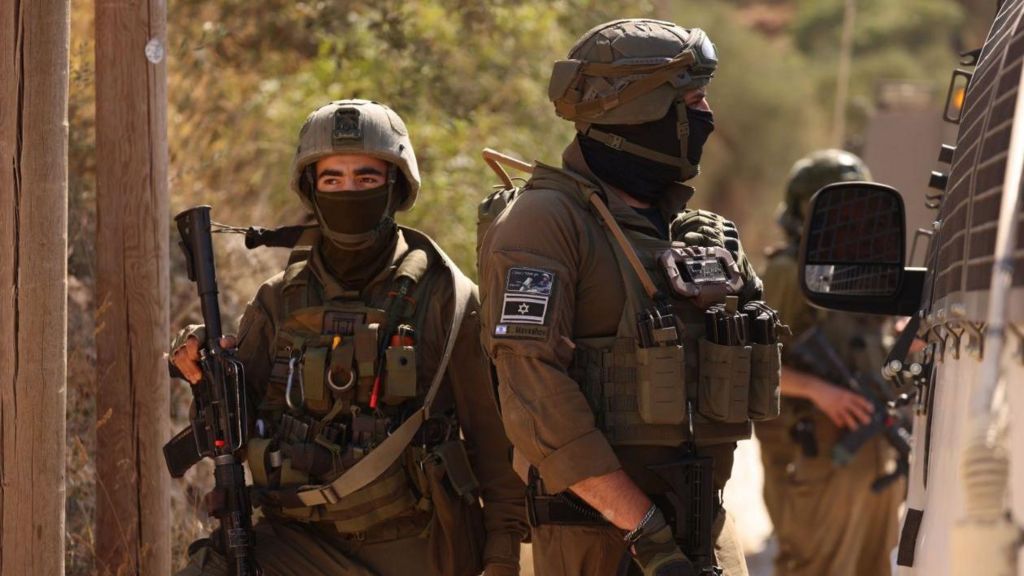
The Israeli military announced it will deploy more troops to the West Bank after failing to remove Israeli settlers who have blocked two Palestinian families in their homes since Sunday. The Abu Ridi and Hassan families, residing on the outskirts of Qusra near Nablus, reported that their water and electricity were cut off and food supplies are low. While Israeli security forces attempted to dislodge the settlers on Wednesday, the operation resulted in confrontations with a larger group of settlers and was unsuccessful.
The situation began on Sunday when settlers blocked access to the families' property. The Israeli military stated that the first soldiers to arrive at the scene prayed with the settlers, an action for which they will be disciplined. In more recent confrontations, Palestinian security camera footage showed Israeli border police and soldiers using tear gas and stun grenades against a crowd of settlers. Although the military confiscated a canopy used by the settlers, other equipment remained as the village was declared a closed military zone.
Qusay Abu Ridi, whose brother is a Palestinian-American businessman, told the BBC that the house was attacked again overnight and that some settlers remain in the area. U.S. Ambassador to Israel Mike Huckabee stated that the embassy requested the removal of the settlers, whom he described as "Israeli terrorists" involved in "thuggish behavior." Conversely, Israel’s Ambassador to the UN, Danny Danon, stated at a UN meeting that settlements will continue to grow because Israel has biblical, historic, and legal rights to the land, asserting that settlements are not an obstacle to peace.
For an ordinary resident in these communities, the impact is a direct loss of basic utilities and freedom of movement. Families like the Abu Ridis and Hassans notice the immediate cessation of water and power, the depletion of food, and the physical threat of property damage, such as the mosque fire reported in Qusra last month. These individuals face the choice of remaining in a besieged home or joining the 47 communities that the UN reports have been entirely displaced since early 2023. The situation also highlights a challenge for Israeli security forces, who are now using riot control measures like tear gas against Israeli citizens.
The knock-on effects include increased diplomatic tension between the United States and Israel, as evidenced by Ambassador Huckabee's condemnation of the events. Locally, these confrontations set a precedent for how the Israeli military manages unauthorized outposts and settler actions, which local mayor Abdel Azim Wadi described as a "sustained pattern." Future developments depend on the effectiveness of the additional troops being deployed and the outcome of military discipline for the soldiers involved in the initial Sunday incident. No specific date has been reported for when the families' utilities will be restored or when the military zone restrictions will be lifted.