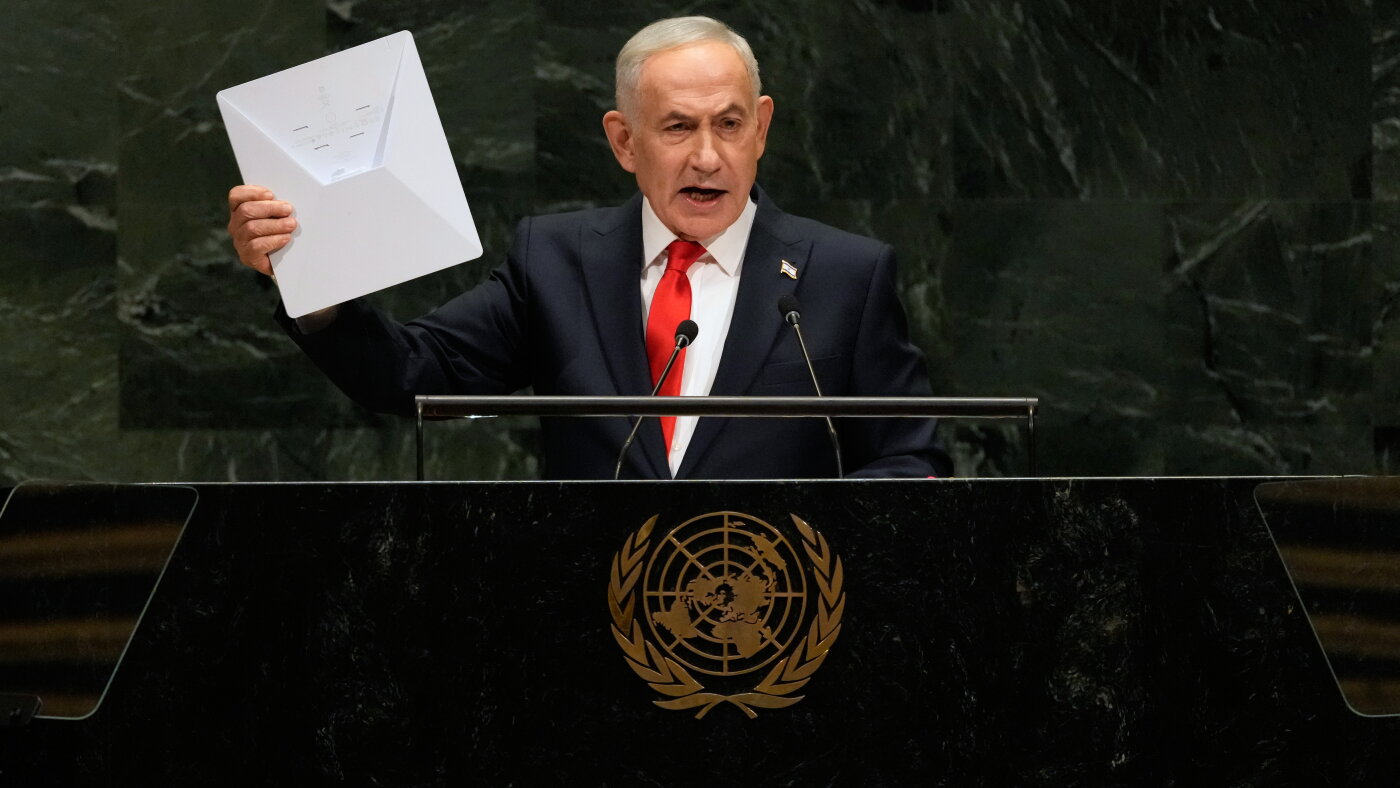
Israeli Prime Minister Benjamin Netanyahu addressed the 81st session of the United Nations General Assembly on Thursday, September 24, 2026, where he defended Israel's military actions and criticized international detractors. During the speech, dozens of U.N. delegates walked out of the hall, while protesters, including actors Susan Sarandon and Hannah Einbinder, rallied outside the building. Netanyahu denied allegations of genocide in Gaza, labeling them "the biggest lie of the century," and defended the joint U.S.-Israeli war against Iran launched in February.
The address follows nearly a year of conflict since a U.S.-mediated truce between Israel and Hamas was established in October 2025. Despite the truce, Israeli military operations have continued, with Hamas-run health authorities reporting more than 1,300 Palestinian deaths since the agreement. These developments occur as Netanyahu faces an upcoming election next month to determine his continued leadership.
Netanyahu used his platform to specifically address New York City Mayor Zohran Mamdani, the city's first Muslim mayor, who has called for the Prime Minister's arrest on war crimes charges. Netanyahu labeled Mamdani "antisemitic" and accused him of supporting Hamas. Mamdani responded in a statement, dismissing the Prime Minister's remarks as "baseless lies" and reiterating his characterization of Netanyahu as a "war criminal" following the reported death of an 11-year-old boy in a Gaza safe zone.
On a global scale, the seven-month war with Iran has impacted energy markets and shipping routes. Yemen’s Vice President Abdullah Abdulkader al Alimi-Bawzer noted that Houthi rebel advances in the Bab el-Mandeb Strait threaten approximately 12% of global trade. The displacement of tens of thousands of people in Yemen and the Houthi blockade on Saudi shipping potentially increase costs for international consumers and jeopardize humanitarian aid delivery to regions experiencing deepening crises.
The diplomatic friction at the U.N. also highlights shifts in U.S. foreign policy and international relations. The Trump administration denied a visa to Palestinian Authority President Mahmoud Abbas for the second consecutive year, citing concerns that the Palestinian leadership undermines peace prospects. This forced Abbas to deliver his address via recorded video, where he advocated for a non-militarized two-state solution. Furthermore, President Trump issued a public ultimatum to Iran, discussing the possibility of either a new deal or military annihilation, a stance that sets a precedent for how the U.S. may engage with the region in the coming months.
Netanyahu was scheduled to depart New York on Thursday night, September 24, following his speech. Regional stability remains tied to the outcome of the Israeli elections scheduled for October 2026 and the ongoing military situation in Yemen, where Houthi forces recently seized the port city of Mokha. The international community continues to monitor these deadlines and the potential for renewed diplomatic negotiations.