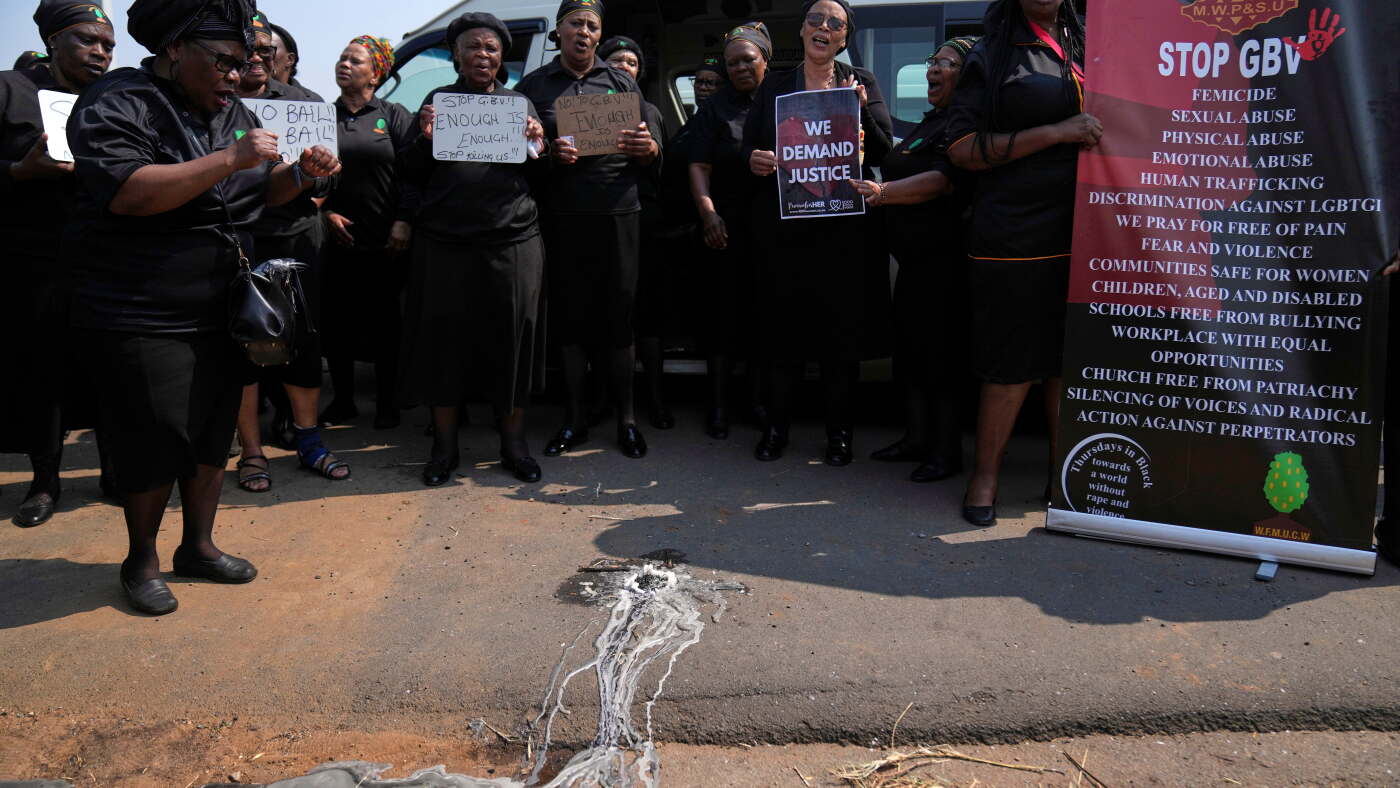
Police in Johannesburg have launched investigations after the bodies of nine women were discovered in the same area of the city, most within a period of a few weeks. Authorities reported that the majority of the victims were sexually assaulted before being killed. The cluster of deaths has led to public protests and criticism of the government's response to gender-based violence.
One of the victims was identified as 38-year-old Elizabeth Moselakgomo, who disappeared during an afternoon jog near the Johannesburg airport. Relatives contacted police after her eight-year-old daughter reported she had not returned. Five days later, her body was discovered in the area. Police have not ruled out the possibility of a serial killer and have advised women to be vigilant and avoid walking or running alone, a recommendation that has drawn criticism from citizens who argue the state should focus on protection rather than limiting women's movements.
South African police statistics indicate that approximately 15 women are killed daily in the country, and more than 100 rape cases are reported every day. Following the recent killings, President Cyril Ramaphosa stated that "no stone will be left unturned" in the hunt for those responsible. This follows the government's 2025 declaration of gender-based violence and femicide—the intentional killing of women because they are women—as a national disaster.
The recent killings affect women and girls living in South Africa. According to police data, approximately 15 women are killed daily in the country. Residents report having to take precautions such as sharing GPS locations or avoiding solitary outdoor exercise.
Women interviewed by NPR stated that the environment feels restrictive, with many adopting habits like sharing vehicle-hailing details or avoiding public spaces alone. Local running clubs have organized collective memorial runs to address members' fears about exercising in public.
The effects include pressure on the South African government to improve safety. Social researchers suggest the violence is linked to societal issues, including patriarchal attitudes and the legacy of apartheid. What happens next depends on the police investigation into whether a serial killer is active. No specific trial dates or new legislative deadlines were reported.