The Plain Record

Neutral daily news — clear headlines, complete facts.

National

Justice Department Seeks to End Over 50 School Desegregation Consent Decrees

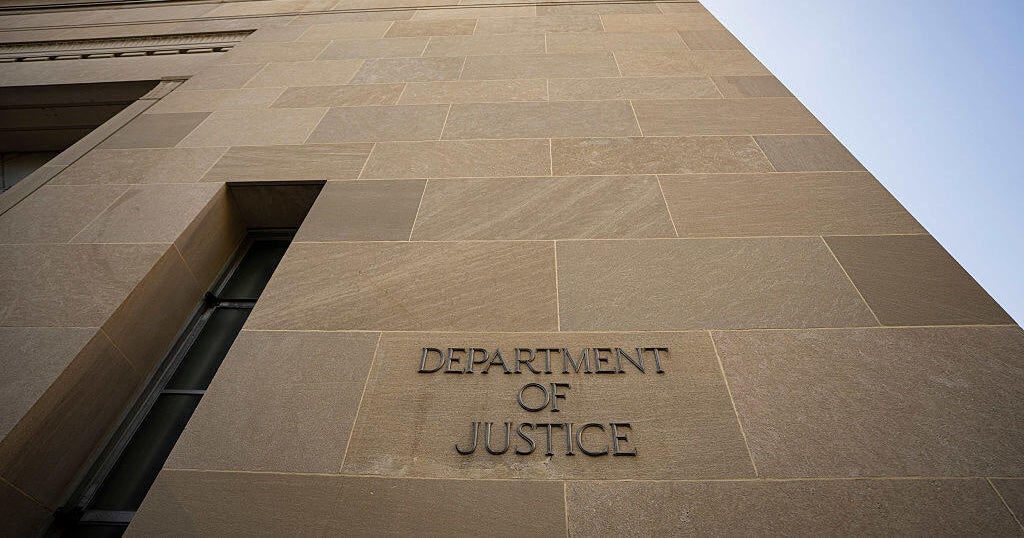
The U.S. Justice Department is moving to dismiss more than 50 decades-old court orders that monitored racial integration in public school districts.

Background: How the Supreme Court takes a case

Published September 25, 2026 at 4:06 AM EDT

The short answer

The U.S. Justice Department is moving to dismiss more than 50 decades-old court orders that monitored racial integration in public school districts. The Justice Department announced on Thursday, September 24, 2026, that it is seeking to end more than 50 school desegregation cases that have remained under federal oversight for decades.

Justice Department Seeks to End Over 50 School Desegregation Consent Decrees

The Facts

Who
Assistant Attorney General Harmeet Dhillon and the Justice Department's Civil Rights Division.
What
The Justice Department is seeking to end federal oversight in more than 50 long-standing school desegregation cases, arguing that the districts have achieved unitary status and that the court orders are outdated.
When
Thursday, September 24, 2026
Where
Washington, D.C., and various school districts across the United States.
Why
The department argues that federal oversight of these districts no longer reflects modern classroom realities, while critics argue the move removes vital protections against racial discrimination.

The Justice Department announced on Thursday, September 24, 2026, that it is seeking to end more than 50 school desegregation cases that have remained under federal oversight for decades. The department is conducting a case-by-case review of pending consent decrees originally filed in the 1960s and 1970s to determine if school districts have achieved "unitary status," a legal term meaning they have eliminated the remnants of racial segregation.

These cases began following the 1954 Supreme Court decision in Brown v. Board of Education, which ruled that public school discrimination based on race was unlawful. In the decades that followed, the Civil Rights Division entered into court-monitored consent decrees with districts to modify student assignment policies and other practices that enforced segregation. As of May 2022, the federal government was still a party in approximately 140 such cases.

Assistant Attorney General Harmeet Dhillon, head of the Civil Rights Division, stated that the office is ending oversight because these decades-old mandates do not reflect current classroom realities. Dhillon characterized the decrees as "onerous and outdated." Conversely, Kristen Clarke, former Assistant Attorney General for the Civil Rights Division and current general counsel at the NAACP, described the department's actions as a threat to public school protections that could fuel resegregation and discrimination.

In specific actions related to this initiative, a federal judge dismissed a 59-year-old case involving the Plaquemines Parish School Board in Louisiana on April 29, 2025. The district was originally sued by the U.S. in 1966, and although a court found schools integrated by 1975, the case remained open in the court system. Other cited examples where the department is seeking dismissal include cases in Waterbury, Connecticut, and Flagler, Florida.

For students and parents, the concrete day-to-day change involves the removal of federal court supervision over policies such as how students are assigned to schools and how resources are distributed. This shift moves the authority for maintaining desegregation standards from federal court monitors back to local school boards. Supporters of the move, such as Dhillon, say this frees local resources from outdated oversight, while critics like Clarke argue it removes essential legal safeguards that prevent a return to discriminatory practices.

The knock-on effects include a broader shift in the Civil Rights Division’s priorities under the current administration. The division has recently focused on investigating university diversity policies and litigating against transgender participation in sports rather than traditional race-related discrimination cases. What happens next depends on the judicial branch; a federal judge must individually agree to dismiss each consent decree. The department has stated it will continue its case-by-case review, seeking dismissal as it concludes that individual districts have met their legal obligations for integration.

Timeline of what happened

Key dates and decisions, in the order they occurred.

  1. 1954

    Supreme Court decides Brown v. Board of Education

  2. 1966

    U.S. sues Plaquemines Parish School Board to desegregate schools

  3. 1975

    Court finds Plaquemines Parish schools integrated but keeps case open

  4. May 2022

    DOJ reports representing government in 140 desegregation cases

  5. April 29, 2025

    Federal judge dismisses Louisiana desegregation case

  6. September 24, 2026

    DOJ announces push to end more than 50 additional cases

Summaries are written by The Plain Record to state the facts of a story plainly and without political slant. Drafted with AI assistance and checked against the source record before publication. See how we report, or report a correction.

← Back to the front page

Questions readers ask

What happened: Justice Department Seeks to End Over 50 School Desegregation Consent Decrees?

The Justice Department is seeking to end federal oversight in more than 50 long-standing school desegregation cases, arguing that the districts have achieved unitary status and that the court orders are outdated.

Who is involved?

Assistant Attorney General Harmeet Dhillon and the Justice Department's Civil Rights Division.

When did this happen?

Thursday, September 24, 2026

Where did this happen?

Washington, D.C., and various school districts across the United States.

Why does this matter?

The department argues that federal oversight of these districts no longer reflects modern classroom realities, while critics argue the move removes vital protections against racial discrimination.