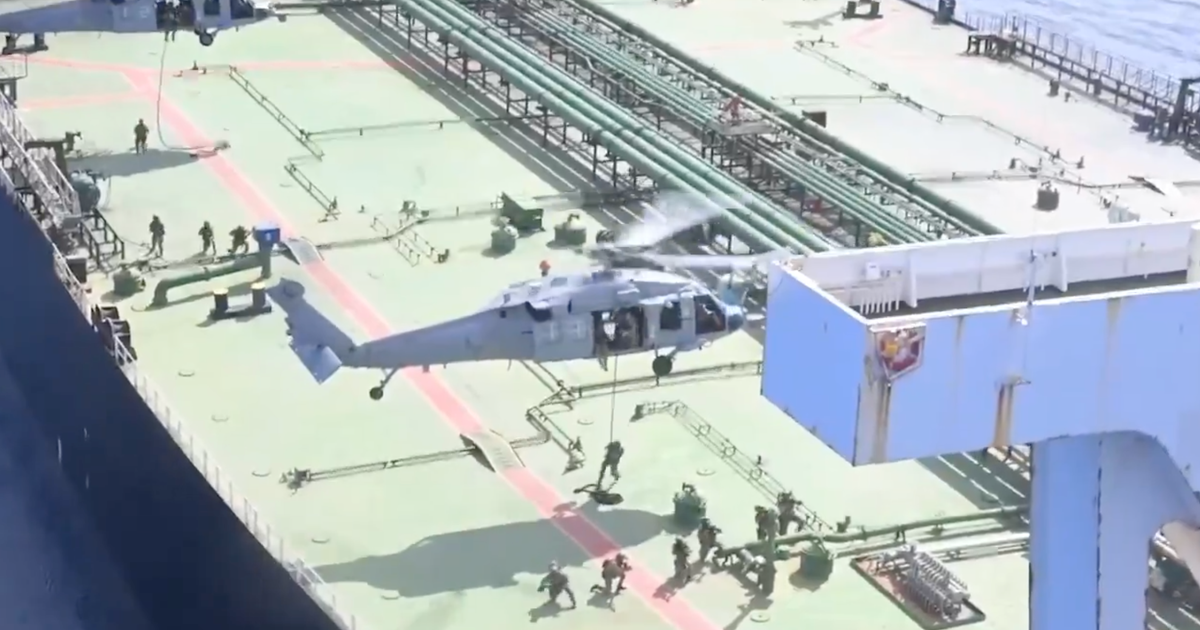
The Trump administration is attempting to revive "prize law," a centuries-old maritime legal regime, to expedite the seizure and sale of Iranian oil tankers captured at sea. Aaron Reitz, the U.S. Attorney for the Southern District of Texas, confirmed the effort, stating that federal courts must be prepared to adjudicate the disposition of vessels and cargo seized during military conflicts to protect national security interests. The specialized legal framework has not seen regular use by the United States since the Spanish-American War in 1898.
Prize law differs from standard civil asset forfeiture by allowing the military to seize vessels without the warrants or specific statutory violation evidence typically required for law enforcement agencies like the Coast Guard. According to maritime litigation experts, the process could allow the government to bypass court delays associated with civil laws. Once a vessel is captured, a federal judge must determine if the U.S. met the legal standards to be awarded the "prize," which could then be sold with proceeds likely directed to the U.S. Treasury.
Legal experts noted that for the government to successfully use this law, it must establish that a seized boat was carrying contraband, transporting enemy soldiers, operating under enemy control, using fraudulent documents, or attempting to circumvent a blockade. U.S. forces have already conducted such operations, including the boarding of the sanctioned vessel MT Davina in the Indian Ocean on June 5, 2026, and the seizure of the Iranian-flagged Touska in May 2026 for attempting to bypass a blockade. Iran has characterized these actions as "piracy" and requested United Nations intervention.
The shift in policy will likely be noticed first by maritime crews and owners of vessels operating in the Middle East and South America. Under prize law, a ship and its cargo must typically be physically present in the jurisdiction of the court that condemns it, meaning seized tankers would likely be diverted to U.S. ports, such as Houston, Texas. This could lead to disruptions in global oil supply chains and increased legal costs for third-party nations whose cargo or flags are associated with seized vessels. Legal experts emphasized that because Congress has not formally declared war against Iran, the use of prize law—a naval warfare construct—may conflict with standard peacetime sanctions enforcement.
What happens next depends on how federal courts respond to the first prize law cases brought by the DOJ. While U.S. district courts have statutory jurisdiction, there are no modern precedents or practicing litigators with experience in these proceedings. Legal scholars anticipate significant challenges regarding the legality of blockades and the rights of neutral vessels. The administration has previously used other dormant statutes for policy priorities, such as the Alien Enemies Act of 1798 and the 1996 Alien Terrorist Removal Court, setting a pattern of testing historical legal authorities in modern contexts.