The Plain Record

Neutral daily news — clear headlines, complete facts.

National

Kansas City nonprofit expands urban fruit tree program to 17 cities

The Kansas City nonprofit The Giving Grove has expanded to 17 cities, supporting 850 urban orchards that produce 2.5 million pounds of food annually.

Published October 17, 2026 at 1:06 AM EDT

The short answer

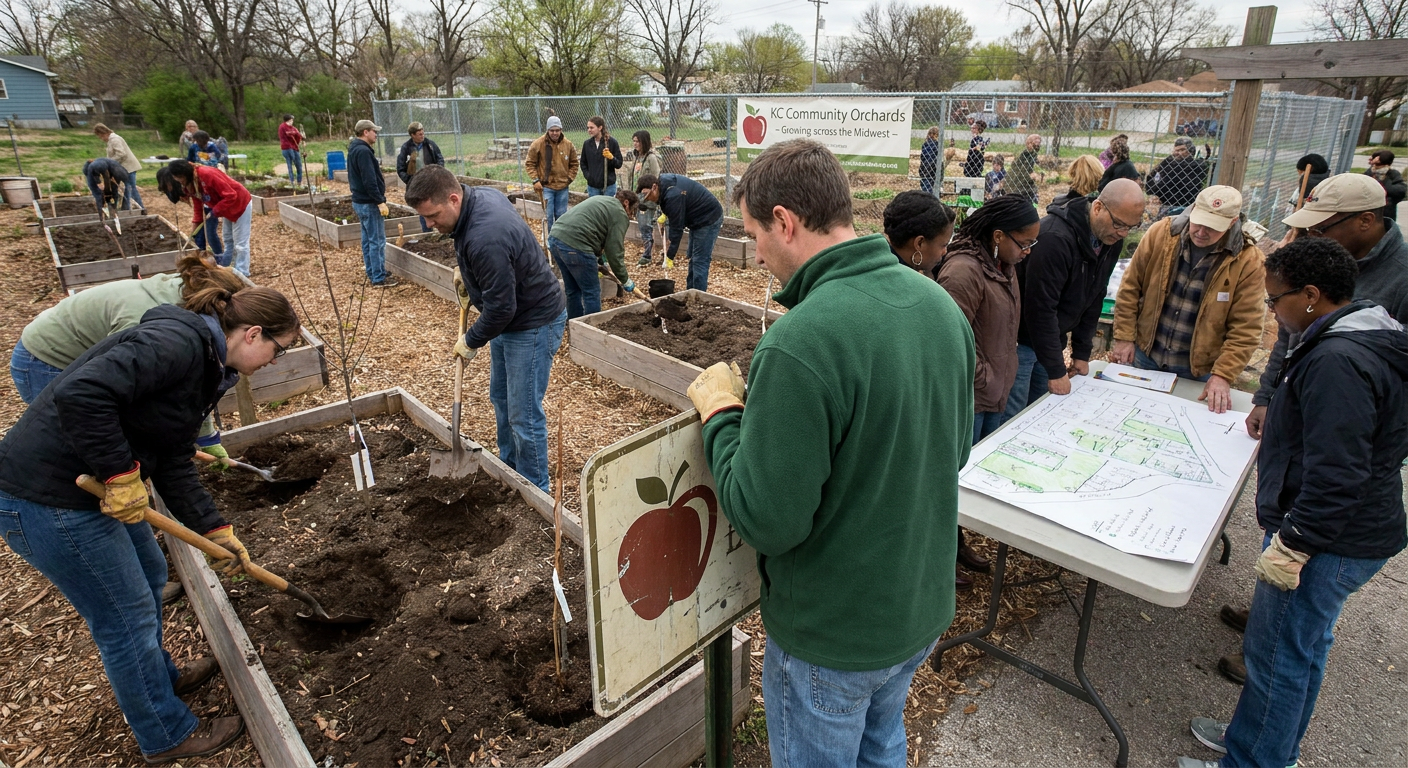
The Kansas City nonprofit The Giving Grove has expanded to 17 cities, supporting 850 urban orchards that produce 2.5 million pounds of food annually. The Giving Grove, a nonprofit organization based in Kansas City, has expanded its operations to help volunteers plant fruit and nut orchards on vacant urban lots in 17 cities nationwide.

Kansas City nonprofit expands urban fruit tree program to 17 cities

The Facts

Who
The Giving Grove (nonprofit), Kevin Birzir (founder), Sarah Sikich (marketing director), Janet Porter (teacher).
What
Expansion of an urban orchard nonprofit to 17 cities.
When
October 15, 2026
Where
Kansas City and 17 other U.S. cities, including Seattle and Atlanta.
Why
To transform vacant urban lots into productive orchards providing free organic food to local communities.

The Giving Grove, a nonprofit organization based in Kansas City, has expanded its operations to help volunteers plant fruit and nut orchards on vacant urban lots in 17 cities nationwide. The organization reported it has supported the planting of approximately 14,000 trees across cities ranging from Seattle to Atlanta.

The program began as a local initiative to assist community garden organizations in transitioning to tree cultivation. The Giving Grove provides partner groups with technical training, workshops, and seed money for equipment and staffing. According to founder Kevin Birzir, the organization uses corporate donations to fund most of its operations while relying on volunteers for the majority of the labor.

The organization reported that it currently supports nearly 850 orchards. These sites produce more than 2.5 million pounds of fruit and nuts annually, including apples, pears, figs, and jujubes. Science teacher Janet Porter, who manages an orchard at the Kansas City Academy, stated that the group provides ongoing support and troubleshooting for local participants.

For residents and students in participating districts, the change is the availability of free food in their neighborhoods. Instead of traveling to rural areas for seasonal picking, residents can access fresh produce, such as jujubes and apples, directly from trees in formerly vacant city lots. Students at participating schools, such as the Kansas City Academy, now have access to fresh snacks during lunch periods.

The program transforms vacant municipal or private lots into productive agricultural spaces. As the organization fields invitations from new cities, the model of using corporate funding to supplement volunteer labor may influence how other municipalities approach food security. While specific upcoming expansion dates were not reported, Birzir stated the organization is currently reviewing invitations from across the country.

Summaries are written by The Plain Record to state the facts of a story plainly and without political slant. Drafted with AI assistance and checked against the source record before publication. See how we report, or report a correction.

← Back to the front page

Questions readers ask

What happened: Kansas City nonprofit expands urban fruit tree program to 17 cities?

The Giving Grove, a nonprofit organization based in Kansas City, has expanded its operations to help volunteers plant fruit and nut orchards on vacant urban lots in 17 cities nationwide. The organization reported it has supported the planting of approximately 14,000 trees across cities ranging from Seattle to Atlanta.

Who is involved?

The Giving Grove (nonprofit), Kevin Birzir (founder), Sarah Sikich (marketing director), Janet Porter (teacher).

When did this happen?

October 15, 2026

Where did this happen?

Kansas City and 17 other U.S. cities, including Seattle and Atlanta.

Why does this matter?

To transform vacant urban lots into productive orchards providing free organic food to local communities.