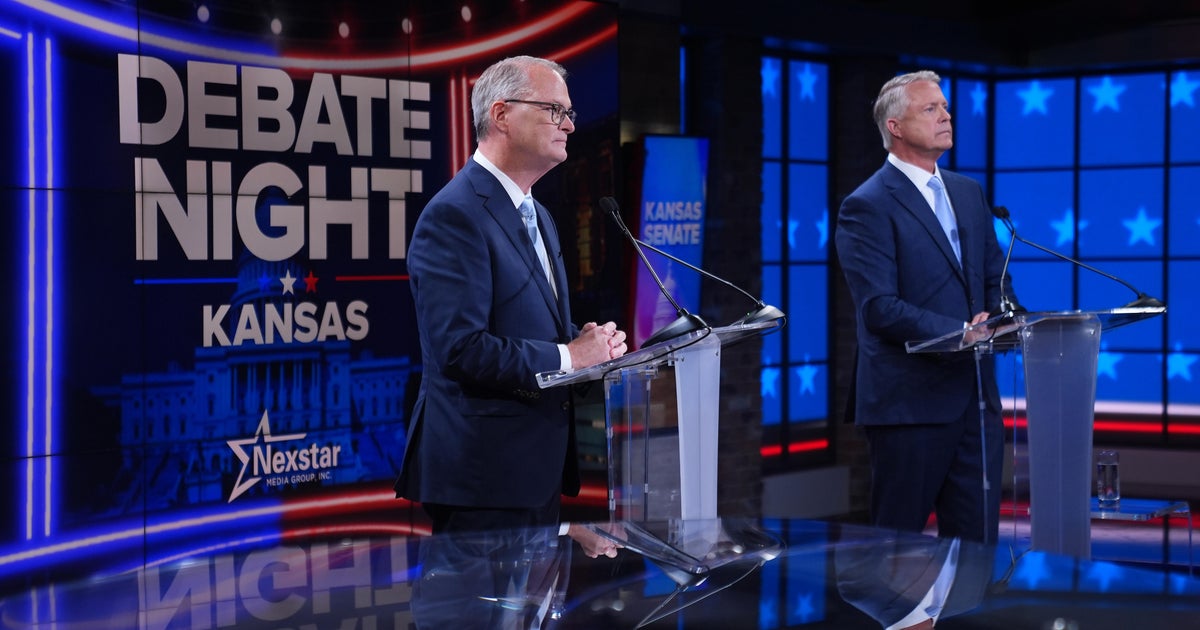
Incumbent Sen. Roger Marshall (R-KS) and Democratic challenger Adam Hamilton participated in a televised debate on Wednesday, October 21, 2026, as polling indicates a tightening race for a seat Republicans have held since 1939. The candidates addressed economic pressures facing the state's agricultural sector, federal border policy, and personal controversies involving Marshall’s medical practice and Hamilton’s ministry. The contest has been reclassified as a "toss-up" by the Cook Political Report.
The debate occurred amid rising costs for diesel fuel, which averaged $6.32 a gallon this week compared to $3.62 a gallon a year ago. Hamilton, a megachurch pastor and founder of the country's largest United Methodist church, argued that the conflict with Iran is the primary driver of high energy prices and called for a pause on federal fuel taxes. Marshall attributed the fuel costs to the war in Ukraine and defended recent proposals to import Russian diesel if it serves to bring Russia to the bargaining table to end that conflict.
During the exchange, Marshall characterized Hamilton as a candidate who would reliably support Democratic leadership, specifically Senate Majority Leader Chuck Schumer. Hamilton sought to distance himself from his party's national platform, stating he would not vote for Schumer as leader and expressing opposition to biological males competing in girls' sports. Hamilton also criticized the Biden administration's border policies as a "disaster," while Marshall argued that border security must be the starting point for all related policy discussions.
The moderator questioned both candidates regarding past controversies. Marshall responded to reports that his former OB-GYN practice pursued medical debts from low-income patients, leading to some arrests; Marshall described the use of collection agencies as a standard industry practice. Hamilton addressed his church’s handling of a 2005 child sex abuse incident at a youth camp, admitting he made a mistake by not ensuring the individual involved did not return to the camp, while noting the church subsequently helped secure a conviction.
Voters will notice the result of this contest in the long-term direction of federal energy and trade policy. Hamilton has campaigned on ending the war in Iran to lower prices, while Marshall supports tariffs that he credits with a "manufacturing renaissance." A victory for Hamilton would mark the first time a Democrat has won a Senate seat in Kansas since 1932. At least 100 Kansas Republican leaders, including former governors, have endorsed the Democratic challenger.
Early voting is currently underway, with election officials reporting turnout levels that rival the 2024 presidential election. The final decision rests with Kansas voters on November 3, 2026. Beyond the Senate seat itself, the race serves as a test of whether a "moderate or independent-minded" Democratic platform can overcome a historically Republican stronghold. The candidates are also competing for the influence of millions of dollars in outside spending.