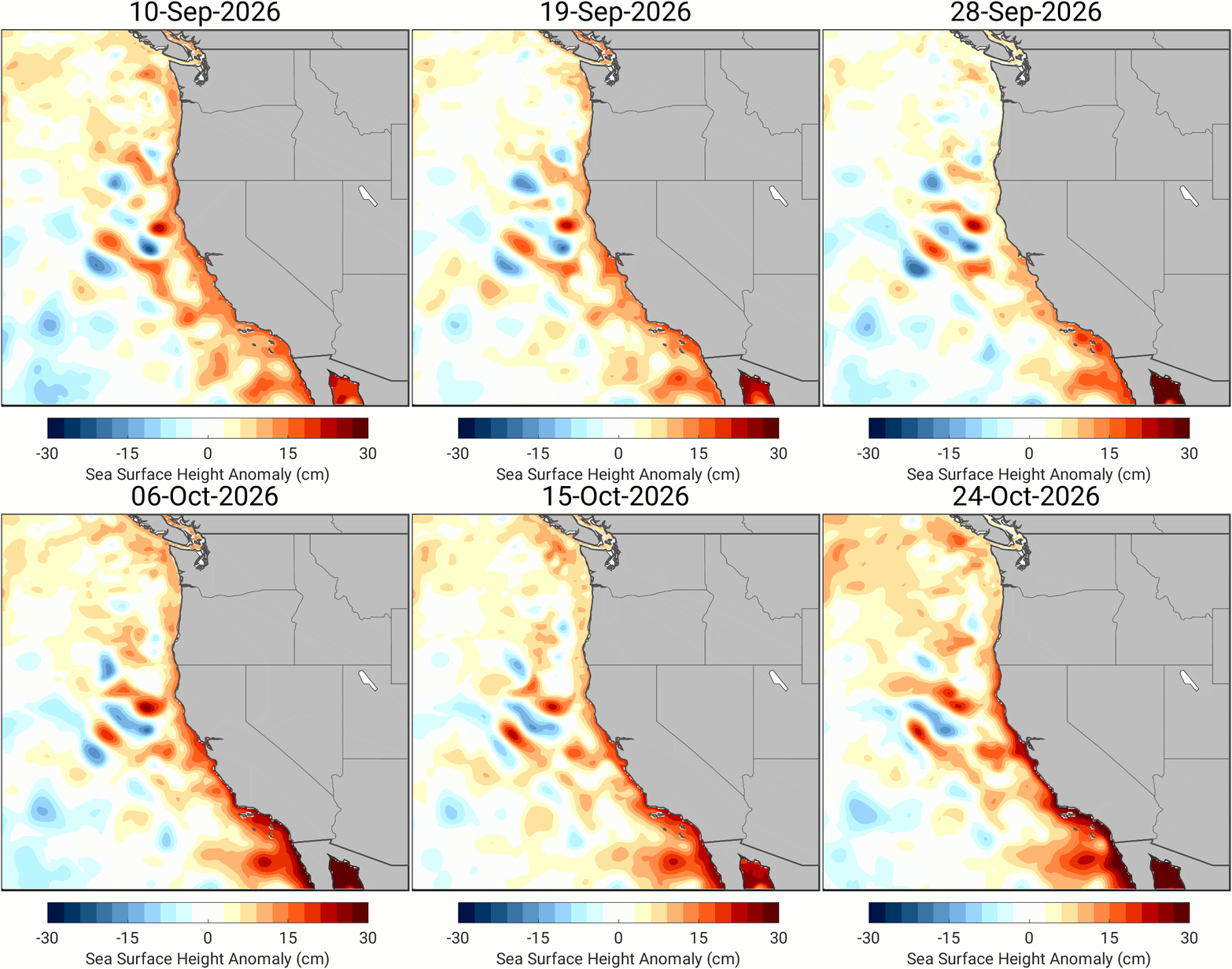
A Kelvin wave, a deep-ocean phenomenon driven by a strong El Niño pattern, has reached the U.S. West Coast, leading to elevated sea levels and increased coastal flood risks. Scientists from NASA and several universities report that these underwater waves move slowly across the Pacific Ocean, raising the baseline water level as they travel north along the coast toward North America and south toward Chile.
The current activity is linked to what researchers describe as a "Super El Niño," a period where Pacific Ocean waters are significantly warmer than average. Mark Cane, professor emeritus at Columbia University, noted that while these waves occur along the equator, they eventually split upon reaching South America. Unlike surface waves caused by storms, Kelvin waves are "planetary-scale" movements that occur beneath the ocean's surface.
According to Dillon Amaya, an assistant professor at North Carolina State University, the wave recently raised sea levels by approximately six to eight inches. This elevation contributed to flooding in Southern California in early October when combined with the storm surge from Tropical Storm Rachel. Josh Willis, a climate scientist at NASA’s Jet Propulsion Laboratory, stated that Kelvin waves increase the probability of a "triple whammy" event, where El Niño conditions, high tides, and storm surges occur simultaneously.
Beyond coastal flooding, the wave is transporting warmer water into northern regions, affecting marine ecosystems. Researchers have documented tropical species, such as whale sharks, appearing off the coast of San Diego and reported instances of sea bird deaths. The warm water can displace the nutrient-dense cold water that typically supports local marine life.
The economic and environmental impact extends to the fishing and tourism sectors as marine life shifts. The displacement of nutrient-rich cold water disrupts the food chain, which scientists say has already led to visible die-offs of sea birds and the unusual appearance of tropical fish in temperate zones. These biological shifts can force changes in commercial fishing patterns and affect the health of protected marine areas along the Pacific shelf.
Looking ahead, the National Oceanic and Atmospheric Administration (NOAA) predicts this El Niño pattern will remain strong through early 2027. The next Kelvin wave is expected to reach San Diego in late October or early November 2026. Additional waves are forecasted to arrive throughout the fall and early winter before the phenomenon typically subsides as El Niño reaches its peak in late 2026 or January 2027. Coastal residents should monitor local weather alerts for the combination of high tides and storm activity during these windows.