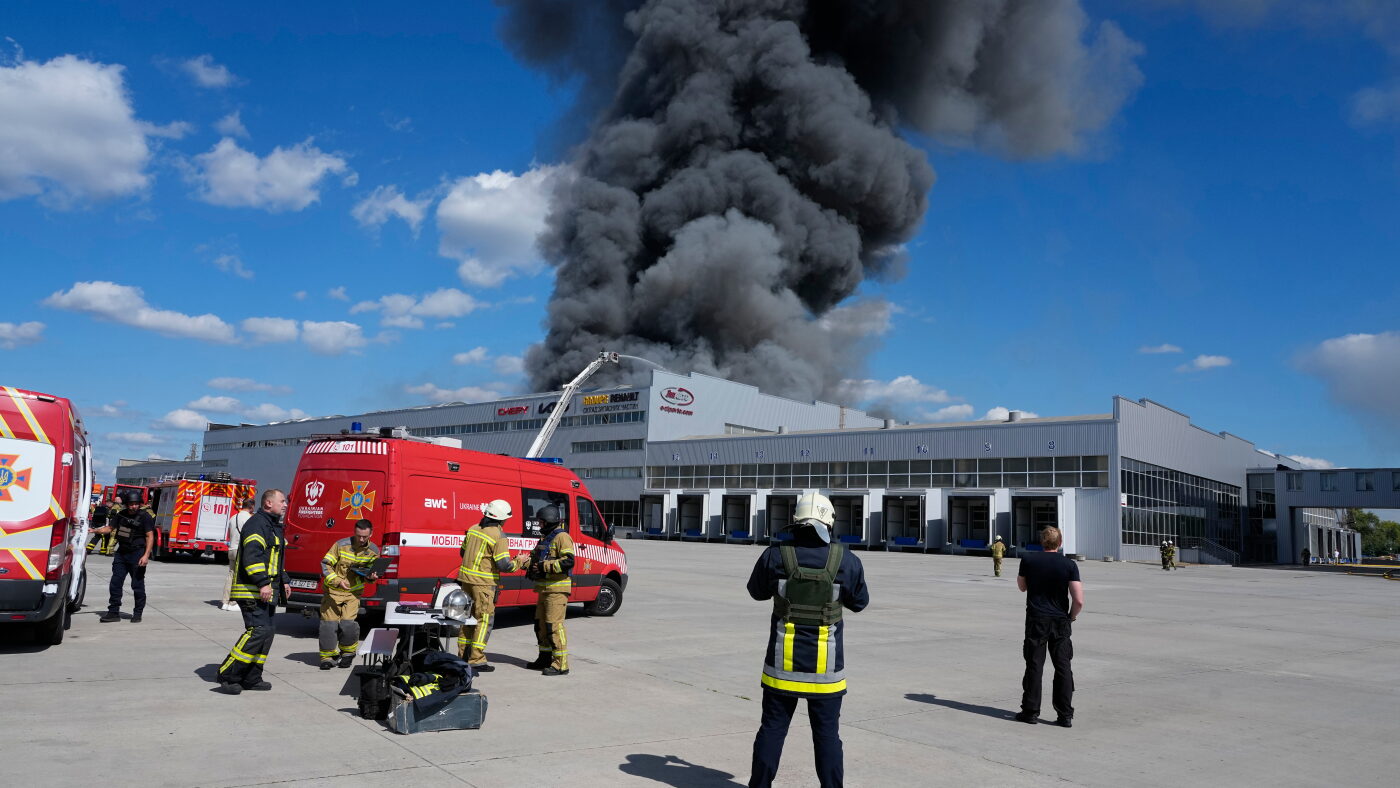
Kyiv Mayor Vitali Klitschko reported on Wednesday, Sept. 2, 2026, that a shift in Russian military tactics has disrupted daily life and economic activity in the Ukrainian capital. Airstrikes that previously occurred once or twice a week have become more constant, taking place during both day and night. The attacks involve a variety of weaponry, including drones, ballistic missiles, cruise missiles, and hypersonic missiles.
The escalation in Kyiv follows a six-month conflict between the United States, Israel, and Iran. While Russia continues its military operations in Ukraine, President Vladimir Putin has expressed support for Iran during its confrontation with the U.S. and Israel. However, the exact depth of the strategic partnership between Moscow and Tehran remains undetermined. In the U.S., Treasury Secretary Scott Bessent recently announced \"Operation Economic Outcast,\" a set of sanctions designed to penalize any entity that conducts business with the government in Tehran.
Mayor Klitschko stated that the increased frequency of air raid alerts—sometimes reaching 14 or 15 per day—has caused life in the city to nearly stop. Residents frequently seek shelter in metro stations or basements, which Klitschko noted has a significant impact on the local economy. He also highlighted a labor shortage caused by military mobilization, reporting that in some sectors, women now make up seven out of every 10 workers to fill roles traditionally held by men, such as bus driving.
Technical changes in the aerial campaign have also reduced reaction times for civilians. Klitschko reported that Russia is now deploying drones equipped with jet engines, which travel at speeds comparable to cruise missiles. These drones leave residents with only a few minutes to reach safety, whereas previous drone models allowed for 30 minutes to an hour of warning. The mayor stated that Kyiv currently faces a deficit of anti-drone and defensive missile systems.
The change in aerial warfare affects approximately 3 million residents of Kyiv and the broader Ukrainian population currently under mobilization. Vitali Klitschko reported that the constant alerts are preventing normal business operations, noting that the city has more buses than available drivers. While Ukraine’s economy had previously shown growth during the war, the mayor indicated that the intensity of attacks is challenging that stability. He also warned that the city is bracing for potential Russian strikes on power plants and heating systems as winter approaches, describing such efforts to leave the population without utilities as a form of genocide.
The situation in Ukraine is further complicated by the broader regional conflict involving Iran, which has economic and military impacts on American citizens. The six-month war between the U.S., Israel, and Iran has led to higher fuel prices in the U.S. and extended deployments for American military personnel. In Iran, the conflict has resulted in economic exhaustion and intensified state repression. The new U.S. sanctions, labeled \"economic D-Day\" by Treasury Secretary Scott Bessent, aim to target any country or entity that maintains trade ties with Tehran.
The humanitarian impact extends beyond these war zones, as rescuers in the Himalayas continue to search for hundreds of people missing after flash floods in Tibet and Nepal. In Kyiv, municipal authorities are attempting to build a \"satellite\" heating system to provide an alternative if the central grid is destroyed. What happens next depends on the effectiveness of these defensive preparations and the implementation of U.S. economic measures. The U.S. and Venezuela have also entered a partnership for control of more than 65 billion barrels of oil reserves, though it is not yet clear when that oil will reach U.S. gas pumps to potentially alleviate fuel costs.