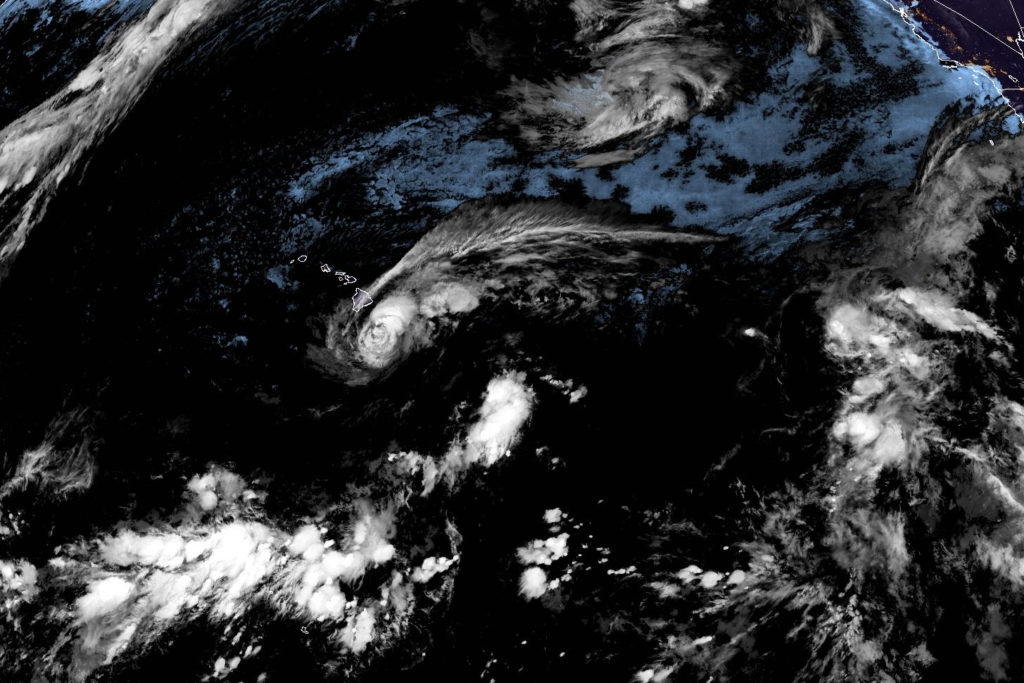
Lala strengthened into a Category 1 hurricane on Saturday as it approached Hawaii’s Big Island, bringing maximum sustained winds of 75 mph. The National Hurricane Center forecast the storm’s center to pass over or near the southern end of the Big Island by Saturday evening. Gov. Josh Green advised residents to shelter in place, noting that rainfall was occurring at a rate of 2 inches per hour in some areas.
The storm follows a period of heavy rain that caused flooding across the islands in March. Meteorologists noted that this year’s weather patterns are influenced by El Niño, a warming of Pacific waters that increases hurricane activity. The last time a major hurricane, Iniki, made landfall in Hawaii was in 1992 on the island of Kauai, causing $3 billion in damage.
Forecasters predicted that volcanic slopes at higher elevations, such as Mauna Kea, could receive up to 25 inches of rain, creating a risk of mudslides. A hurricane warning was issued for the Big Island, while tropical storm warnings were in effect for Maui, Molokai, Lanai, Kahoolawe, Oahu, Kauai, and Niihau. Poweroutage.us reported that approximately 20% of electricity customers on the Big Island had lost power as the storm approached.
Residents will see concrete changes to their daily lives through mandatory sheltering and the closure of public events. In coastal and low-lying areas, residents may experience flash flooding and blocked roads due to fallen albizia trees, which Mike Caputo, a local fire captain, noted can make thoroughfares impassable. Additionally, the high winds combined with dry conditions in some areas have increased the risk of wildfires, a concern that has remained elevated for Maui residents since the 2023 Lahaina fire.
The storm sets a precedent as the first possible direct hurricane hit on the Big Island in 155 years. Ranchers across the islands have been advised to move cattle to open pastures to avoid injuries from collapsing structures. While the storm was expected to move over the southern tip on Saturday evening, National Weather Service meteorologist Vanessa Almanza stated that destruction can occur even without a direct landfall. Emergency officials have not yet provided a date for when shelters will close or when power restoration will be complete.