The Plain Record

Neutral daily news — clear headlines, complete facts.

World

Landfill landslide in Guinea capital kills 30 people

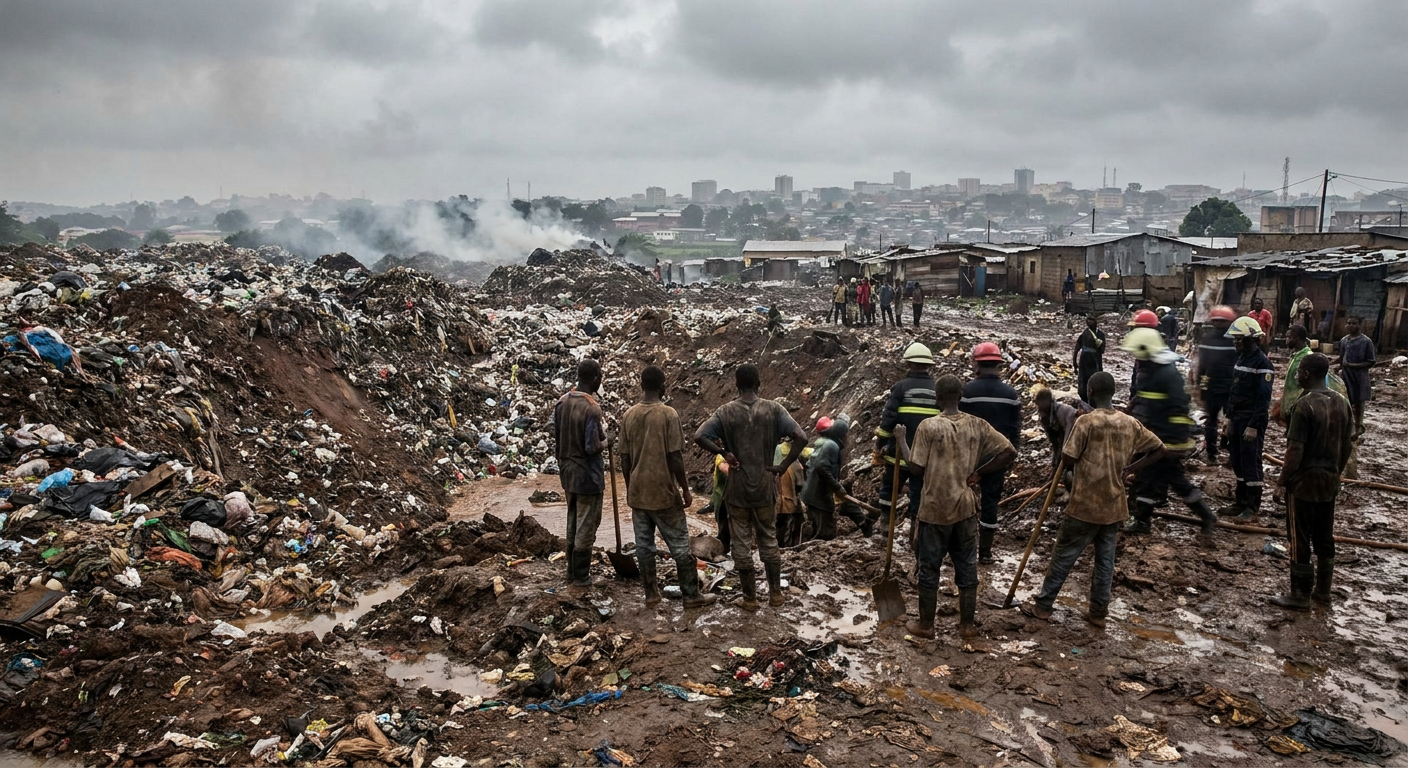
A landfill collapse in Guinea's capital following heavy rains killed 30 people and injured 22 others early Sunday morning.

Published August 23, 2026 at 3:03 PM EDT

The short answer

A landfill collapse in Guinea's capital following heavy rains killed 30 people and injured 22 others early Sunday morning. A landslide at a landfill in Conakry, the capital of Guinea, killed at least 30 people on Sunday, according to a government statement. Heavy overnight rains caused a large mound of waste to collapse, burying nearby tents, shacks, and other dwellings.

Landfill landslide in Guinea capital kills 30 people

The Facts

Who
The Guinean government, Minister of Territorial Administration Djenab Toure, and local residents.
What
A fatal landslide at a landfill caused by heavy rains.
When
Sunday, August 23, 2026, at approximately 2 a.m. local time.
Where
The Gbessia commune of Conakry, Guinea.
Why
Heavy overnight rains caused a massive waste mound to collapse onto nearby residences.

Timeline of what happened

Key dates and decisions, in the order they occurred.

  1. April 1, 2026

    World Bank reports poverty statistics for Guinea

  2. August 20, 2026

    Minister announces plan to close landfill due to safety risks

  3. August 23, 2026

    Landslide occurs in Gbessia commune at 2 a.m. local time

A landslide at a landfill in Conakry, the capital of Guinea, killed at least 30 people on Sunday, according to a government statement. Heavy overnight rains caused a large mound of waste to collapse, burying nearby tents, shacks, and other dwellings.

The incident occurred at approximately 2 a.m. local time in the Gbessia commune. In addition to the fatalities, the government reported that six people were seriously injured and 16 others sustained light injuries. Rescue operations remained active at the site following the collapse, which witnesses described as large enough to have buried an apartment building.

Prior to the event, Djenab Toure, the Minister of Territorial Administration, announced on Thursday that the government intended to close the landfill due to safety risks posed by the rainy season. The plan involved relocating the waste to a site outside the capital city. The disaster occurred as residents lived in precarious housing adjacent to the waste site.

The event underscores a gap between Guinea's natural resource wealth and its domestic infrastructure. Despite holding the world’s largest reserves of bauxite and a massive iron ore deposit at Simandou, the country faces widespread poverty and insufficient waste management systems for its 15.1 million citizens. Residents in the capital will likely see an immediate disruption in local waste services as the government works to fulfill its Thursday pledge to relocate the landfill and manage the aftermath of the collapse.

The disaster sets a critical precedent for how the Guinean government manages urban safety during the annual rainy season. Following the minister's announcement on August 20, 2026, the government must now manage the logistics of waste relocation while addressing the needs of those displaced by the landslide. Future policy may focus on the enforcement of exclusion zones around industrial and waste sites to prevent similar casualties among the country's impoverished populations. Rescue efforts were ongoing as of Sunday, and the specific timeline for the waste relocation project has not been finalized.

Summaries are written by The Plain Record to state the facts of a story plainly and without political slant. See our editorial standards, or report a correction.

← Back to the front page

Questions readers ask

What happened: Landfill landslide in Guinea capital kills 30 people?

A landslide at a landfill in Conakry, the capital of Guinea, killed at least 30 people on Sunday, according to a government statement. Heavy overnight rains caused a large mound of waste to collapse, burying nearby tents, shacks, and other dwellings.

Who is involved?

The Guinean government, Minister of Territorial Administration Djenab Toure, and local residents.

When did this happen?

Sunday, August 23, 2026, at approximately 2 a.m. local time.

Where did this happen?

The Gbessia commune of Conakry, Guinea.

Why does this matter?

Heavy overnight rains caused a massive waste mound to collapse onto nearby residences.