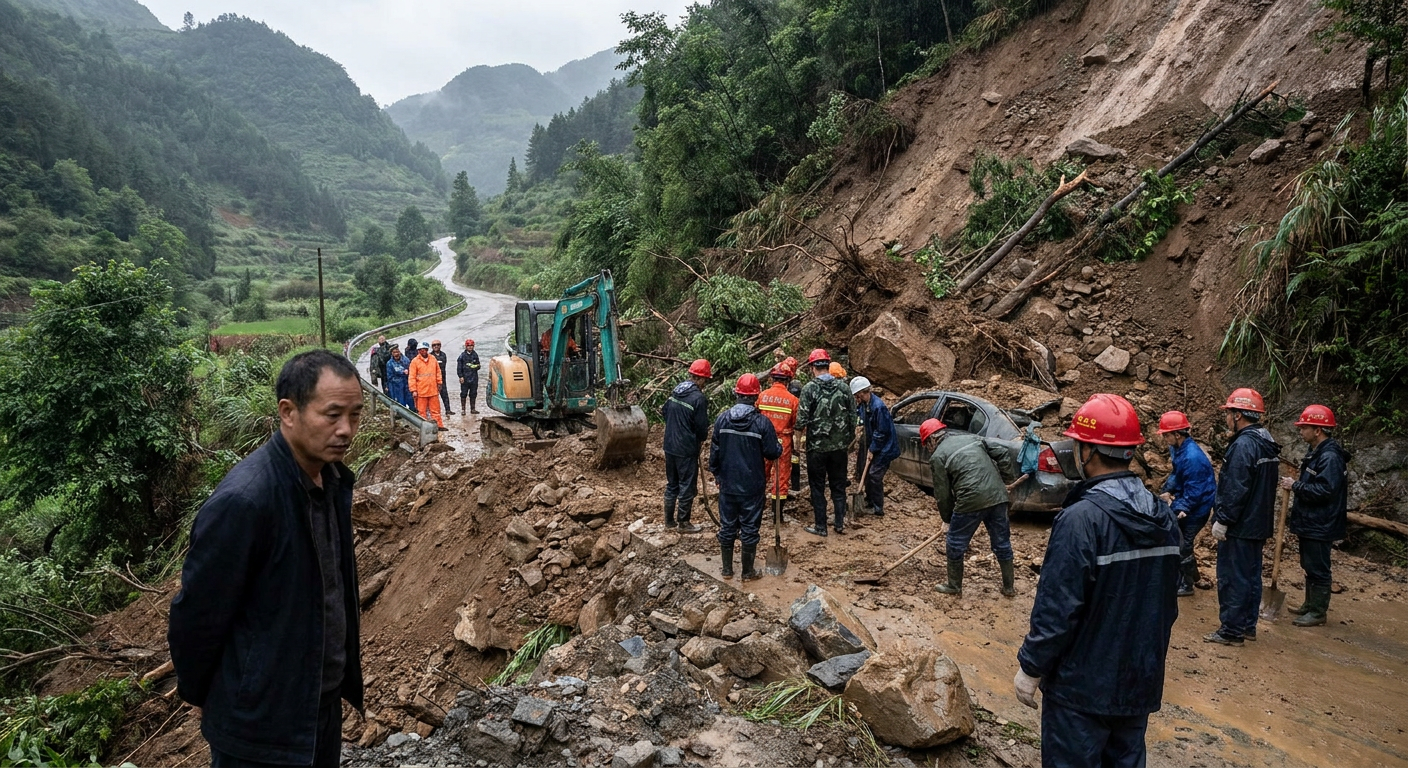
A landslide in the Guangxi region of southwestern China killed at least one person and left four others trapped on Monday. The event occurred at a construction site in Nandan County shortly before noon, according to a statement from the local government.
The incident follows a period of extreme weather in the country. Last week, remnants of Typhoon Dolphin caused heavy rainfall across eastern, central, and northern China. In response to recent floods and landslides throughout the summer, President Xi Jinping called for enhancements to the nation's ability to prevent and respond to natural disasters in an article published Saturday.
Regional authorities continue to issue warnings as heavy rains persist. Sichuan province issued an alert for heavy rainfall from Monday to Tuesday, citing the risk of geological disasters. Similarly, Shaanxi province in northwestern China warned of an increased risk for floods and landslides.
In the day-to-day, residents in these affected provinces will notice the impact of heavy rain alerts in their commute and safety planning through at least Tuesday. The potential for further landslides at construction sites or in mountainous areas may lead to temporary work stoppages or evacuations as local governments implement the disaster mitigation strategies mentioned by President Xi. The source does not specify the exact dollar amount of damage or the total number of people currently under evacuation orders.
The situation sets a precedent for how Chinese local governments will implement the disaster prevention improvements called for by the central government following a summer of extreme weather. The knock-on effects include potential strain on local emergency response teams and the construction industry as safety protocols are reviewed. Search efforts for the four trapped individuals are the immediate next step, while weather alerts for Sichuan remain in effect through Tuesday. State media and local authorities have not yet announced specific dates for new disaster prevention legislation or policy changes.