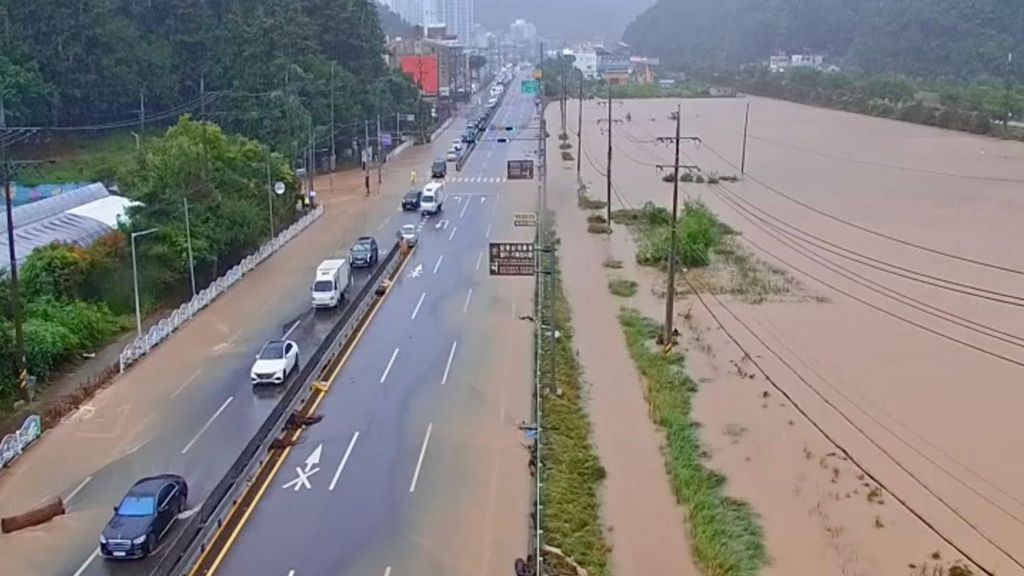
One person died and two others were injured on Monday morning after heavy rainfall triggered a landslide in Geoje, South Korea. The landslide struck an apartment building in the south-eastern city, burying the first floor and requiring rescue efforts to pull three residents from the debris.
The event followed a period of intense weather across the Gyeongsang province. South Korea’s meteorological agency reported that Geoje received 124.5mm of rain in a single hour, the highest hourly total recorded since data collection began for the city in 1972. Between Sunday and Monday, the city received a total of more than 400mm of rain.
Local authorities in Geoje suspended bus operations and household waste collection on Monday, citing flooded or damaged roads. Some tourist attractions were also closed. These local disruptions followed a Sunday advisory from authorities urging residents to avoid driving, stay away from riverbanks, and evacuate to safe areas if necessary.
Regionally, the storms have affected several countries in East and South East Asia. Forecasters attributed the intensity of this year’s typhoon season to a strong El Niño, which began in June and increases global temperatures and typhoon strength. In Japan's Chiba prefecture, recent rainfall resulted in 10 deaths and left more than 20,000 households without power. One of those deaths, reported Sunday, involved a man in his 30s who died from carbon monoxide poisoning while using a generator during a power outage.
Beyond the immediate local casualties, the weather has caused significant logistical and utility issues across the region. In nearby Japan, 20,000 households lost electricity, and thousands of travelers were stranded at Narita Airport near Tokyo following similar "unprecedented" rainfall last week. These events demonstrate a pattern of severe weather that forecasters link to El Niño, suggesting that residents in coastal and mountainous areas across East Asia may face increased risks of flooding and landslides throughout the current typhoon season.
What happens next involves the assessment of damage to roads and the apartment building in Geoje. Local authorities have not yet reported a specific date for when bus services or waste collection will resume, as it depends on the recession of floodwaters and the clearing of debris. Meteorological agencies continue to monitor the region as the typhoon season progresses under the influence of El Niño, which was established in June.