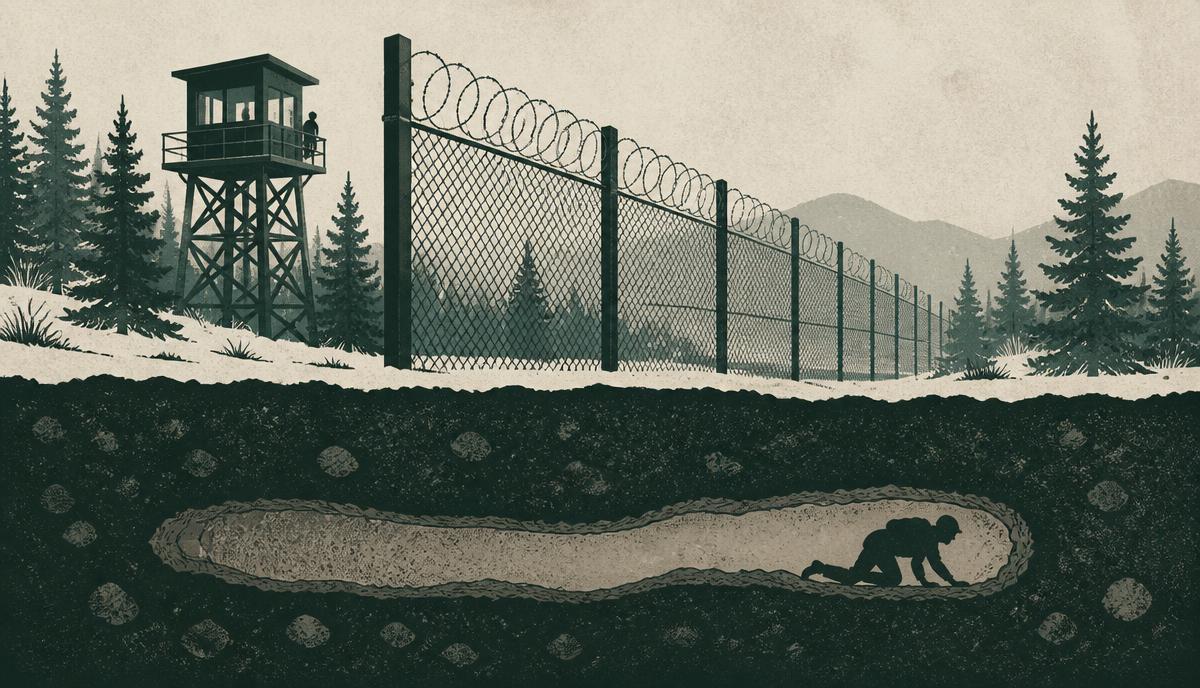
Latvian officials announced on Tuesday the discovery of a tunnel under the country's border with Belarus, signaling an increase in security measures to stop unauthorized crossings. Prime Minister Andris Kulbergs and Interior Minister Janis Dombrava stated that the government will launch "Operation Werewolf" to dismantle criminal networks that facilitate migration into the European Union's Schengen area.
The discovery follows a period of heightened activity along the 173-km (107-mile) border between Latvia and Belarus. Last month, the Latvian National Armed Forces used tear gas and a warning shot to prevent a group of migrants from entering the country. Prime Minister Kulbergs previously characterized the migrant situation as a "hybrid threat," leading the government to double the number of guards stationed at the frontier.
To address the issue, the Latvian government plans to increase cooperation between the Border Guard, State Police, National Armed Forces, and security services. Interior Minister Dombrava noted that the state will employ drones more intensively for the early detection and detention of migrants. Latvia also intends to coordinate these efforts with neighboring countries, including Estonia, Lithuania, and Poland.
The scale of the financial and logistical impact on the Latvian state involves the deployment of additional personnel from four different security and military agencies. Taxpayers and federal workers in the security sector will see a shift in resources toward the eastern border, though the specific per-household cost or exact budget for "Operation Werewolf" was not reported. The measures represent a hardening of the border between the EU and Belarus, following a similar discovery in Lithuania, where officials reported finding a cross-border tunnel in July.
The knock-on effects include a more integrated regional security apparatus, as Latvia, Estonia, Lithuania, and Poland align their border policies. This coordination sets a precedent for how Baltic nations manage what they characterize as organized criminal facilitation of migration. What happens next depends on the effectiveness of the drone deployments and the success of police actions against domestic support points for migrants; however, no specific end date or legislative vote for these operations was provided in the report.