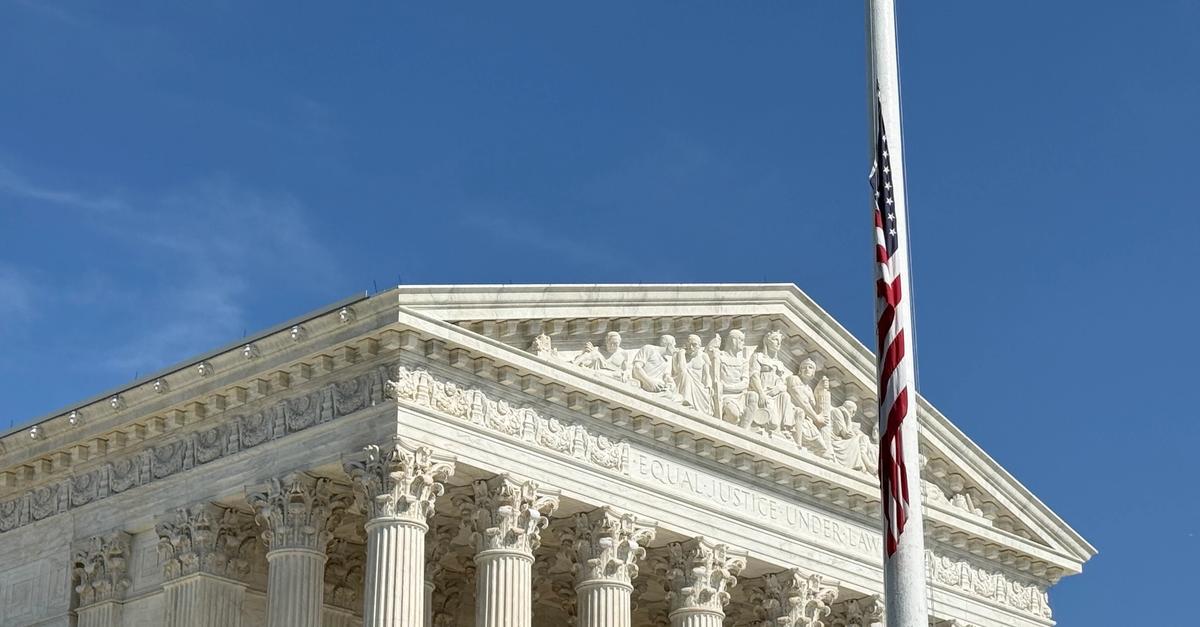
Northwestern Pritzker School of Law professor Steven Gow Calabresi argued on Monday, Sept. 21, 2026, that the U.S. Supreme Court should fully incorporate the Bill of Rights to apply against state governments. In an article for SCOTUSblog, Calabresi specifically called for the court to mandate 12-person juries in state criminal trials and to apply the Seventh Amendment's right to a civil jury trial to the states.
The argument is based on the "born free and equal" clauses found in the Declaration of Independence and various state constitutions. Calabresi noted that when the 14th Amendment was ratified in 1868, 24 out of 37 state constitutions contained such clauses. He argued that the court’s existing "history and tradition" test for incorporation, used in the 2010 Second Amendment case McDonald v. City of Chicago, supports applying the remaining unincorporated portions of the first eight amendments to the states.
The Supreme Court is scheduled to hear Kian v. Florida in the upcoming term, a case that challenges the use of six-person juries in state criminal trials. Current precedent established in the 1970 case Williams v. Florida allows states to use six-person juries, but Calabresi and others, including columnist Akhil Amar, argue that the historical definition of "jury" at the time of the founding and the 14th Amendment's ratification specifically meant a body of 12 people. Calabresi cited Noah Webster’s 1828 dictionary and Samuel Johnson’s dictionary to support this definition.
The scale of this impact involves the legal rights of millions of Americans across multiple states. According to the research cited by Calabresi, 36 out of 37 states guaranteed the right to a civil jury trial in 1868, yet the Supreme Court ruled in the 1916 case Minneapolis & St. Louis R. Co. v. Bombolis that this Seventh Amendment right does not apply to the states. Incorporating this right would mean that individuals involved in state-level civil lawsuits—ranging from contract disputes to personal injury claims—would gain a federal constitutional guarantee to a jury trial that does not currently exist at the state level under federal law.
A ruling in Kian v. Florida that mandates 12-person juries would set a precedent for "originalist" interpretations of the 14th Amendment, potentially leading to the incorporation of other remaining rights, such as the Third Amendment's protection against quartering soldiers or the Fifth Amendment's grand jury requirement. For the average person, this would mean a standardized set of trial rights regardless of which state they are in. The court is expected to hear oral arguments in Kian v. Florida during its upcoming term, though a specific decision date has not yet been announced.