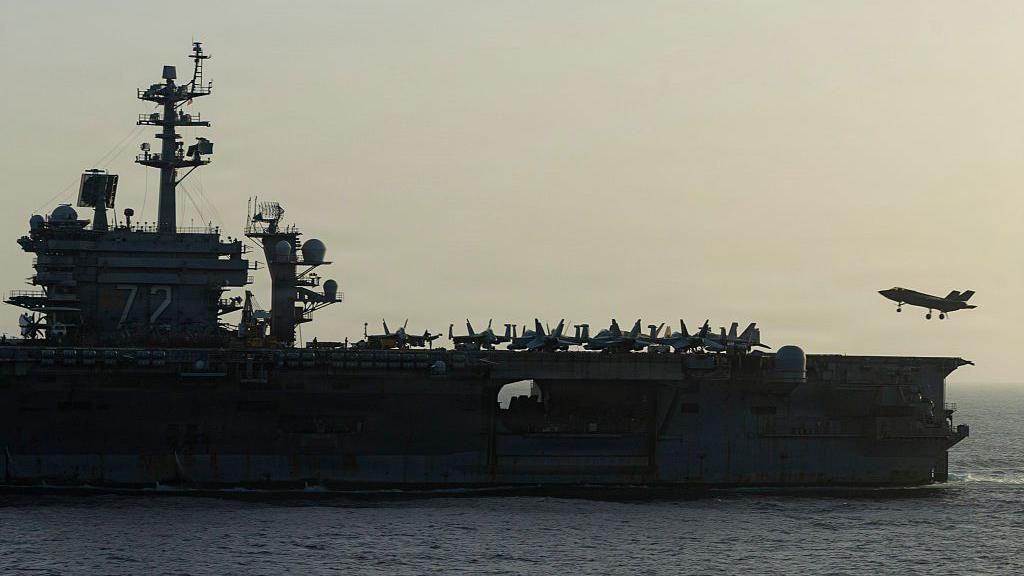
Lawmakers and family members have raised concerns regarding living conditions and mental health support aboard the USS Abraham Lincoln, a U.S. aircraft carrier that has been at sea for more than 250 days. Reports from military news outlets and elected officials describe food shortages, broken plumbing, and signs of extreme exhaustion among the approximately 5,000 personnel on board. Defense Secretary Pete Hegseth addressed the situation on Thursday, stating that reports of the conditions have been \"completely misrepresented\" and that the government is providing the crew with necessary resources.
The carrier departed California in November for the South China Sea and was later moved to the Middle East in February. While the deployment was originally scheduled to conclude in May, it has been repeatedly extended without a formal return date. On Thursday, multiple media outlets reported that the Navy is preparing to replace the ship with the USS George Washington as part of a previously scheduled rotation plan.
Senator Richard Blumenthal (D-CT) detailed several reported hardships in a letter to Hegseth, including water contamination, moldy showers, and disruptions to the mail system. Representative Mike Levin (D-CA) stated that some meals were reduced to rice and tortillas and that hygiene items like soap and toothpaste were unavailable. A Navy official told the BBC that while supply hubs were disrupted by combat actions, the ship currently has access to clean water and healthy food. The official also stated they have not identified an increase in suicidal ideation, though CBS News reported a sailor was recently recovered by helicopter after going overboard and was transferred off the ship.
The scale of the reported shortages involves basic necessities for thousands, with reports of laundry services being unavailable for more than a week and a lack of fresh food due to infrequent port calls. For individual sailors, this translates to a day-to-day environment with limited hygiene supplies, restricted diets, and no access to care packages that have been lost in transit for months. These reports have prompted calls for a congressional delegation to conduct an oversight investigation, reflecting concerns about the Navy's ability to maintain its current operational pace in the Middle East and the South China Sea.
The outcome of this situation may set a precedent for how the Department of Defense manages long-term deployments and mental health support during active conflict. A January 2025 study cited by the source found that Navy personnel experience higher rates of serious psychological distress compared to other military branches due to poor habitability and demanding schedules. While the Navy has prioritized delivering mission-critical supplies, the next steps include the transition of the USS George Washington to the region. The specific dates for the USS Abraham Lincoln's return to port have not yet been announced.