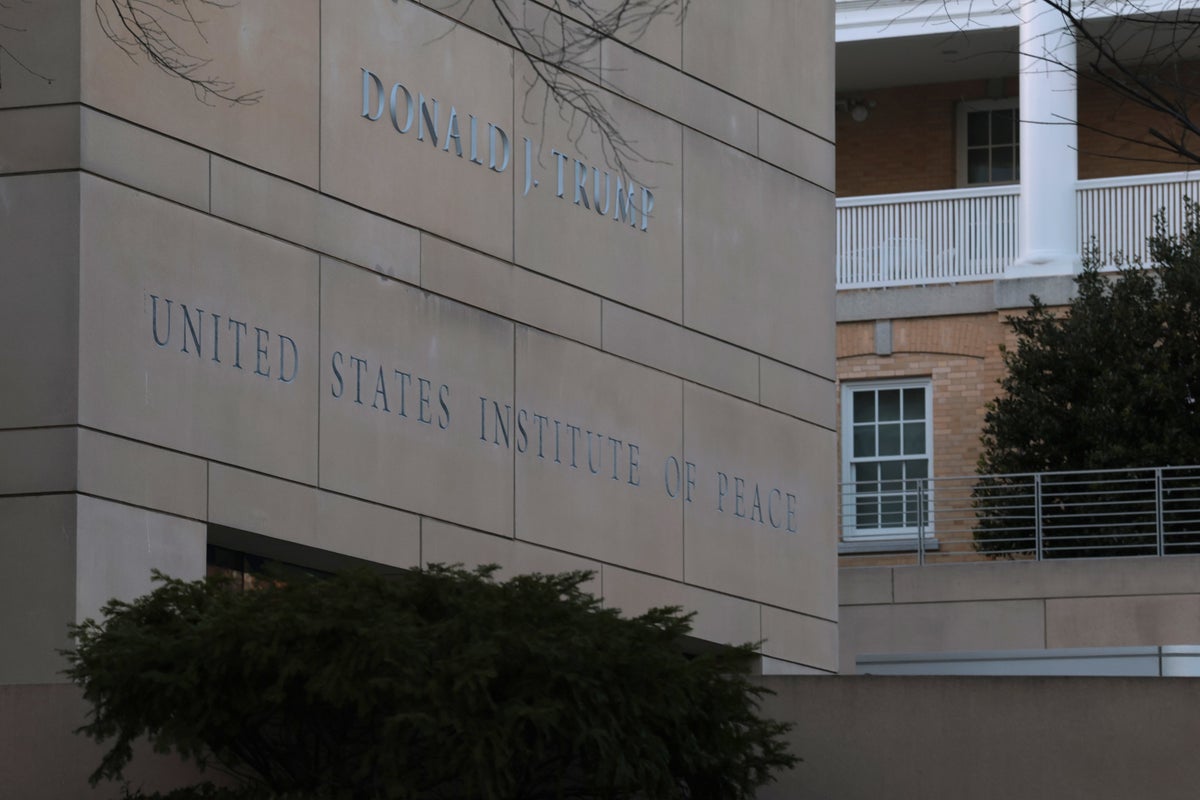
Former board members of the U.S. Institute of Peace (USIP) filed an emergency motion on Thursday seeking to prevent the carving of President Donald Trump’s name into the organization’s headquarters. The legal filing argues that altering the building's facade to include the president's name would cause irreparable harm to a structure designed to symbolize the institute's independent mission.
The U.S. Institute of Peace was the subject of executive actions during the current administration. In February 2025, President Trump issued an executive order calling for the dismantling of the USIP as part of an initiative with Elon Musk to reduce government waste. This order resulted in mass firings at the agency, which remain under legal challenge.
In December 2025, the State Department announced it had renamed the organization the Donald J. Trump Institute of Peace. While the president’s name is currently attached to the building, it has not been permanently etched into the facade alongside the original name. The renaming followed a peace agreement between Rwanda and the Democratic Republic of Congo.
The ousted board members stated in their motion that the headquarters was largely funded by private donations to the USIP as a tax-exempt nonprofit corporation. They contend the building is a work of expressive architecture that must remain free of the president's name to preserve its mission. This follows a May 2026 ruling by U.S. District Court Judge Christopher Cooper, who ordered the removal of the president’s name from the John F. Kennedy Center for the Performing Arts, stating that only Congress has the authority to change names it has designated.
For the general public and federal workers, the outcome will determine the branding of national landmarks and the degree of independence held by federally-funded think tanks. A May 2026 Pew Research Center poll indicated that 9 percent of Americans found it acceptable for a sitting president to name government buildings after himself, while approximately 70 percent said it was unacceptable or should only occur after a president leaves office. The legal precedent set by this case could reinforce or limit executive power regarding the naming rights of historic structures, following the removal of the president's name from the Kennedy Center earlier this year.
The effects could influence future policy regarding how government waste is defined and how independent agencies are managed or dismantled. If the court grants the emergency motion, it would block physical alterations to the USIP facade. The next steps in the legal process depend on the court's response to the emergency motion, as the previous lawsuit regarding the mass firings at the agency continues.