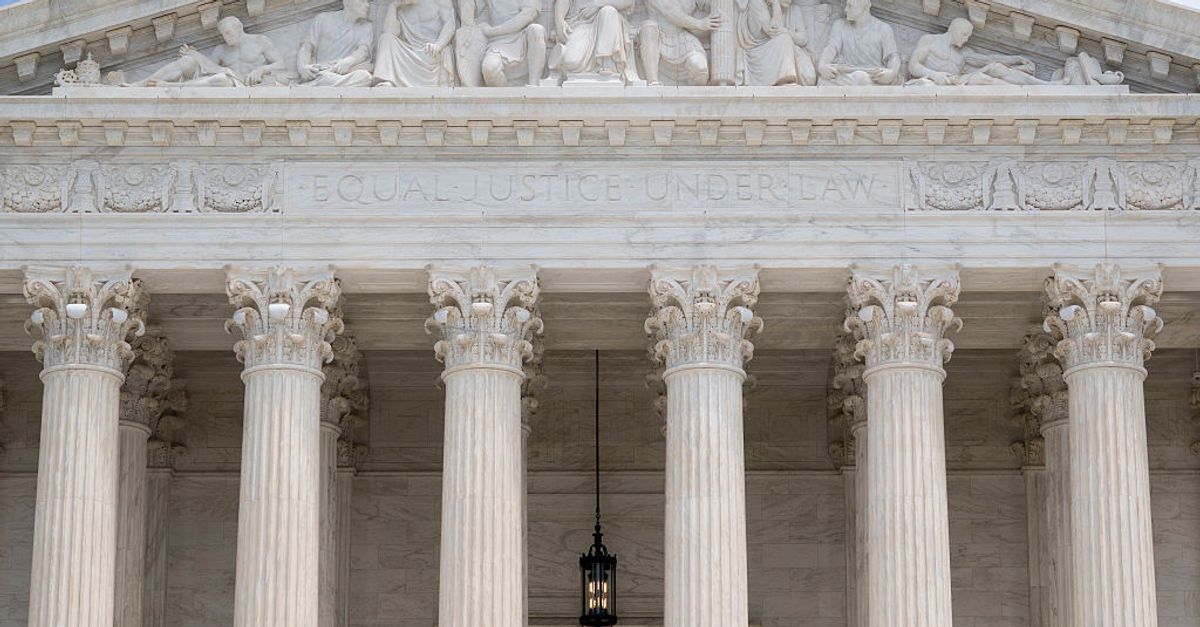
Legal scholars and television hosts are examining the long-term shifts in the U.S. Supreme Court’s ideological composition and its role as the final arbiter of constitutionality. Alexander Heffner, host of the PBS series "The Open Mind," noted that the court’s recognized power of judicial review, established in the 1803 case of Marbury v. Madison, allows nine justices to override executive and legislative actions. Current discourse focuses on the court's 6-3 ideological majority and the increasing use of a "shadow docket" to issue decisions without public argument or deliberation.
The court's transition from the progressive era of Chief Justice Earl Warren to the current conservative majority has been marked by the rise of originalism as a counterpoint to "Living Constitutionalism." Former federal judge David F. Levi noted that while the Supreme Court receives the most public attention, it decides fewer than 75 cases annually out of nearly 360,000 federal cases and 100 million state court filings. Levi emphasized that the appearance of impartiality is as critical as reality, warning that partisan identification of judges would damage the judiciary's role as a separate branch.
Associate Justice Anthony M. Kennedy, in an address to the American Bar Association, previously called for a re-evaluation of the U.S. correctional system and sentencing laws. Kennedy argued that federal mandatory minimum sentences are often "unwise and unjust," noting that they shift discretion from trial judges to assistant prosecutors. He reported that the U.S. inmate population had reached approximately 2.1 million people, with an incarceration rate of 1 in 143 persons, significantly higher than rates in England, Italy, France, or Germany.
The shift toward a 6-3 conservative majority and the use of life tenure mean that the federal judiciary's direction is often determined by the timing of a justice's death and which party controls the presidency and Senate. This structure granted significant influence to the three justices appointed by Donald Trump during his first term. Changes in these patterns would require reform, such as transparent ethics standards or court expansion, which remain subjects of debate among legal academics like Leah Litman and Carissa Byrne Hessick.
What happens next depends on whether the legislative branch acts on recommendations to repeal mandatory minimums or reinvigorate the pardon process. Justice Kennedy suggested that the Federal Sentencing Guidelines be revised downward to address increasing prison terms. Further discussion on court reform, including potential expansion and ethics transparency, is scheduled for a broadcast featuring SCOTUSblog founder Amy Howe and executive editor Zachary Shemtob on Wednesday, September 23, 2026.