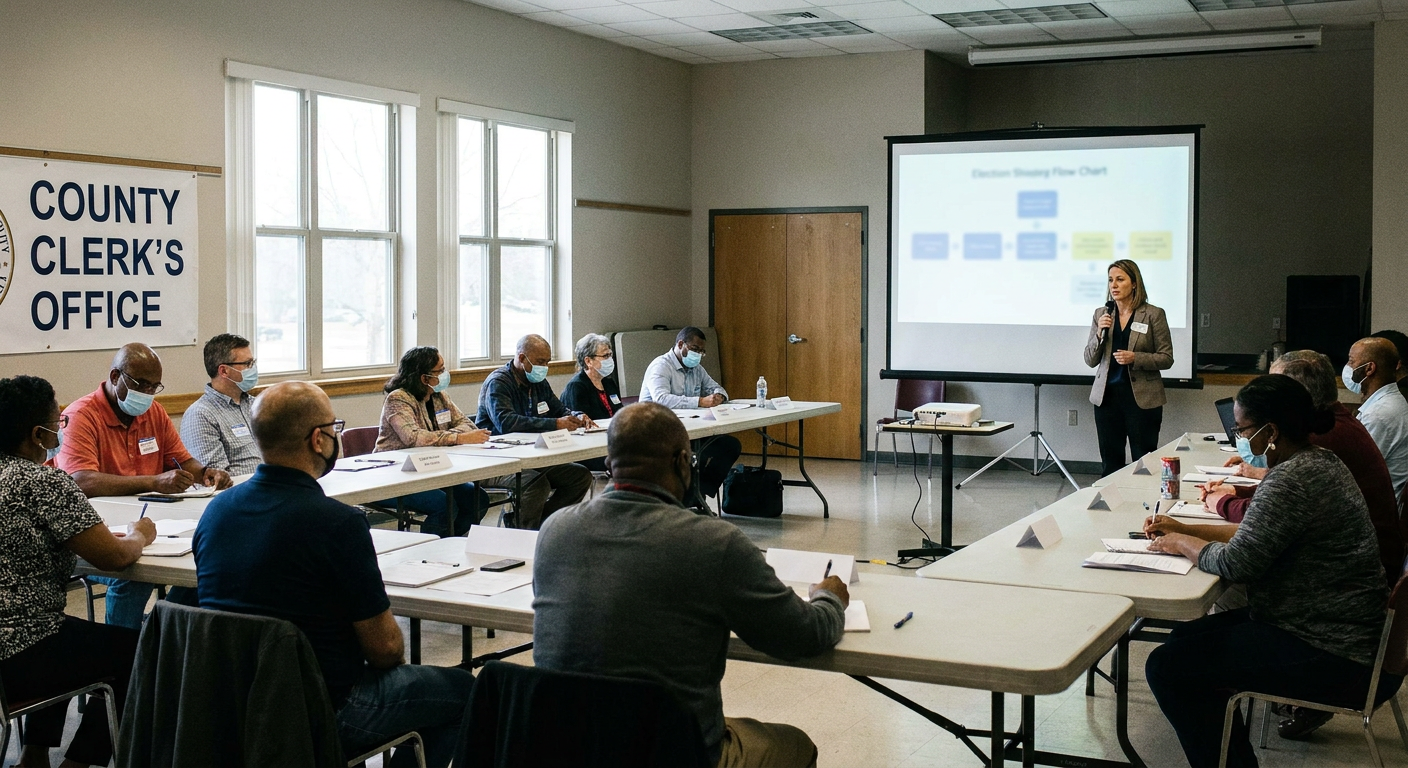
Hundreds of election officials from across the United States recently met in Charleston, South Carolina, to discuss strategies for protecting the integrity of the upcoming midterm elections. The two-day training session, organized by the Association of South Carolina Election Officials, focused on preparing for various potential disruptions, ranging from artificial intelligence-driven disinformation to the possible seizure of ballots by federal agents.
The training follows reports that local officials are concerned about federal government interference during the voting process. Organizers noted that while some threats are physical, such as bomb threats or drones at polling locations, others involve complex legal challenges. Local directors were advised to strengthen relationships with county attorneys and identify legal experts specialized in election law to prepare for potential federal interventions.
Brenda Cabrera, a trainer with 35 years of experience in Virginia elections, suggested that officials should have legal motions, such as motions to quash, prepared in advance. She emphasized that officials should consult with local government attorneys before taking action if presented with a search warrant. The Committee for Safe and Secure Elections, which provided training at the event, reported that demand for their services has increased significantly this year.
Election officials cited a January incident in Fulton County, Georgia, where FBI agents seized hundreds of thousands of ballots from the 2020 election as a reason for their preparation. While legal experts and election officials described a mid-election seizure as unlikely—noting that a judge would have to approve any such warrant—participants expressed concern that such an event would undermine public confidence. Jeanine Bostick, director of the Jasper County Board of Elections, stated she would consult the state election commission to ensure poll workers know how to respond if agents attempt to take ballots.
The scale of the reported concerns involves the potential seizure of hundreds of thousands of ballots, a volume that could impact the results of local, state, or federal races. For an individual voter, this could mean that their physical ballot is removed from local control before it is fully processed or audited, potentially leading to delays in certification. Election officials expressed worry that such actions could lead to a loss of public trust in the final results, possibly requiring elections to be run again or causing significant staffing shortages if workers resign in response to interference.
The training sets a precedent for how local governments interact with federal authorities during an active election cycle. If local officials successfully file motions to block or delay federal warrants, it could lead to legal disputes between state-level election administrators and the U.S. Department of Justice. As Election Day is less than two months away, these officials are working to finalize their emergency procedures. The next steps involve directors coordinating with state commissions and legal teams to establish clear instructions for poll workers before voting begins.