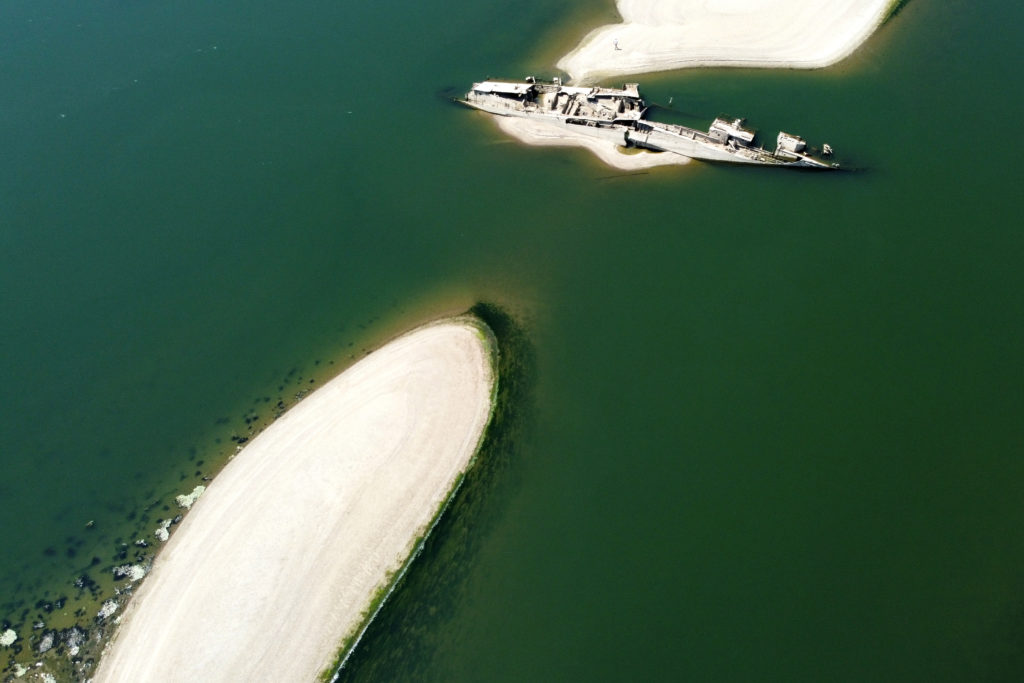
A period of high temperatures in Europe has lowered water levels in the Danube River, exposing historical artifacts previously submerged. The receding waters have revealed items ranging from fossilized remains to military hardware from the 20th century.
The Danube River reached these low levels following months of heat waves across the European continent. As the water line dropped, relics that had been covered for decades or longer became visible along the riverbed.
Among the items uncovered are warships belonging to the German navy during the Nazi era. Additionally, the low water levels revealed fossilized bones identified as belonging to a woolly mammoth.
The scale of the river's decline follows what the National Oceanic and Atmospheric Administration (NOAA) reported as the hottest month ever recorded for the contiguous United States in July. While specific water level measurements for the Danube were not provided in the report, the drop was described as critical, affecting a river system that serves as a primary transportation artery for Central and Eastern Europe. The exposure of woolly mammoth remains indicates the water has reached levels low enough to uncover geological layers that have been submerged for thousands of years.
The discovery of these artifacts marks a concrete change in the physical landscape that residents and tourists will notice immediately as they observe the riverbanks. The long-term impact involves the potential cost and logistical challenge of excavating or securing these sites before water levels rise again. Local governments must now decide whether to preserve these findings or leave them in place, a decision that will affect archaeological budgets and regional tourism. What happens next depends on weather patterns and precipitation levels; if the dry conditions persist, more relics may be revealed, whereas significant rainfall could re-submerge these items, ending the window for research or removal.