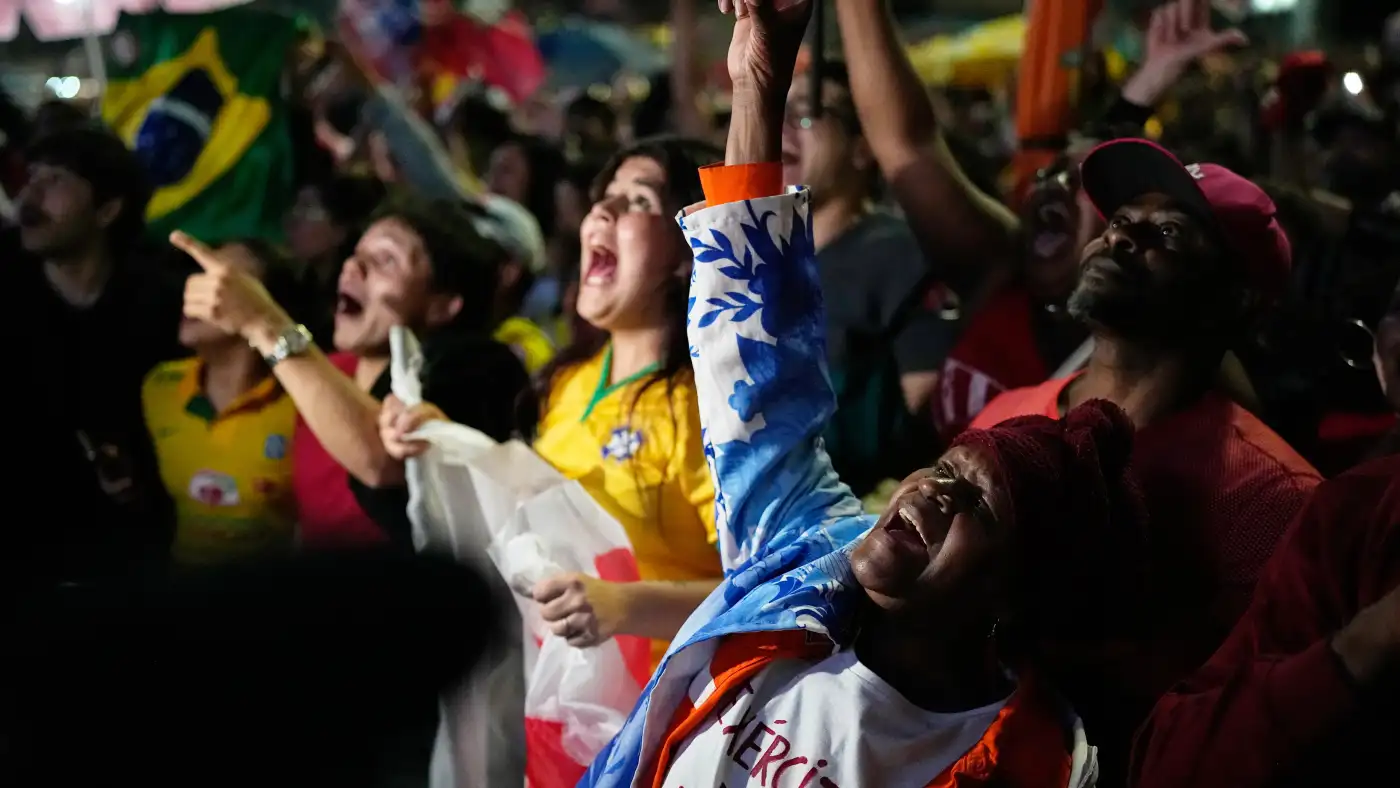
Luiz Inácio Lula da Silva was elected to a fourth term as president of Brazil on Sunday, October 25, 2026, defeating Sen. Flávio Bolsonaro in a runoff election. With 100% of the votes counted, Lula received 51.79% of the vote compared to 48.21% for Bolsonaro, a margin of more than 4 million votes.
The election followed a first-round vote on October 4, where Bolsonaro had finished in first place. The runoff victory makes Lula, who turns 81 on Tuesday, October 27, 2026, one of the oldest sitting leaders in the Americas. The result also follows the 2022 election in which Lula defeated Flávio’s father, Jair Bolsonaro, who is currently serving a 27-year sentence under house arrest for plotting a coup.
Election day was marked by procedural disputes after Supreme Court Justice Cristiano Zanin extended voting by two hours until 7 p.m. local time. The extension was requested by both campaigns; Lula’s team cited reduced bus services, while Bolsonaro’s team cited heavy rain. However, some polling stations had already deactivated electronic machines by the time the order arrived, preventing some citizens from voting. Sen. Bolsonaro stated he would seek to annul the results, calling the circumstances "inexplicable" and "impossible to recognize."
Economic stakeholders will notice immediate shifts in market stability and international trade relations. Following the announcement, a Tokyo-listed exchange-traded fund tracking Brazil's Bovespa index fell nearly 15%. Domestically, the government forecasts economic growth of just 2.3% for 2027, as public debt has risen above 82% of Gross Domestic Product (GDP). For the average Brazilian household, this economic climate and high interest rates may influence future costs for credit and public services. Internationally, the result signals a shift in diplomatic priorities, as Lula has emphasized relations within the BRICS group—Brazil, Russia, India, China, and South Africa—and stated Brazil would not be "anyone's backyard" in a message directed at the U.S. administration.
The next steps involve the formal certification of the results and the legal challenge promised by the Bolsonaro campaign. While analysts reported by The Independent suggested an annulment is unlikely given the 4-million-vote margin, the challenge could affect the transition of power. Financial markets will continue to monitor the fiscal policies of the incoming administration as Lula prepares to take office. International leaders from Canada and Mexico have already issued statements recognizing the results, indicating the beginning of new trade and environmental partnership discussions. No specific date for the inauguration was reported.