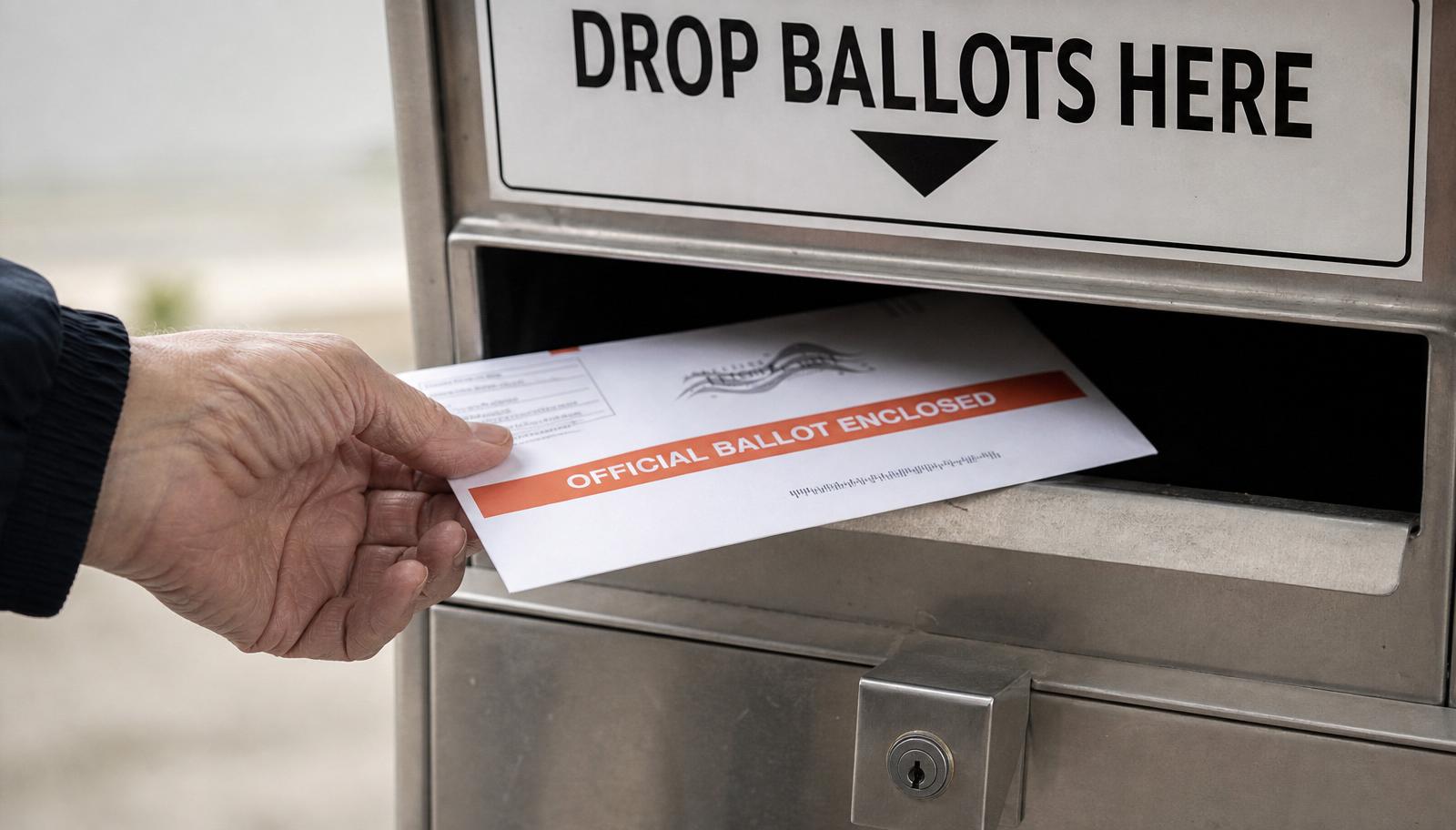
Mail-in voting is again the subject of federal executive action, state law changes and litigation that is now before the U.S. Supreme Court. On July 27, 2026, U.S. Solicitor General D. John Sauer asked the justices to let the Trump administration fully implement an executive order that would condition the mailing of ballots on federal citizenship lists, after two lower courts blocked parts of it for the Nov. 3, 2026, elections.
The dispute sits on top of a decade of state-level expansion of voting by mail, a series of state-level rollbacks, and a research record that both supporters and critics of mail voting cite. What follows is an account of what the orders say, what the courts have decided so far, what legislatures have done, and what studies and official audits have found.
What the executive orders say
President Donald Trump signed Executive Order 14248, "Preserving and Protecting the Integrity of American Elections," on March 25, 2025. Among other provisions, it directed the U.S. Election Assistance Commission to add a documentary proof-of-citizenship requirement to the federal voter registration form, and directed the attorney general to take action against states that count ballots that are postmarked by Election Day but arrive afterward. Court filings identified 13 states with such receipt deadlines or with procedures allowing voters to fix, or "cure," technical defects on timely ballots.
On March 31, 2026, the president signed a second order, "Ensuring Citizenship Verification and Integrity in Federal Elections." It instructs the U.S. Postal Service to propose rules governing mail-in and absentee ballots and directs the Department of Homeland Security to compile "state citizenship lists" of U.S. citizens over 18 in each state. Under the order, the Postal Service rules must provide that mail ballots may be sent only to voters whose names appear on those lists.
What the courts have decided
The 2025 order was partially blocked twice. On April 24, 2025, U.S. District Judge Colleen Kollar-Kotelly in Washington, D.C., halted the proof-of-citizenship directive to the Election Assistance Commission. On June 13, 2025, U.S. District Judge Denise Casper in Massachusetts, ruling in a suit brought by 19 state attorneys general, blocked the citizenship-documentation provisions as applied to the plaintiff states, writing that the Constitution assigns the states and Congress — not the president — authority over election procedures.
The 2026 order drew a suit in the same district from 23 states and the District of Columbia, led by California. The states argued the order conflicts with the Constitution's assignment to the states of the power to determine voter eligibility and to set the "Times, Places, and Manner" of congressional elections. On June 25, 2026, U.S. District Judge Indira Talwani barred the federal government from implementing the mail-ballot and citizenship-list provisions for the November 2026 elections in the states that sued.
A divided panel of the U.S. Court of Appeals for the 1st Circuit declined on July 25, 2026, to put that ruling on hold. If the order took effect for the fall elections, the majority wrote, "it would sow confusion and threaten disenfranchisement of many eligible voters."
In the Supreme Court application, filed as Trump v. California, Sauer called Talwani's order "extraordinary" and argued it "flouts settled" doctrines about when courts may weigh in, because the agencies have not yet decided how they will implement the order. He also asked for an administrative stay, arguing that "there is not enough time to obtain ordinary appellate relief from the injunction" before November. The Supreme Court instructed the states to respond by 4 p.m. Eastern on Monday, Aug. 3, 2026.
The legislative backdrop
Congress has considered the underlying questions directly. The Safeguard American Voter Eligibility Act, or SAVE Act, which would require documentary proof of citizenship to register to vote in federal elections, passed the House on April 10, 2025, by a vote of 220-208, with four Democrats joining Republicans. It has not advanced in the Senate, where it would need 60 votes to overcome a filibuster.
At the state level, the pattern runs in both directions. Eight states and the District of Columbia mail ballots to all registered voters. A majority of states allow any registered voter to request a mail ballot without giving a reason; roughly a dozen still require an excuse. Since 2020, some states have shortened mail-ballot receipt deadlines, added identification requirements for absentee applications, or limited drop boxes, while others have extended curing periods, added prepaid postage or moved to permanent absentee lists.
Two federal laws frame the debate. The Uniformed and Overseas Citizens Absentee Voting Act of 1986 guarantees mail voting for military and overseas voters. The National Voter Registration Act of 1993 governs the federal registration form at the center of the citizenship-documentation fight.
What the research and audits have found
Supporters and critics of mail voting both point to documented findings.
Reviews of prosecuted cases have found fraud involving mail ballots to be rare in absolute terms. The Heritage Foundation, which favors tighter rules, maintains a database of roughly 1,500 proven cases of election fraud of all types across decades of U.S. elections — a figure that includes in-person and registration offenses as well as absentee cases. State audits after the 2020 election, including a Republican-commissioned review in Michigan and audits in Arizona and Georgia, did not find fraud sufficient to change results.
At the same time, the bipartisan 2005 Commission on Federal Election Reform, chaired by former President Jimmy Carter and former Secretary of State James A. Baker III, concluded that absentee ballots "remain the largest source of potential voter fraud" because they are cast outside the supervision of polling places, and recommended safeguards rather than restriction. Documented cases exist, including the 2018 North Carolina 9th Congressional District absentee-ballot operation that led the state elections board to order a new election.
On partisan effect, a 2020 study in the Proceedings of the National Academy of Sciences by researchers at Stanford University's Democracy and Polarization Lab examined states that adopted universal mail voting and found no significant partisan advantage and only a modest increase in turnout. The MIT Election Data and Science Lab has reported similar findings.
Administrative concerns are also documented. Election Assistance Commission surveys show that mail ballots are rejected most often for missing signatures, signature mismatches or late arrival, and academic analyses of state data have found higher rejection rates among younger voters and some voters of color. Postal delivery timing is a recurring issue: the Postal Service has advised voters to mail ballots at least a week before Election Day, and the agency's inspector general has reported on delays in ballot processing during recent election cycles.
Where things stand
The Supreme Court has not ruled on the administration's request. Until it does, the district court's order remains in effect in the 23 states and the District of Columbia that sued, and the executive order's mail-ballot and citizenship-list provisions cannot be implemented there for the November elections. The agencies named in the order have not published final implementation rules.
The practical burden falls unevenly by geography and circumstance. Voters in the eight all-mail states, rural voters far from polling places, voters with disabilities, and military and overseas voters rely on mail ballots more heavily than the national average. County election offices, which administer the process, would need to make procedural changes in the months before November; the 1st Circuit majority cited that compressed timeline as a reason to keep the order paused. Supporters of the order argue that verifying citizenship before a ballot is mailed is a straightforward safeguard and that the federal government has an interest in the integrity of federal elections.
Beyond November, the case raises a structural question the courts have not settled: how far a president may go in directing federal agencies to shape election procedures that the Constitution assigns to the states, subject to congressional override. A ruling on the merits would set the boundary for future executive action in this area. The immediate next step is narrower — the states' response is due Aug. 3, after which the justices may act on the stay request, grant an administrative pause, or set the matter for argument.