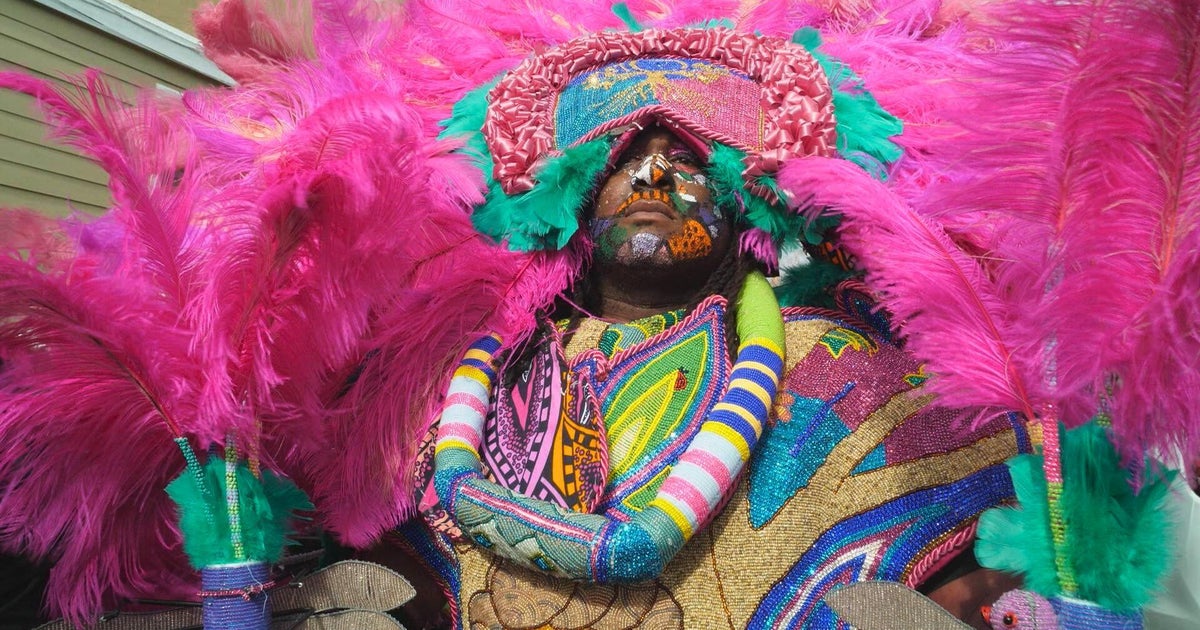
Members of the Mardi Gras Indians, also known as Black Masking Indians, continue a tradition dating back to the 1800s by hand-sewing elaborate suits for the annual Mardi Gras celebration in New Orleans. These suits, which can take an entire year to construct, are unveiled on Mardi Gras morning as tribes march through historically Black neighborhoods. The tradition involves a complex hierarchy led by "Big Chiefs" who engage in mock competitions to determine whose craftsmanship is the most detailed.
The cultural practice is rooted in history where enslaved Africans who escaped were reportedly sheltered by Native Americans in the bayous surrounding New Orleans. Today, many participants identify as having both African and Indigenous roots, using the masking tradition to honor their ancestors. The Mardi Gras Indian Council serves as a governing body for the various tribes, maintaining the standards and history of the culture against challenges such as the displacement of neighborhoods following Hurricane Katrina and the effects of gentrification.
Individual participants often face significant financial and personal costs to maintain the tradition. Big Chief Demond Melancon of the Young Seminole Hunters reported that his suit for a recent year cost $25,000 to produce, involving daily labor from 6 a.m. to midnight. Melancon, who formerly worked in concrete and cooking, now sustains his practice through the sale of his beadwork as fine art. His recent suit, which depicts the 1839 Amistad slave ship case, weighs 120 pounds and stands 10 feet tall.
The day-to-day life of a "masking" Indian involves thousands of hours of manual labor, specifically hand-sewing beads and rhinestones with dental floss onto canvas. This labor culminates in a physical transformation on Mardi Gras day, where participants carry suits weighing up to 120 pounds through the streets. For older members like 84-year-old Big Chief Monk Boudreaux, who has masked for 72 years, the tradition serves as a primary method of community mentorship and the preservation of African and Caribbean cultural threads that were historically restricted or forbidden in the American South.
The practice has expanded beyond local streets into the global art and music markets, setting a precedent for how folk traditions are categorized. Big Chief Monk Boudreaux’s musical contributions earned two Grammy nominations, while Melancon’s suits are currently exhibited at the Venice Biennale in Italy. The future of the tradition depends on the transfer of leadership within tribes, as veteran leaders like Boudreaux, who was recently diagnosed with cancer, begin the process of passing their crowns to a younger generation to ensure the culture does not disappear.