Author Margaret Atwood discussed the historical and personal influences behind her 1985 novel, "The Handmaid's Tale," in an interview with 60 Minutes correspondent Jon Wertheim. Atwood explained that the book’s specific plot points were drawn exclusively from historical events, following her personal rule that she would not include any element that had not already occurred in reality. The author identified the 1981 political organization of the religious right and her observations of life in the Eastern Bloc during the Cold War as central inspirations for the dystopian narrative.
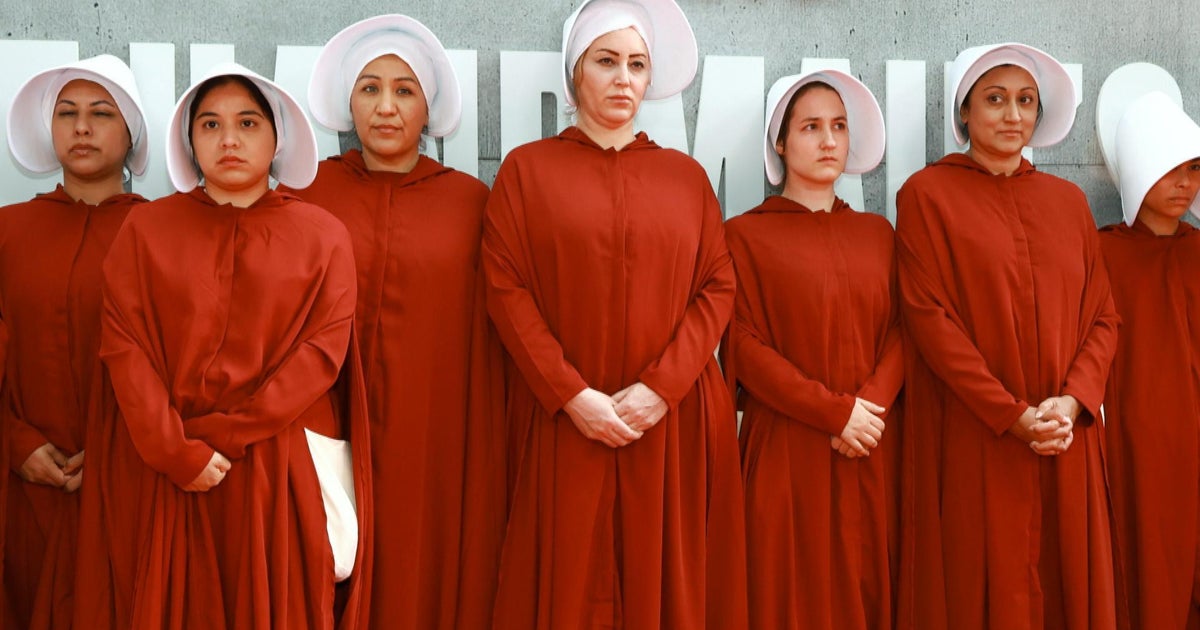
The novel’s signature red cloaks and bonnets were inspired by the branding on a 1940s can of Old Dutch cleaning solution, which featured a woman in a face-covering bonnet. Atwood stated that totalitarian movements often utilize specific "outfits" as a tool for control. She chose red for the Handmaids to reference Mary Magdalene and "The Scarlet Letter," while selecting blue for the "Wives" to represent the Virgin Mary. Atwood noted that she wrote much of the manuscript in 1984 West Berlin, a setting that allowed her to witness firsthand the policing and lack of freedom in neighboring communist states.
Atwood’s research files at the Thomas Fisher Rare Book Library include clippings regarding 20th-century policies in Romania, where "persistent non-pregnancy" was treated as a crime. The author also cited George Orwell’s "1984" as a formative influence. One of the book's dedications is to Mary Webster, a 17th-century ancestor who survived an attempted hanging after being accused of witchcraft in New England. Atwood explained that placing the story's setting at Harvard University was a deliberate choice to challenge the assumption that totalitarianism could not happen in the center of liberal American academia.
The scale of this influence is reflected in the global reach of the resulting work. Since its 1985 publication, the novel has transitioned into an Emmy-award-winning television series, reaching millions of viewers through the streaming platform Hulu. The imagery Atwood developed—specifically the red cloaks and bonnets—has moved beyond fiction to become a visible uniform for protesters. These individuals would notice the adoption of these garments during political demonstrations, particularly those related to reproductive rights, where the clothing serves as a recognized shorthand for resistance against perceived overreach.
The knock-on effects of Atwood’s work include the continued academic and public study of her archives at the Thomas Fisher Rare Book Library in Toronto. Her focus on how "anything can happen anywhere" serves as a precedent for dystopian literature that relies on historical fact rather than pure invention. The interview was originally published on November 9, 2025, and provides a breakdown of the specific cultural and political triggers that led to the book’s creation, though no future publication dates for new related works were reported in this source.